 Nerve Blocks App
 Anesthesia Assistant App
 Ultrasound Pain App
 Pain Medicine Assistant App
 POCUS App
 IV Access App
 MSK Knee App
 VetRA App
 Nerve Block Manual
 Regional Anesthesia Updates
 Anesthesiology Manual
 Anesthesiology Review
 Anesthesia Updates 2025
 Anesthesia Updates 2026
 Pediatric Anesthesia Updates
 Airway Management Updates
 US Interventional Pain Manual
 Pain Medicine Updates
 Mastering Difficult IV Access
 PACU Nursing Manual
 RA Veterinary Manual
 Books
Books About
About

Learning objectives
- Etiology and complications of abdominal aortic aneurysm (AAA)
- Anesthetic management of Abdominal aortic aneurysm (AAR) repair through an open incision or through EndoVascular Aneurysma Repair (EVAR)
Definition and mechanisms
- Abdominal aortic aneurysm (AAR) repair is a procedure used to treat an aneurysm of the abdominal aorta
- An aneurysm is a bulging, weak spot in the aorta that may be at risk for rupturing
- small AAA: 3-4.4 cm across
- medium AAA: 4.5-5.4 cm across
- large AAA: ≥5.5 cm more across
- The incidence of AAA increases with age
- Repair of an abdominal aortic aneurysm may be performed surgically through an open incision or in a minimally-invasive procedure called endovascular aneurysm repair (EVAR)
- In the EVAR procedure, a stent graft is inserted into the aneurysm through small incisions in the groin
Etiology
| Atherosclerosis | |
| Cystic medial necrosis | |
| Connective tissue disorders | Marfan’s syndrome Ehlers Danlos syndrome type IV Turner's syndrome Polycystic kidney disease |
| Arterirtis | Giant cell arteritis Takayasu's disease Relapsing polychondritis |
| Infections | Acute: syphilis, salmonella, staphylococcus, brucellosis Chronic: tuberculosis, fungal (mycotic) |
| Posttraumatic | |
| Inflammatory |
Risk factors
- Age > 60 years
- Male
- Family history
- Hyperlipidemia
- Hypertension
- Chronic obstructive pulmonary disease
- Smoking
- Diabetes
- Caucasian race
- Sedentary life style
- Coronary artery disease
- Peripheral vascular disease
Management
Preoperative management
Similar for open repair and EVAR
- Start patients on statins and antiplatelet medications
- Control arterial pressure
- Perform standard investigations: full blood count, electrolytes, ECG, chest X-ray, urinalysis
- Assess major cardiac risk factors:
- Decompensated heart failure
- Acute coronary syndrome
- Arrhythmias
- Valvular disease
- Worsening ischemic heart disease
- Recent MI
- Consider:
- Diuretics and ACE inhibitors
- Potential for hemorrhage, large fluid shifts & hypothermia
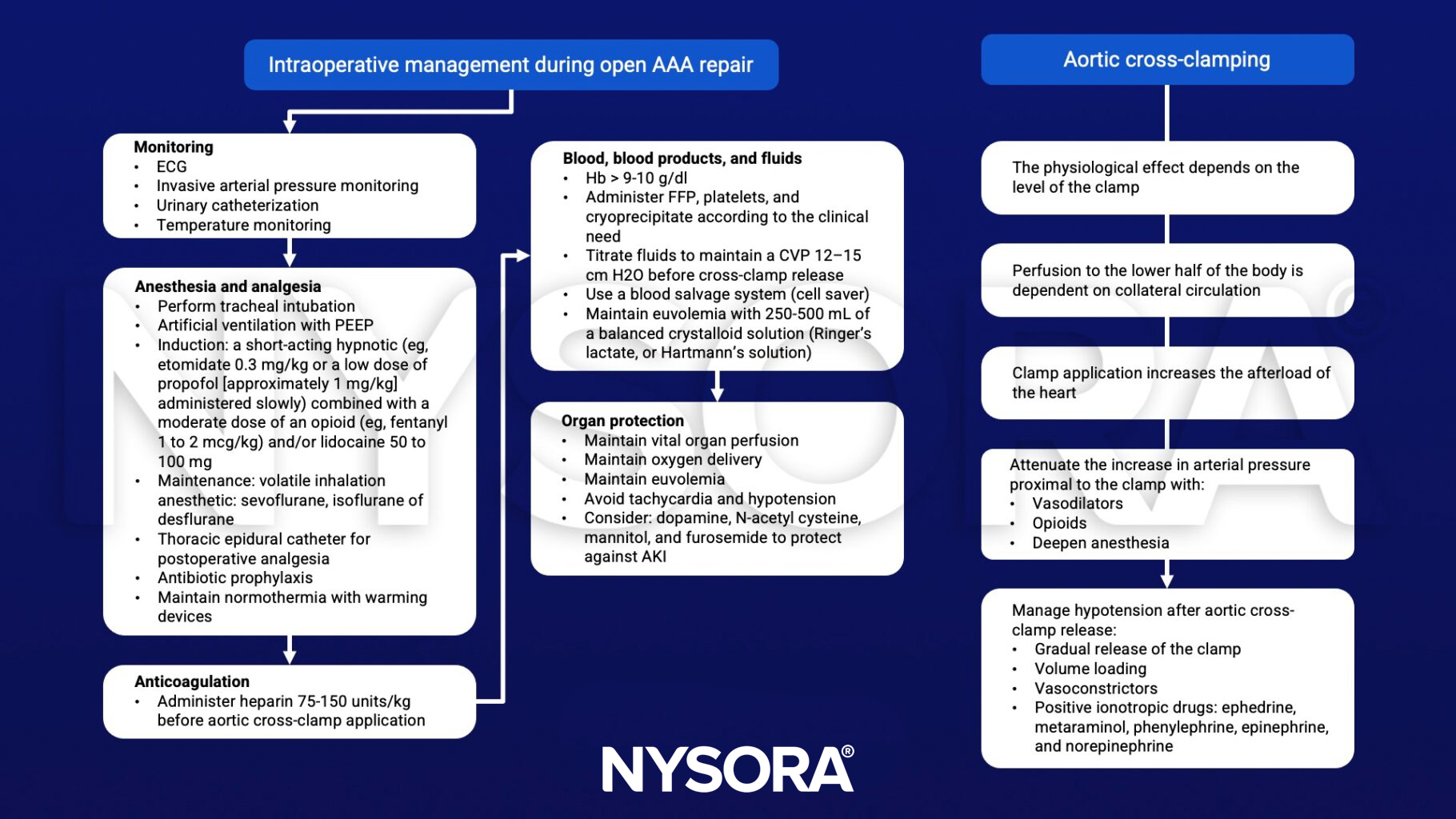
Perioperative management: open incision
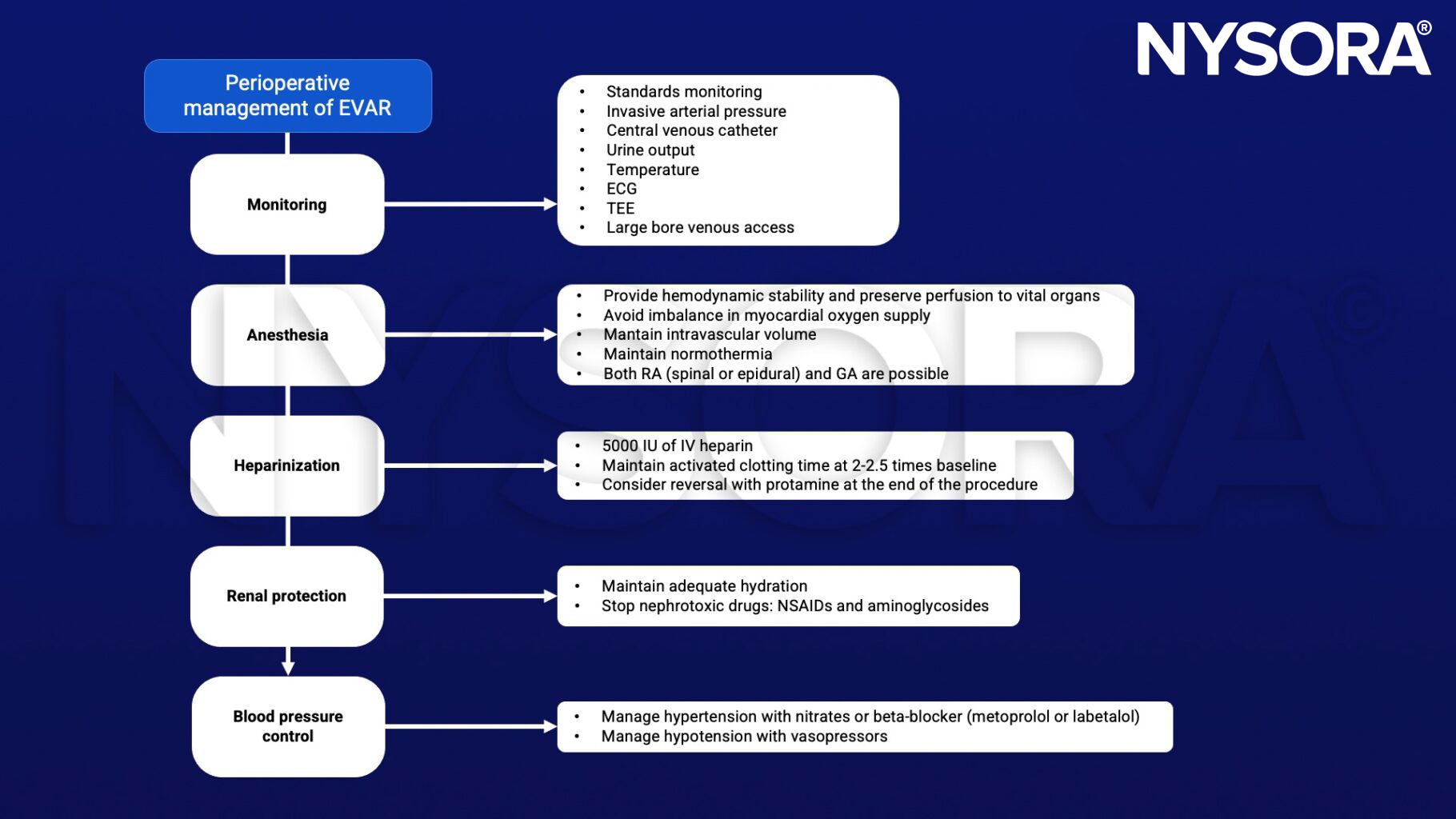
Perioperative management: EVAR
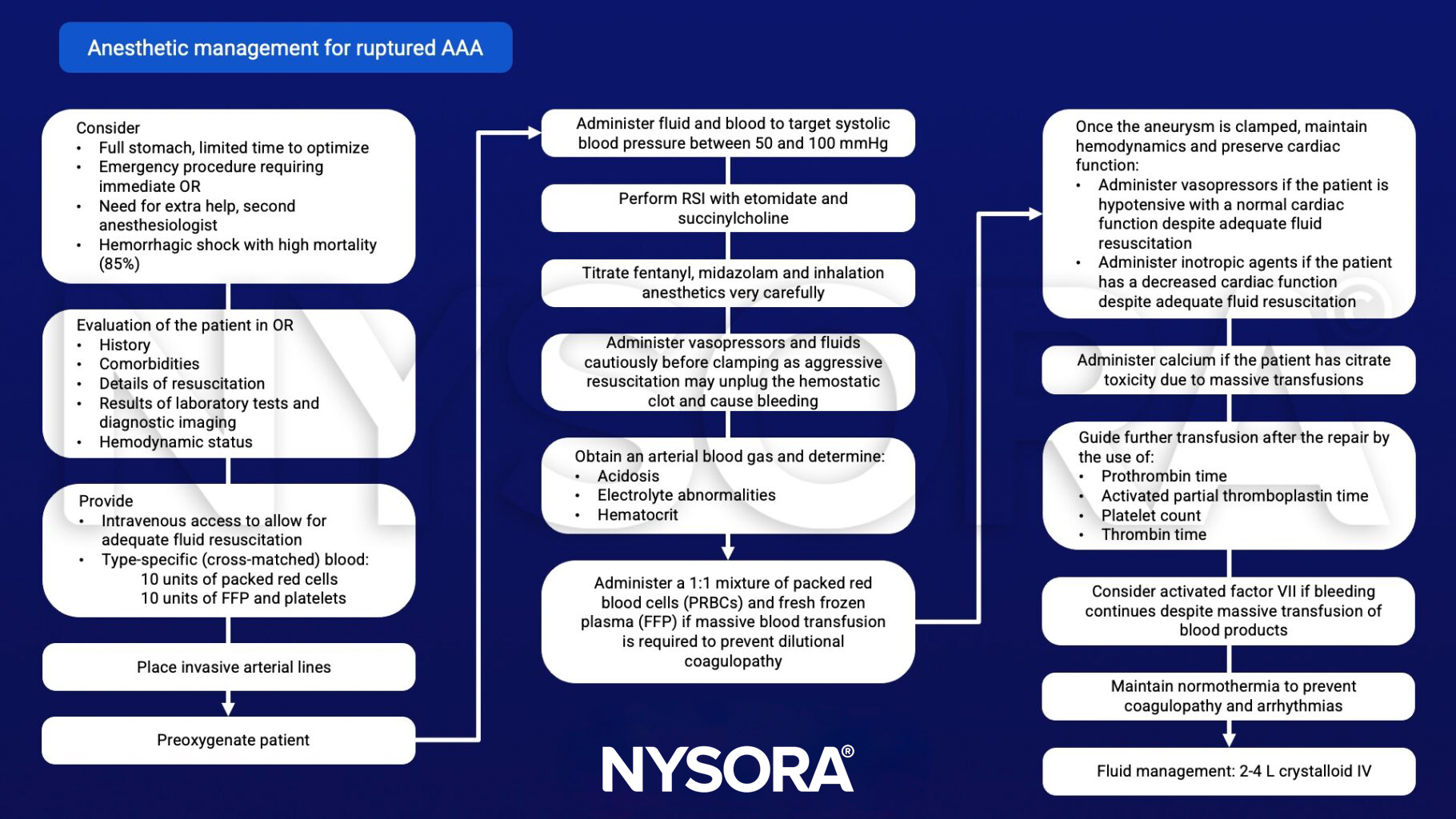
Perioperative management: ruptured AAA
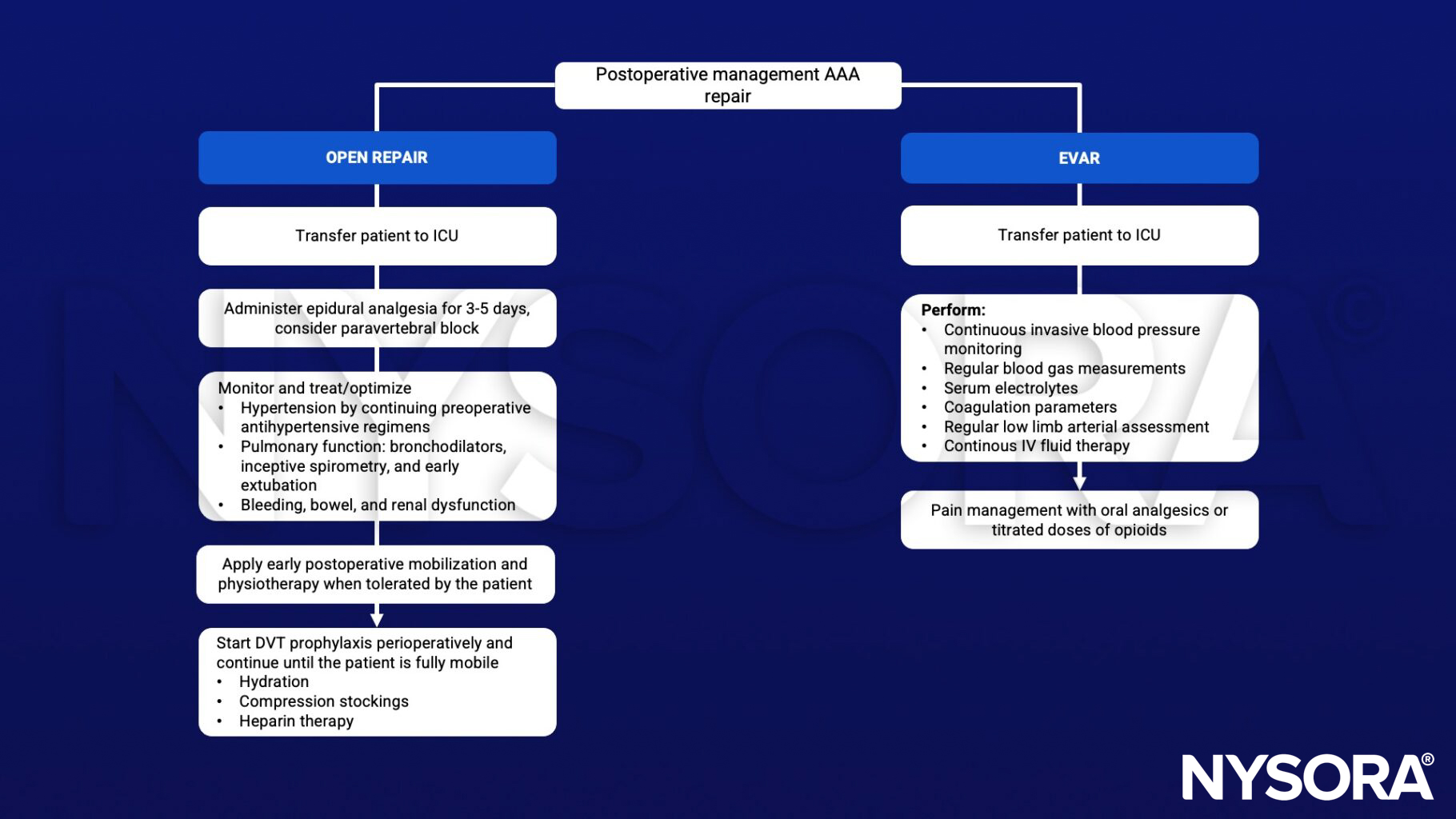
Postoperative management: open repair and EVAR
Postoperative complications open repair
| Respiratory complications | Pneumonia Atelectasis Respiratory failure Pulmonary thromboembolism |
| Cardiovascular complications | Myocardial ischemia Myocardial infarction Dysrhythmias |
| Cerebrovascular complications | Cerebrovascular disease Carotid insufficiency Postoperative cognitive dysfunction Confusion/delirium |
| Renal complications | AKI CKD Dialysis acute tubular necrosis Renal vascular injury Ureteral injury |
| Gastrointestinal complications | Bowel ischemia ACS paralytic ileus |
| Neurological complications | Spinal cord ischemia Paraplegia |
| Surgical complications | Bleeding Wound dehiscence Incisional hernia Venous thromboembolism Wound infection Leg ischemia Graft infection Graft thrombosis |
Postoperative complications EVAR
| Surgical | Medical |
|---|---|
| Maldeployment of malposition of graft Arterial rupture/arterial dissection Delayed AAA rupture Stent-graft limb thrombosis leading to lower limb ischemia Graft migration Endoleak Rupture of iliac artery Ischemia of spinal cord, kidneys, liver, bowel, legs Graft infection Paralysis | Acute coronary syndromes Acute congestive cardiac failure Acute kidney injury (AKI)/CIN arrhythmia Respiratory infection Venous thromboembolism Cerebovascular accident Postimplantation syndrome |
Suggested reading
- Kothandan H, Haw Chieh GL, Khan SA, Karthekeyan RB, Sharad SS. Anesthetic considerations for endovascular abdominal aortic aneurysm repair. Ann Card Anaesth. 2016;19(1):132-141.
- Al-Hashimi M, Thompson J. Anaesthesia for elective open abdominal aortic aneurysm repair, Continuing Education in Anaesthesia Critical Care & Pain, Volume 13, Issue 6, December 2013, Pages 208–212.
- Gelzinis TA, Subramaniam K. Anesthesia for Open Abdominal Aortic Aneurysm Repair. Anesthesia and Perioperative Care for Aortic Surgery. 2010;301-327.
- Nataraj V, Mortimer AJ. Endovascular abdominal aortic aneurysm repair, Continuing Education in Anaesthesia Critical Care & Pain, Volume 4, Issue 3, June 2004, Pages 91–94.
Clinical updates
Bradley C et al. (European Journal of Anaesthesiology, 2024) report that cardiopulmonary exercise testing (CPET), CT-derived body composition (including sarcopenia), and systemic inflammatory markers independently predict survival after elective abdominal aortic aneurysm (AAA) repair. Reduced peak oxygen uptake (VO₂peak), adverse body composition metrics (low skeletal muscle mass), and elevated inflammatory indices were associated with worse long-term survival following both open repair and EVAR. These findings support integrating CPET and CT-based frailty/sarcopenia assessment into preoperative risk stratification for AAA repair to better inform shared decision-making and perioperative optimization .