 Nerve Blocks App
 Anesthesia Assistant App
 Ultrasound Pain App
 Pain Medicine Assistant App
 POCUS App
 IV Access App
 MSK Knee App
 VetRA App

 Nerve Block Manual 2027
 Nerve Block Manual
 Regional Anesthesia Updates
 Anesthesiology Manual
 Anesthesiology Review
 Anesthesia Updates 2025
 Anesthesia Updates 2026
 Pediatric Anesthesia Updates
 Airway Management Updates
 US Interventional Pain Manual
 Pain Medicine Updates
 Mastering Difficult IV Access
 PACU Nursing Manual
 RA Veterinary Manual
 Books
 About

 Back to News
 12 min read

Intrathecal drug delivery (ITDD) may offer an important treatment option for patients with severe chronic non-cancer pain who have not achieved adequate relief from conventional therapies.
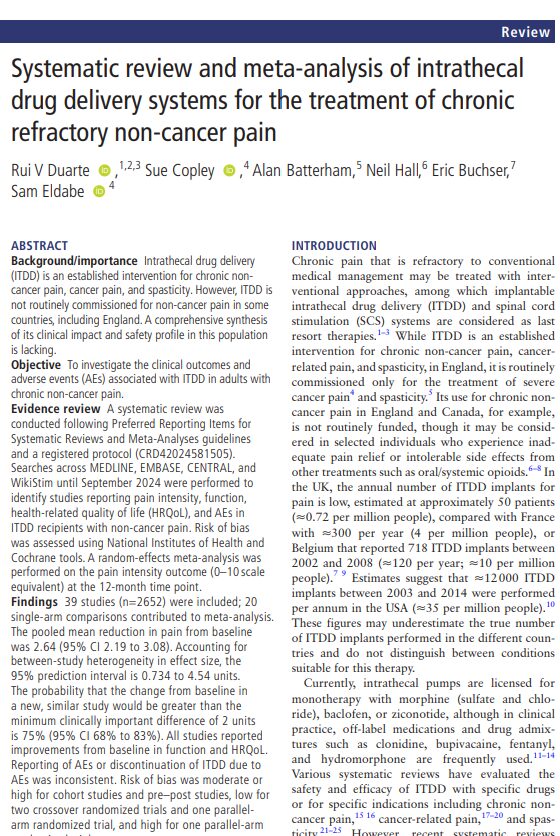
A systematic review and meta-analysis published in Regional Anesthesia & Pain Medicine examined the effectiveness and safety of implantable intrathecal drug delivery systems in adults with chronic refractory non-cancer pain.
The researchers, led by Rui V. Duarte, analyzed 39 studies involving 2,652 patients. Twenty studies contributed to a quantitative meta-analysis of pain intensity at 12 months.
The pooled results demonstrated an average reduction of 2.64 points on a 0–10 pain intensity scale compared with baseline.
This improvement exceeds the commonly accepted minimum clinically important difference of 2 points, suggesting that ITDD may provide meaningful analgesia in appropriately selected patients.
However, the authors emphasized that the certainty of evidence for pain reduction was low, while evidence for improvements in physical function and health-related quality of life was very low.
Importantly, most included studies lacked control groups, making it difficult to determine how much of the observed improvement was directly attributable to intrathecal therapy.
Why intrathecal drug delivery matters in refractory chronic pain
Chronic non-cancer pain can remain difficult to manage despite comprehensive pharmacological, rehabilitative, psychological, and interventional treatments.
Patients with refractory pain may experience persistent symptoms, substantial functional limitations, sleep disturbances, and reduced quality of life.
For individuals who do not achieve adequate relief or who develop intolerable adverse effects with conventional treatments, implantable therapies may be considered.
These include spinal cord stimulation (SCS) and intrathecal drug delivery systems.
Unlike systemic medication administration, ITDD delivers analgesic drugs directly into the cerebrospinal fluid within the intrathecal space.
An implanted pump administers medication through a catheter positioned in the spinal canal, allowing controlled drug delivery close to relevant spinal pain-processing pathways.
This approach can achieve analgesic effects with smaller drug quantities than those typically required through systemic administration, although it introduces device-related and intrathecal medication-specific risks.
ITDD has established applications in cancer-related pain, chronic non-cancer pain, and spasticity. However, access and reimbursement vary considerably between healthcare systems.
In England, for example, intrathecal pumps are routinely commissioned for severe cancer pain and spasticity, but not generally for chronic non-cancer pain.
The limited availability of ITDD for refractory non-cancer pain reflects ongoing uncertainty about its long-term effectiveness, safety, and comparative value.
Study design: 39 studies and more than 2,600 patients
The investigators conducted a systematic review following PRISMA guidelines, using a prospectively registered protocol.
MEDLINE, EMBASE, CENTRAL, and WikiStim were searched for relevant studies published between 2003 and September 2024.
Eligible studies included adults aged 18 years or older with chronic non-cancer pain who received permanently implanted intrathecal drug delivery systems.
Studies involving fewer than 20 participants were excluded, as were investigations focused on cancer-related pain, spasticity, external intrathecal pumps, or other neuromodulation interventions.
The review included 39 unique studies reported across 41 publications.
Most were observational investigations, including prospective and retrospective cohorts and single-arm case series.
Only four randomized controlled trials were identified, comprising two crossover trials and two parallel-group trials.
The included populations predominantly consisted of patients with chronic low back pain and persistent spinal pain syndromes.
Other conditions included:
- Complex regional pain syndrome.
- Diabetic neuropathy.
- Persistent postsurgical pain.
- Other chronic neuropathic and nociceptive pain conditions.
Treatment regimens varied considerably.
Twenty-one studies evaluated intrathecal opioid therapy alone. Other investigations assessed ziconotide, combinations of opioids and local anesthetics, clonidine, methadone, or mixed intrathecal regimens.
Follow-up durations ranged from two weeks to 24 years, reflecting substantial differences in study design and clinical populations.
Clinically meaningful reduction in pain intensity at 12 months
The primary outcome was change in pain intensity from baseline.
Pain scores were standardized to a 0–10 scale using measurements such as the Numerical Rating Scale (NRS), Visual Analog Scale (VAS), and Brief Pain Inventory.
Twenty studies provided sufficient information for a random-effects meta-analysis at the 12-month follow-up.
The pooled mean reduction in pain intensity was 2.64 points (95% confidence interval [CI] 2.19–3.08).
This exceeded the prespecified minimum clinically important difference of 2 points.
The findings suggest that patients receiving ITDD may experience a clinically relevant reduction in pain intensity during the first year following implantation.
However, the results also demonstrated substantial variation between studies.
The 95% prediction interval ranged from 0.734 to 4.54 points, indicating that the magnitude of benefit in a future comparable study could range from relatively small to substantial.
The investigators estimated a 75% probability (95% CI 68%–83%) that a new, similar study would demonstrate a mean pain reduction greater than 2 points.
This probability applies to the average effect in a future study, not to an individual patient’s likelihood of responding.
The distinction is important because treatment responses may differ according to pain mechanism, underlying diagnosis, previous treatment history, and the medication delivered.
Pain relief may vary substantially between patients
Individual studies reported considerable variation in treatment response.
Among studies evaluating reductions of at least 50% in pain intensity, reported responder rates ranged from 12% at 12 months to 72.4% at 36 months.
However, these findings were obtained from different populations, treatment regimens, and follow-up periods, limiting direct comparisons.
Some studies observed declining response rates over time, while others reported sustained or increasing benefits.
The review therefore supports the possibility of meaningful pain reduction with ITDD but does not establish which patients are most likely to experience durable long-term relief.
Improvements in physical function and quality of life
Pain intensity is only one component of successful chronic pain treatment.
For patients with longstanding refractory pain, improvements in mobility, daily activities, independence, and health-related quality of life may be equally important.
The review examined these outcomes separately.
Ten studies assessed health-related quality of life using instruments such as the EuroQol five-dimension questionnaire (EQ-5D), Brief Pain Inventory, and other validated measures.
All reported improvements from baseline during follow-up.
Similarly, 17 studies evaluated functional outcomes using instruments including the Oswestry Disability Index, Pain Disability Index, and Sickness Impact Profile.
Most reported improvements in physical function after ITDD.
One randomized study involving patients already receiving intrathecal therapy observed worsening disability scores in both treatment groups, although the change in the control group was not statistically significant.
Other studies described improvements in mobility, sleep, and the ability to perform activities of daily living.
These findings suggest that ITDD may provide benefits extending beyond pain intensity alone.
Nevertheless, substantial variation in outcome measures and reporting prevented a reliable quantitative synthesis.
The authors therefore classified the certainty of evidence for improvements in function and health-related quality of life as very low.
Consequently, although the findings are encouraging, they cannot establish the magnitude of functional benefit attributable specifically to ITDD.
Safety remains a major consideration
The potential benefits of intrathecal drug delivery must be balanced against medication-related adverse effects and complications associated with implanted devices.
Thirty-six studies provided some information about adverse events.
However, reporting was highly inconsistent, ranging from detailed complication assessments to limited descriptions or statements that no specific adverse events had occurred.
This variability prevented the researchers from calculating reliable pooled complication rates.
Medication-related adverse effects
Reported opioid-related adverse effects included:
- Nausea and vomiting.
- Pruritus.
- Urinary retention.
- Dizziness and drowsiness.
- Peripheral edema.
- Endocrine complications, including hypogonadism.
The frequency of opioid-related side effects varied considerably between studies.
One investigation reported such effects in 88% of recipients, whereas another reported a rate of 5.1%.
These differences likely reflect variation in patient populations, medication regimens, follow-up, and adverse-event reporting methods.
Serious medication-related complications were also described, including opioid overdose and intoxication requiring hospitalization or intensive care.
Ziconotide-related adverse effects
Studies involving intrathecal ziconotide reported neurological and neuropsychiatric adverse effects.
These included confusion, dizziness, nausea, and hallucinations.
One registry-based investigation reported treatment-emergent adverse events in 96% of patients over 18 months.
In that cohort, auditory hallucinations occurred in 18.3% of patients.
The review noted that adverse effects associated with ziconotide were commonly linked to higher starting doses and rapid dose escalation.
These findings reinforce the importance of cautious dosing and careful monitoring when using intrathecal medications.
Device-related complications and long-term risks
Beyond medication-related adverse effects, ITDD introduces risks associated with permanent implantation of a pump and intrathecal catheter.
Infections were reported in 12 studies, including two cases of meningitis.
Hardware-related complications involving pumps or catheters were documented in 12 reports representing 11 studies.
One study reported device explantation in 11 of 110 patients.
Other potentially important complications included intrathecal granuloma formation and endocrine disturbances associated with long-term opioid exposure.
Granulomas were reported in two patients over three years in one study, but reporting across the evidence base was inconsistent.
The authors emphasized that the absence of comprehensive adverse-event reporting limits confidence in the overall safety profile of ITDD.
This is particularly relevant because treatment may continue for many years, and long-term complications can influence both patient outcomes and the need for further procedures.
Standardized reporting of medication-related, infectious, neurological, endocrine, and device-related complications is therefore essential for future research.
Why the quality of evidence remains limited
Despite the observed reductions in pain intensity, the investigators rated the certainty of evidence as low.
This assessment reflects several important methodological limitations.
First, most included studies were observational and lacked control groups.
Without a suitable comparator, improvements from baseline cannot be attributed confidently to the intervention alone.
Changes in concurrent treatment, natural symptom variation, patient expectations, and other factors may contribute to observed outcomes.
Second, many studies had moderate or high risk of bias.
Among the cohort studies, 10 were judged to have moderate risk of bias and 18 were rated high risk.
High attrition rates, insufficient adjustment for confounding factors, and incomplete outcome reporting were common concerns.
Third, the randomized evidence was limited.
Both parallel-group randomized trials enrolled relatively small patient populations and were terminated prematurely.
The two double-blind crossover trials were assessed as having low risk of bias, but they investigated treatment characteristics in patients already receiving stable intrathecal therapy rather than directly establishing the effectiveness of implantation.
Finally, treatment regimens, patient characteristics, outcome measures, and follow-up durations varied considerably.
These differences limit the ability to identify the most effective drug combinations or determine which patient groups derive the greatest benefit.
Why randomized trials are difficult in refractory pain populations
The authors also highlighted an important challenge in evaluating treatments intended for patients who have exhausted conventional options.
Patients considered for ITDD often have longstanding severe pain despite multiple previous interventions.
Randomizing these individuals to treatments that have already failed may be ethically problematic and clinically unattractive.
Such trial designs may also lead to substantial patient withdrawal, particularly when access to intrathecal therapy is otherwise available.
Nevertheless, the lack of appropriate controlled studies makes it difficult to distinguish treatment-specific effects from other contributors to improvement.
Future research will need to identify comparator strategies that preserve clinical equipoise while allowing rigorous assessment of effectiveness and safety.
Clinical implications for pain specialists
The findings suggest that intrathecal drug delivery remains a reasonable option to consider for carefully selected patients with chronic refractory non-cancer pain.
However, the results do not support indiscriminate expansion of ITDD or establish its superiority over alternative treatments.
Several practical considerations emerge.
-
Prioritize comprehensive patient selection
ITDD should be considered in the context of the patient’s underlying pain condition, previous treatment response, functional limitations, and overall treatment goals.
The potential for meaningful analgesia must be weighed against the responsibilities and risks associated with long-term implanted therapy.
-
Evaluate outcomes beyond pain scores
Treatment success should not be defined exclusively by a reduction in pain intensity.
Functional improvement, quality of life, medication burden, and patient-reported treatment satisfaction are also relevant.
These outcomes should be evaluated consistently during follow-up.
-
Consider medication-specific risks
Intrathecal medications have distinct adverse-effect profiles.
Opioid-based regimens may be associated with endocrine effects, sedation, and other systemic or neurological complications.
Ziconotide requires particular attention to neuropsychiatric adverse effects and cautious titration.
-
Maintain long-term device surveillance
Implanted systems require ongoing assessment for infection, catheter or pump malfunction, medication-related complications, and continued clinical benefit.
The review demonstrates why consistent long-term safety monitoring is essential.
-
Recognize uncertainty in comparative effectiveness
The available evidence does not establish whether ITDD provides better outcomes than spinal cord stimulation or other advanced pain interventions.
Decisions between these approaches should therefore remain individualized rather than based on assumptions of comparative superiority.
What should future research address?
The authors identified several priorities for strengthening the evidence base.
Future studies should aim to:
- Establish the comparative effectiveness of ITDD against clinically appropriate alternatives.
- Identify patient characteristics associated with sustained treatment response.
- Determine the durability of analgesic and functional benefits.
- Standardize measurement of pain, disability, and quality of life.
- Improve reporting of medication-related and device-related adverse events.
- Evaluate long-term safety, treatment discontinuation, and device explantation.
- Clarify the overall risk–benefit profile of different intrathecal treatment strategies.
More consistent reporting would also support stronger comparisons between studies and help clinicians provide patients with realistic expectations about potential benefits and complications.
Conclusion
This systematic review and meta-analysis provides encouraging evidence that intrathecal drug delivery may offer clinically meaningful pain relief for selected patients with chronic refractory non-cancer pain.
Across 20 studies included in the quantitative synthesis, ITDD was associated with an average reduction of 2.64 points on a 0–10 pain intensity scale at 12 months.
Improvements in physical function and health-related quality of life were also frequently reported.
However, the predominance of uncontrolled observational studies, substantial methodological heterogeneity, and inconsistent adverse-event reporting limit confidence in these findings.
The evidence suggests that ITDD may have an important role in managing refractory non-cancer pain, particularly when conventional treatments have failed or produced unacceptable adverse effects.
The central clinical message is that intrathecal drug delivery can provide meaningful pain relief in selected patients, but careful patient selection, medication-specific risk assessment, and long-term follow-up remain essential.
Further controlled research is needed to establish which patients benefit most, how durable these improvements are, and how intrathecal therapy compares with other advanced pain management strategies.
Reference: Duarte RV et al. Systematic review and meta-analysis of intrathecal drug delivery systems for the treatment of chronic refractory non-cancer pain. Reg Anesth Pain Med. 2026;51:995-1003.
Discover the latest research and evidence-based insights with the NYSORA Pain Medicine Assistant app and our upcoming Pain Medicine Updates 2026 book.