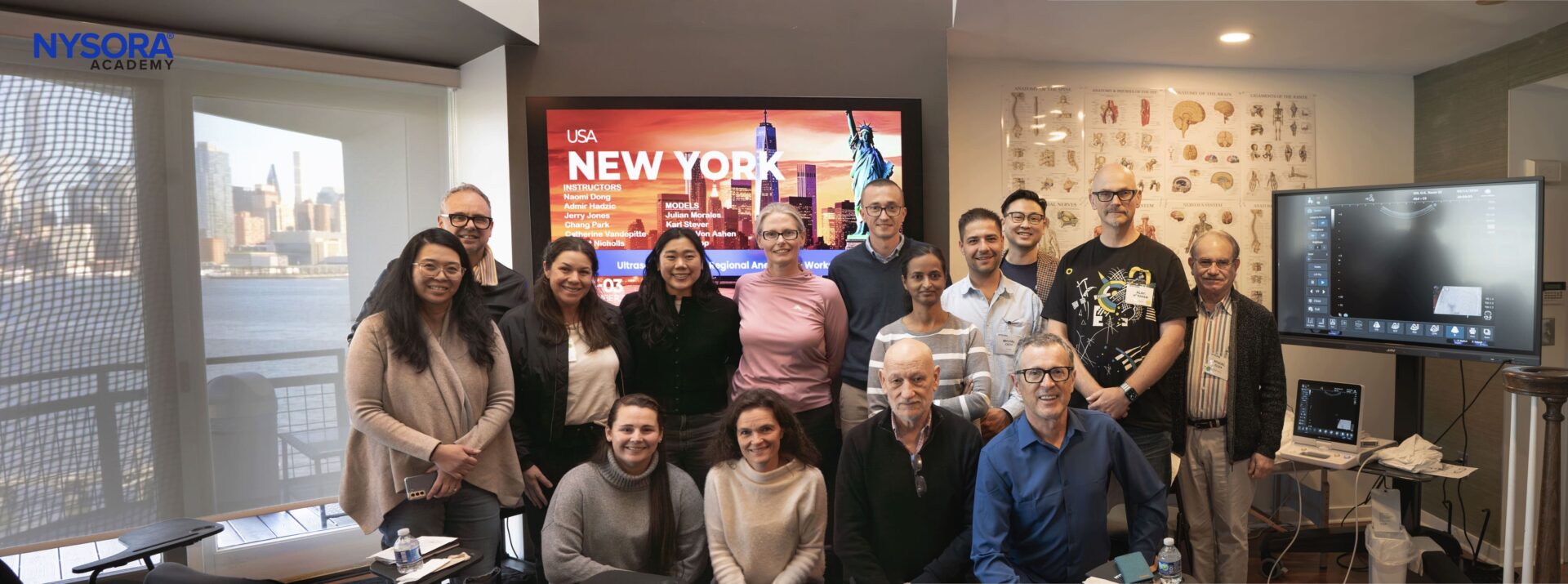
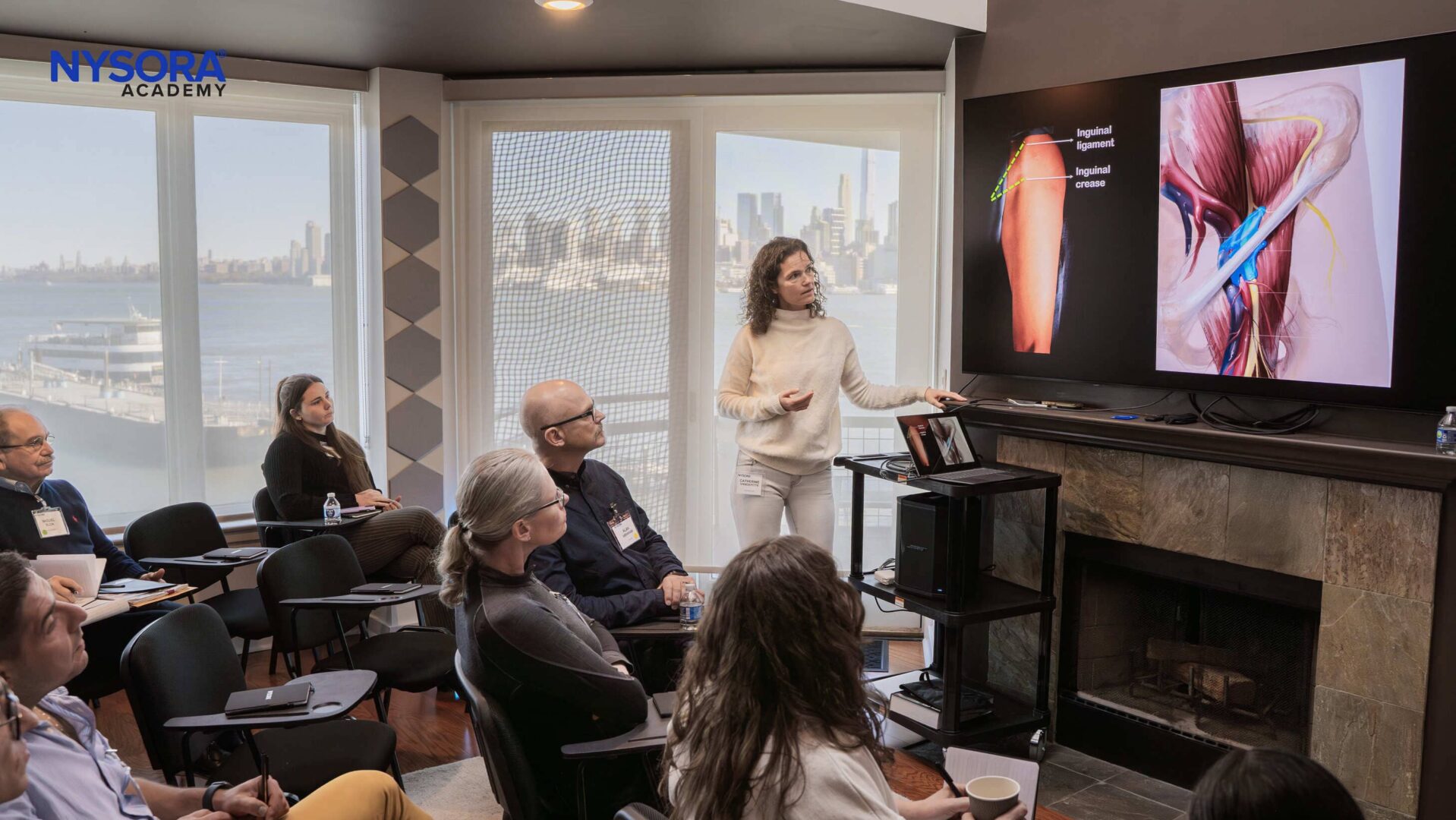
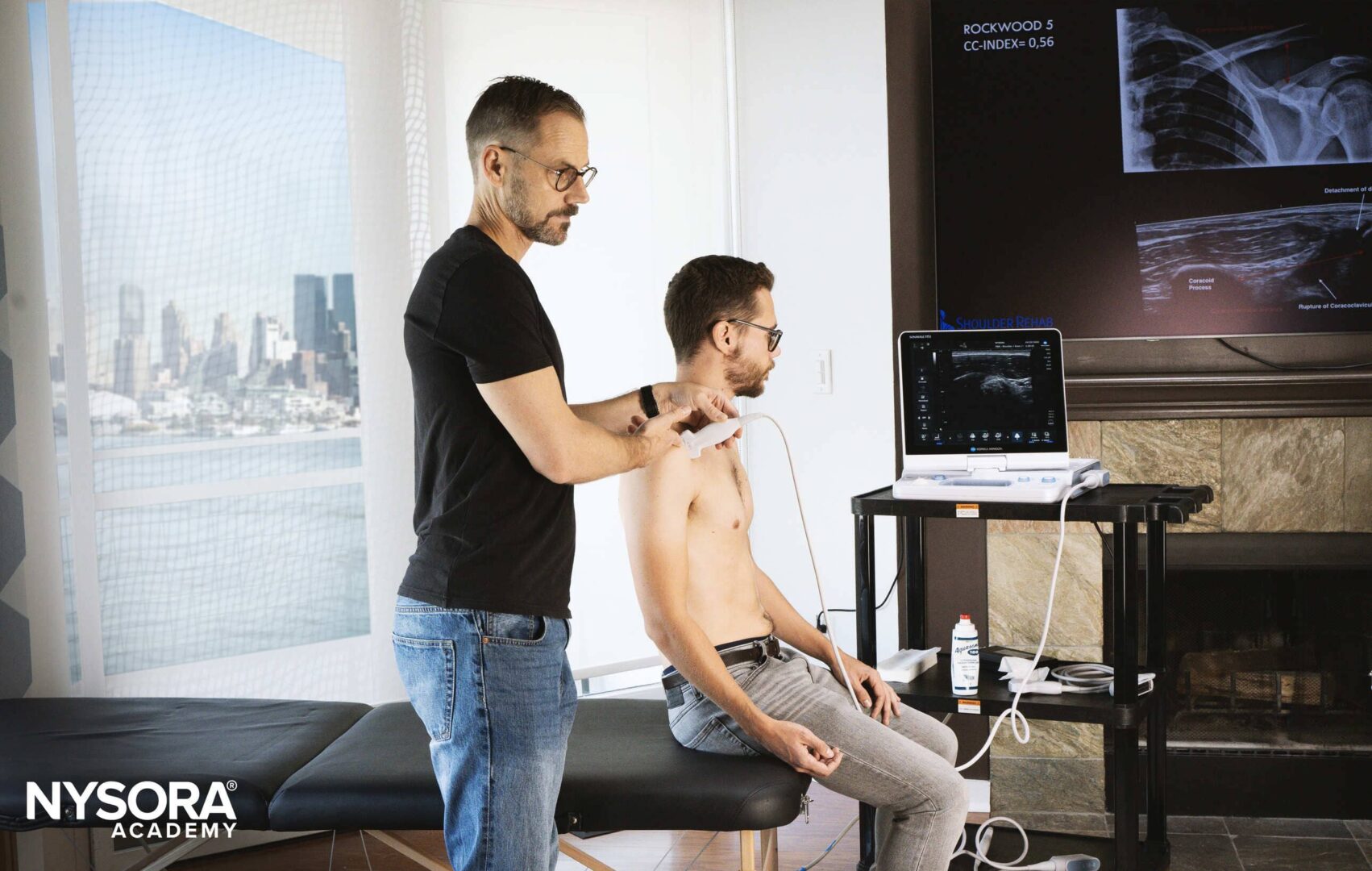
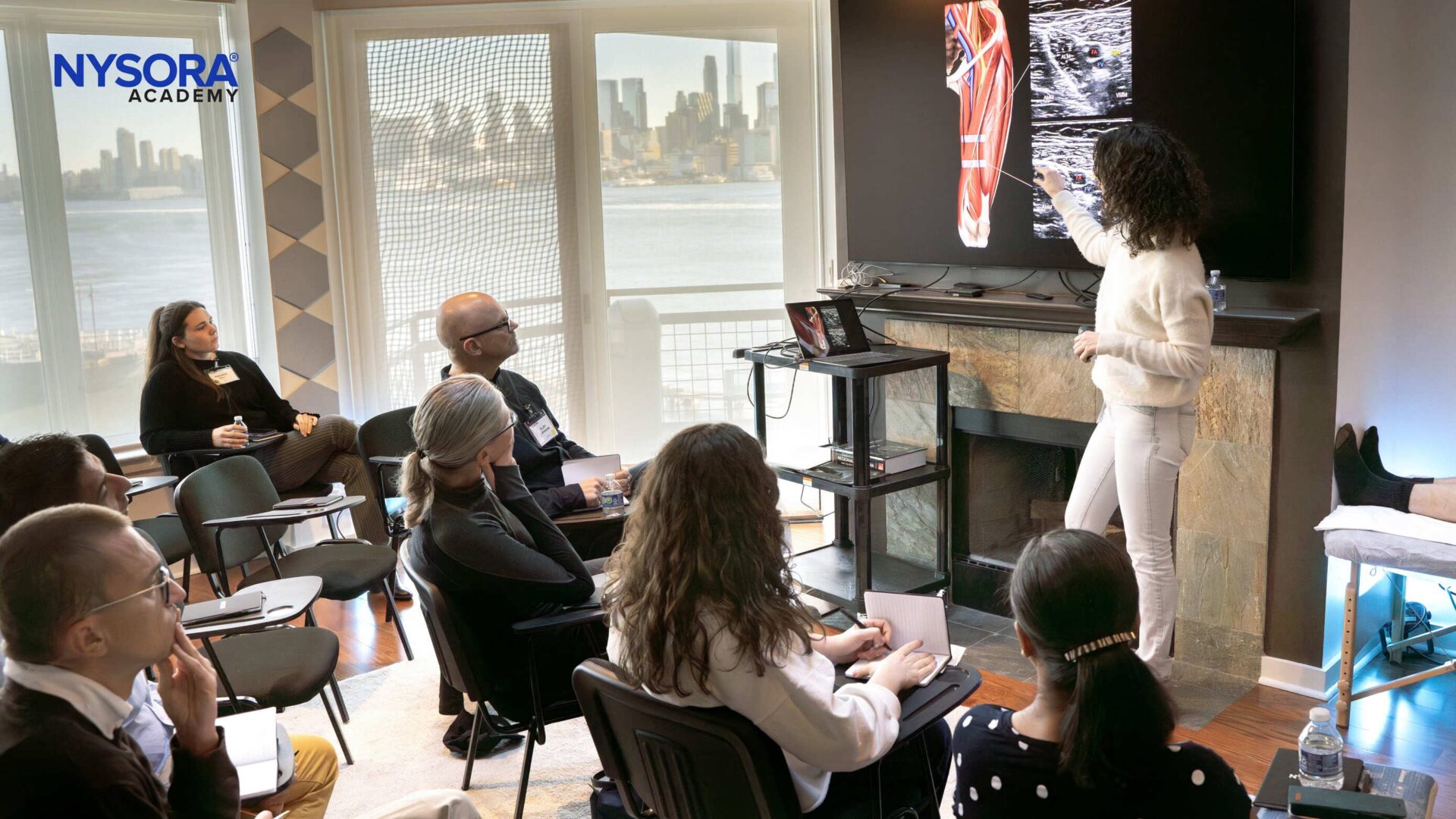
Boutique Workshops - NYSORA
Back to Events

NYSORA Workshops

NYSORA Workshops

Master Hands-On Skills 
with NYSORA Workshops

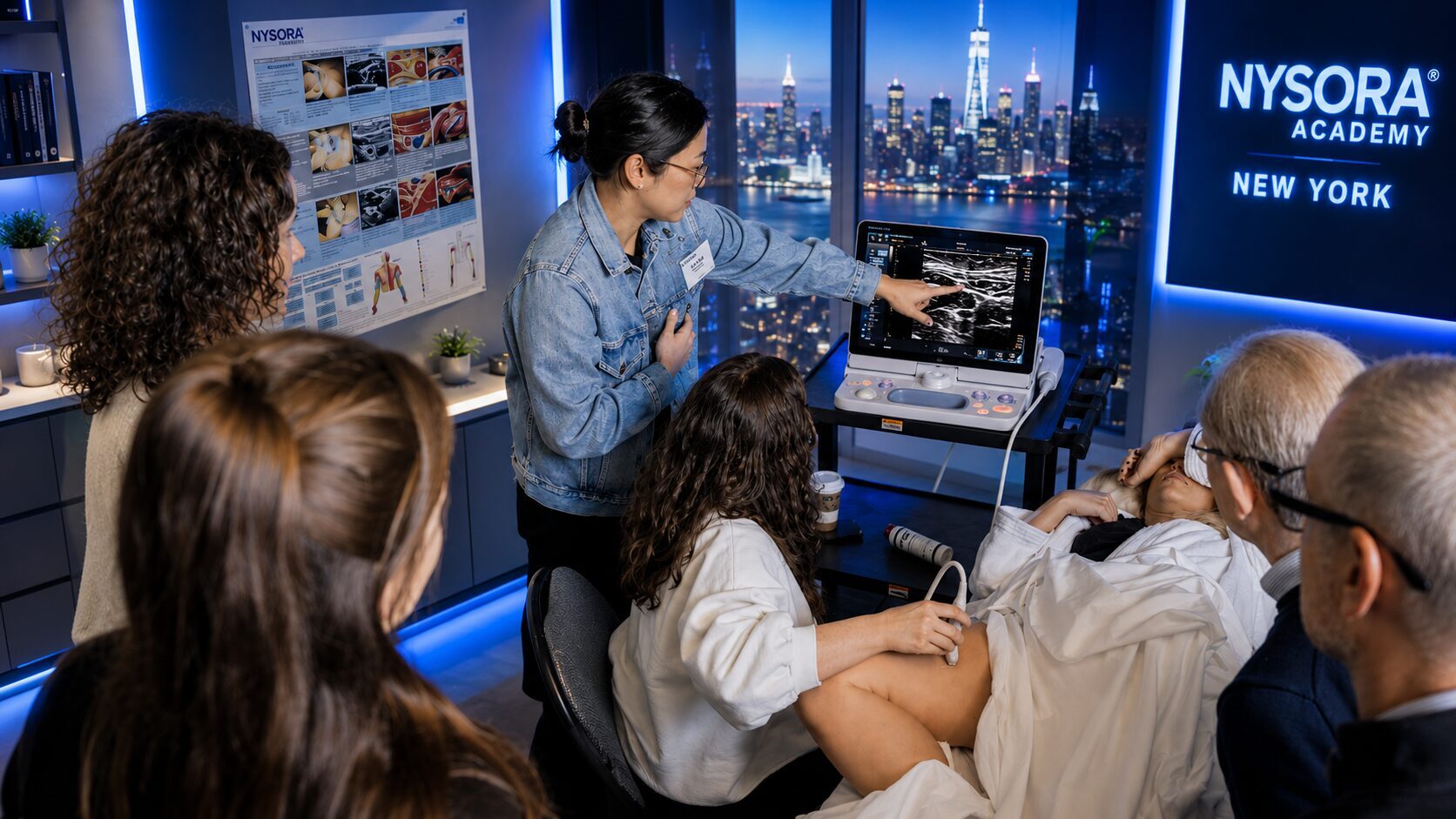
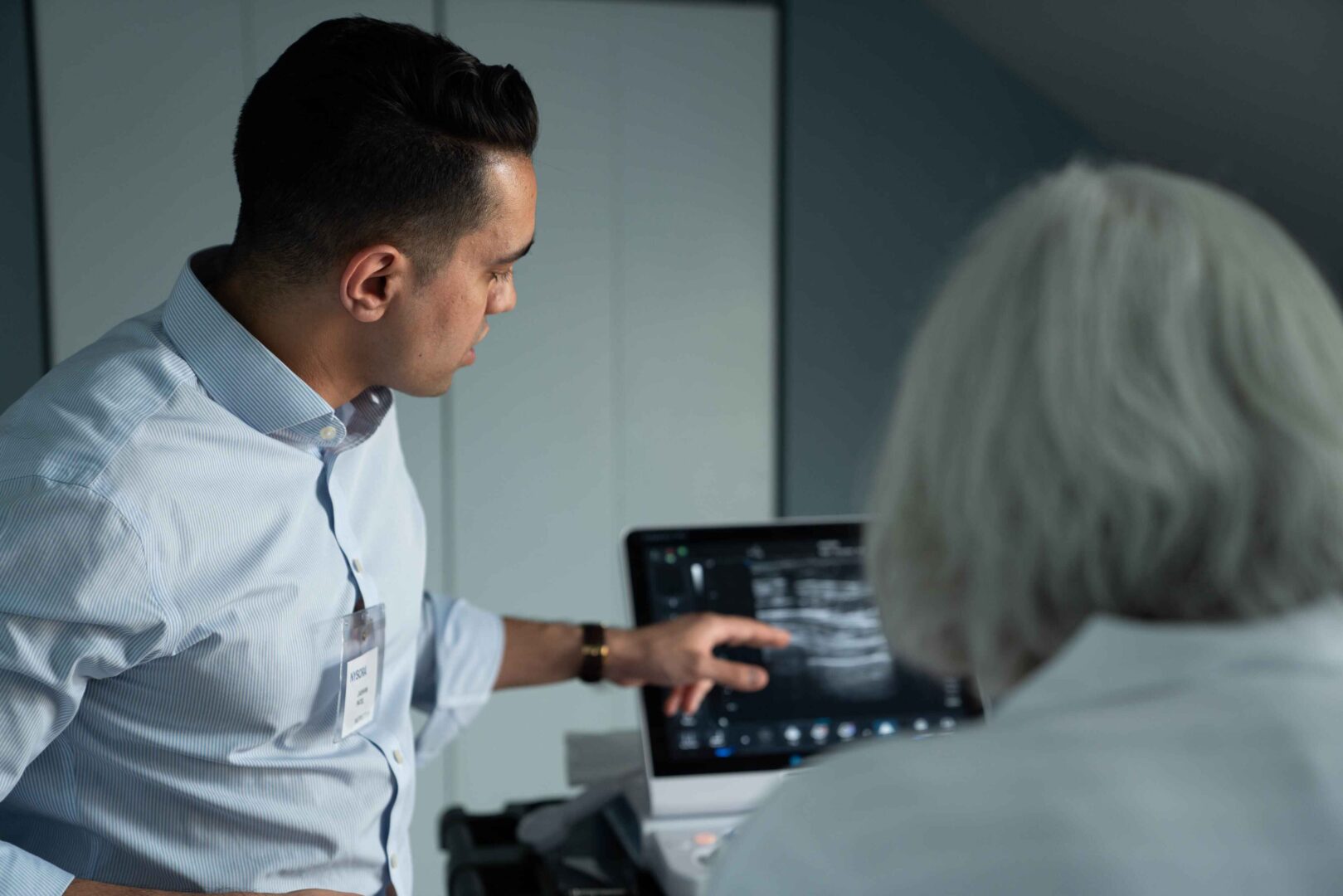
NYSORA Boutique Workshops combine standardized techniques, immersive anatomy education, and intensive hands-on training to help clinicians build real-world procedural confidence across regional anesthesia, pain, musculoskeletal ultrasound, and point-of-care ultrasound.

Learn before you arrive.
Train with experts.
Return to practice, ready to perform.

Inside NYSORA Workshops

Why NYSORA Workshops Are the Best in Class

Not just a course. A complete learning ecosystem.

Standardized Techniques

The program is standardized worldwide, ensuring the same structured NYSORA approach in every workshop - from New York to Sydney.

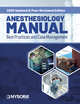
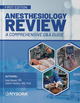
NYSORA Textbooks

NYSORA Applications

NYSORA360 e-learning platform

NYSORA Workshops

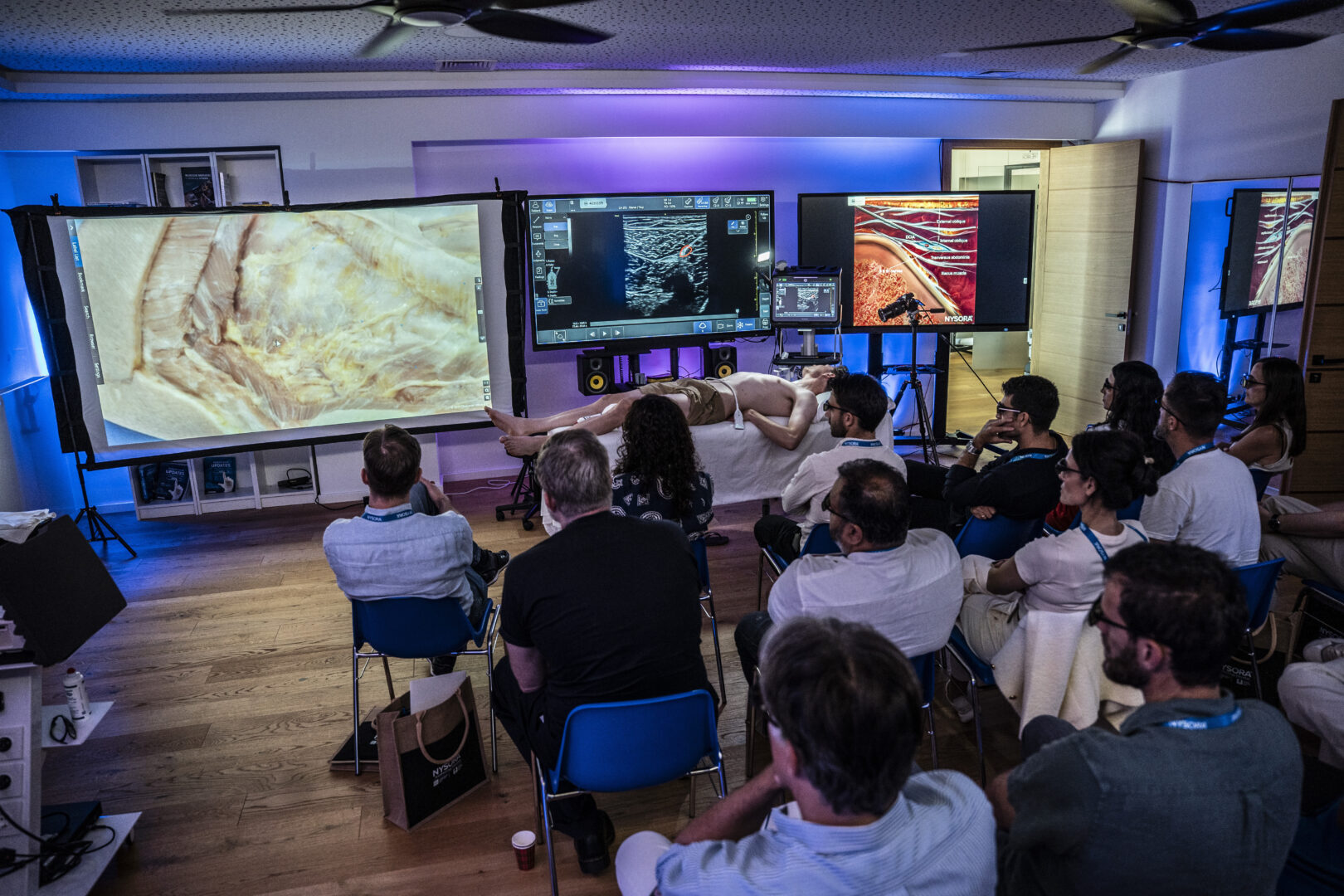
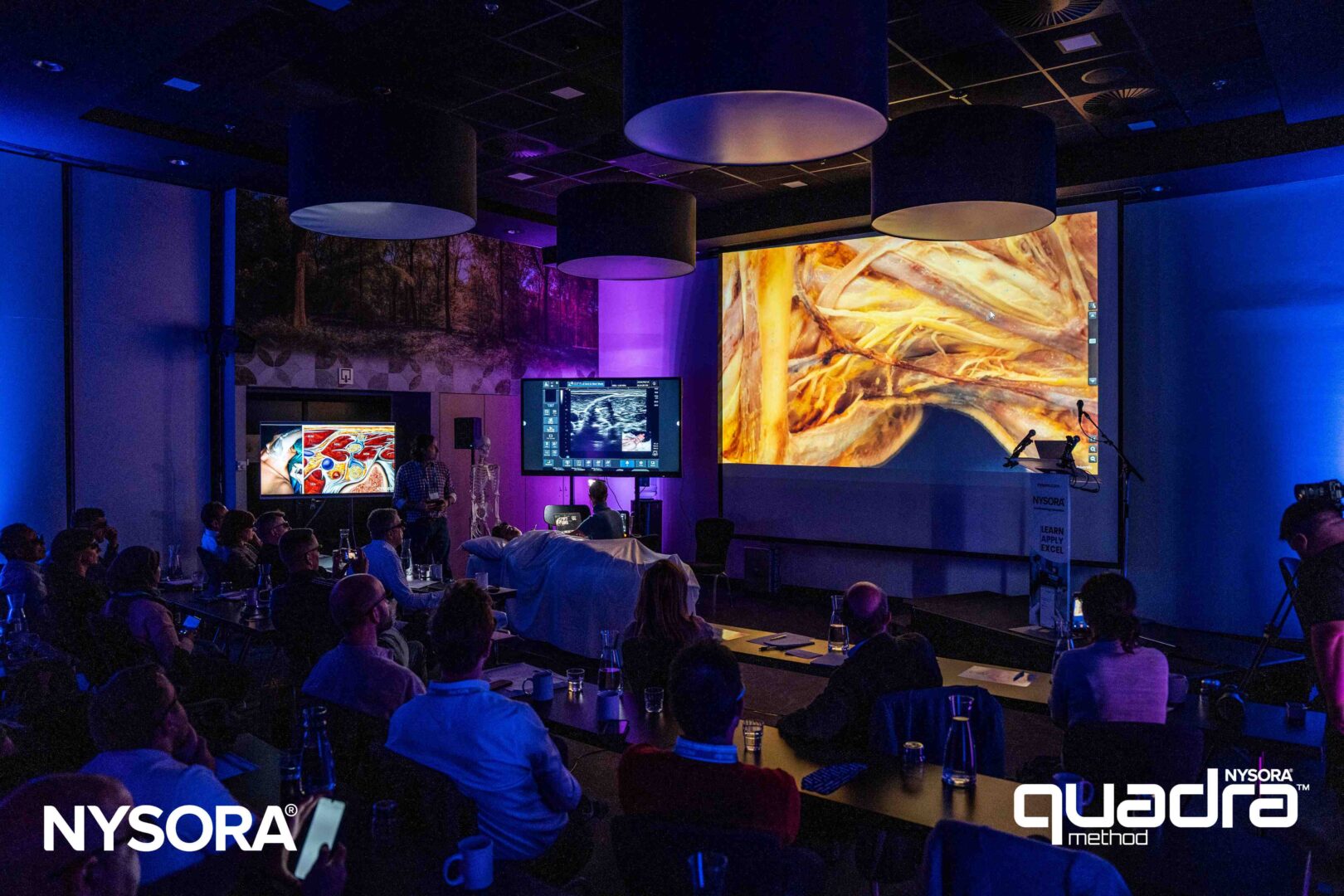
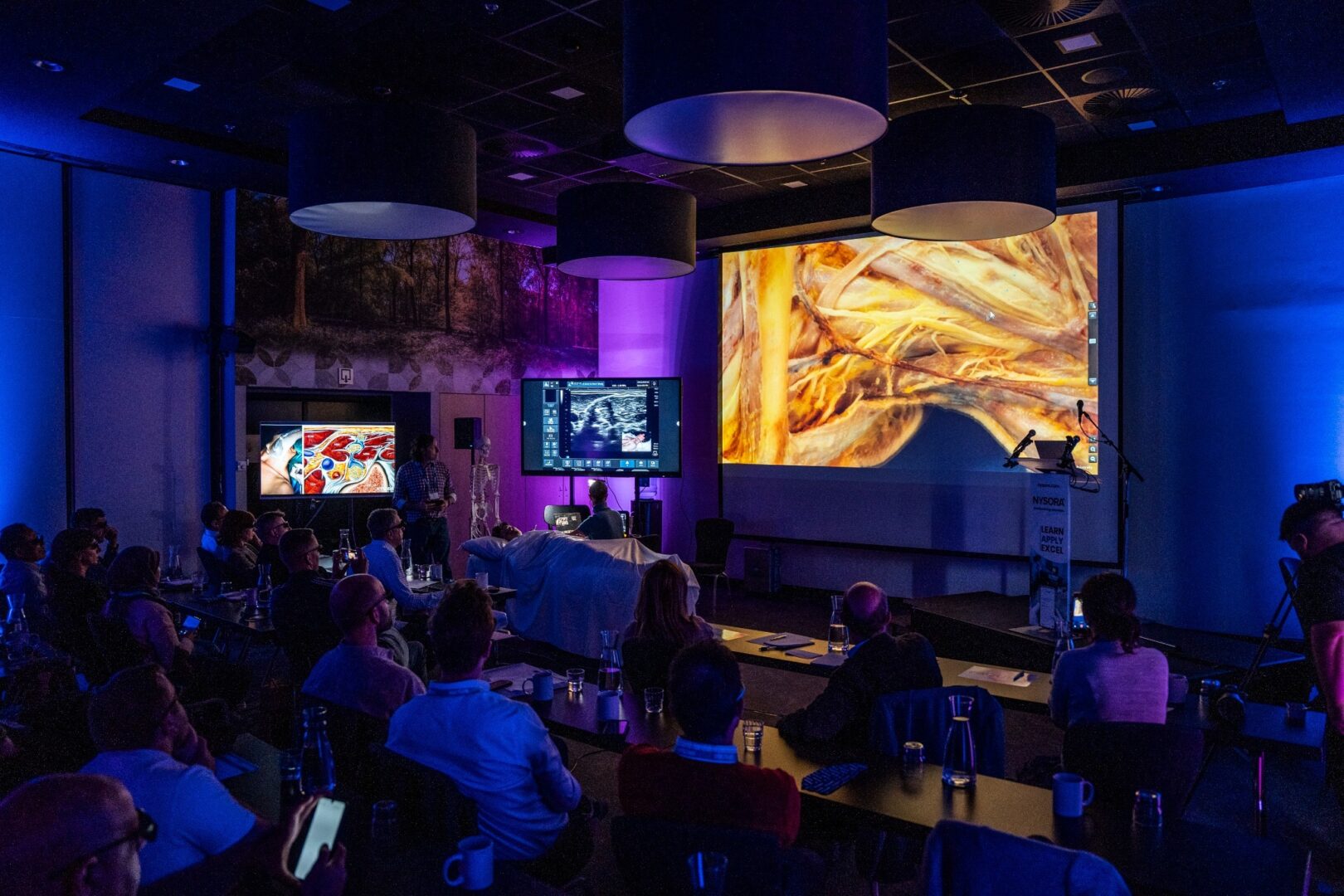
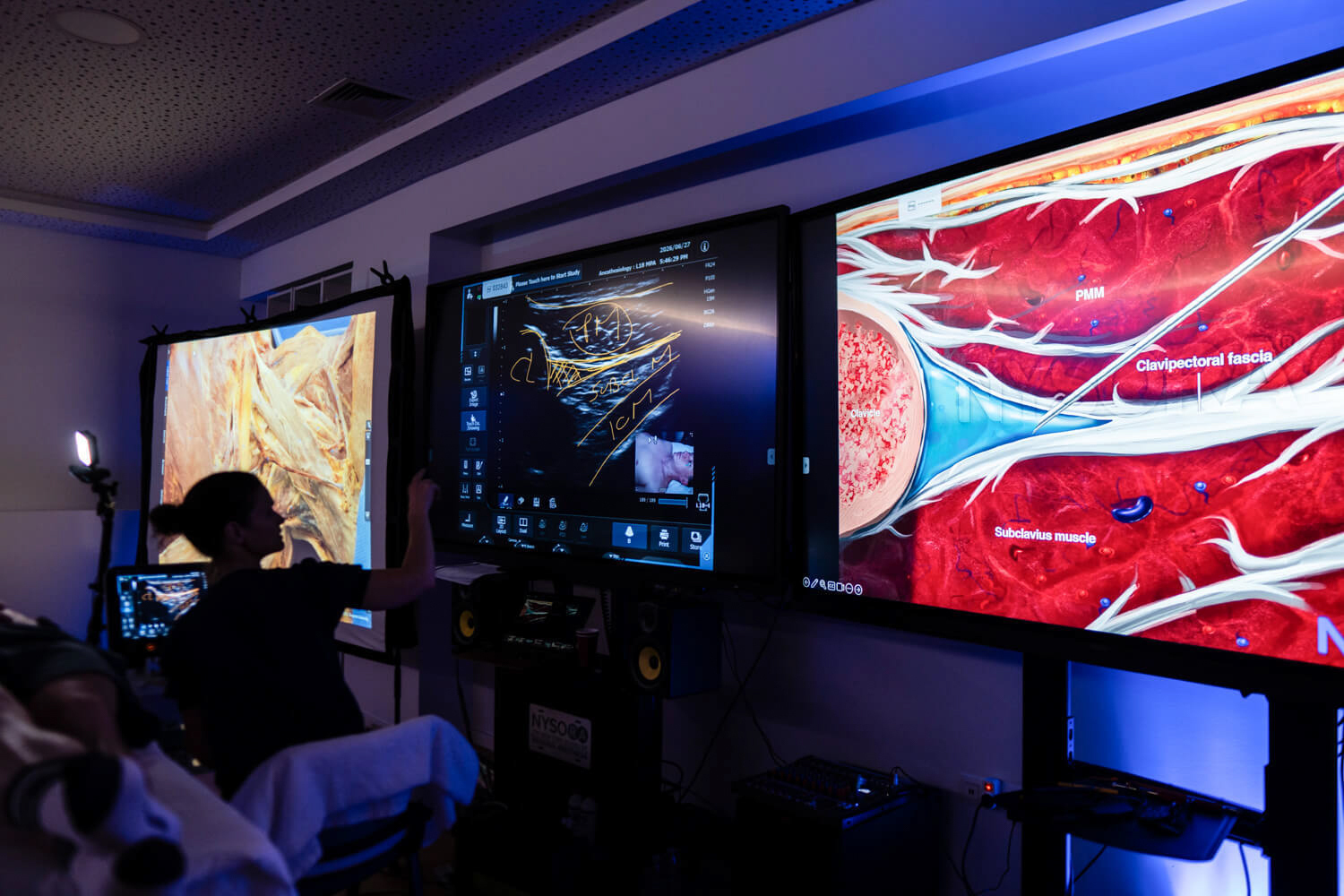
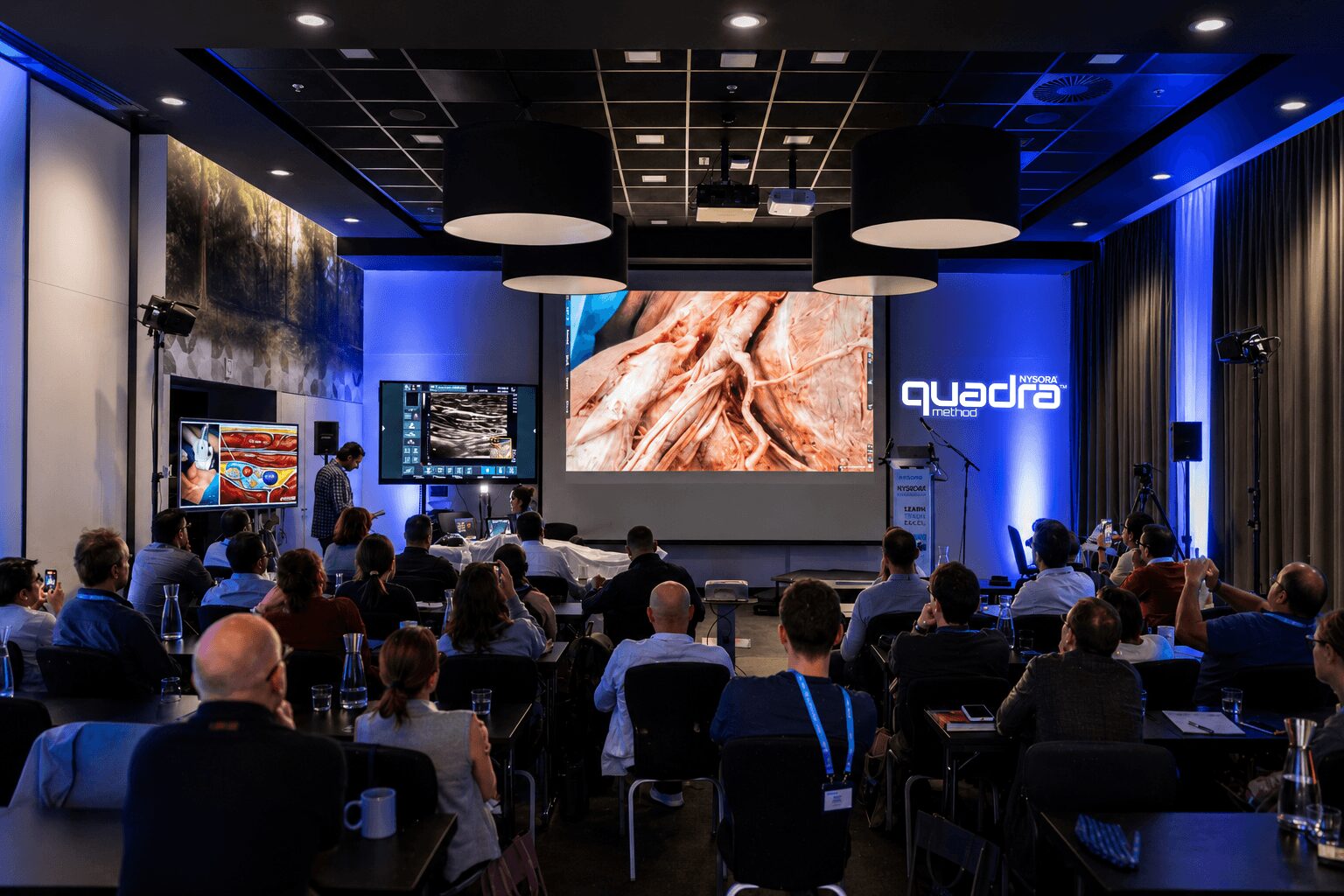
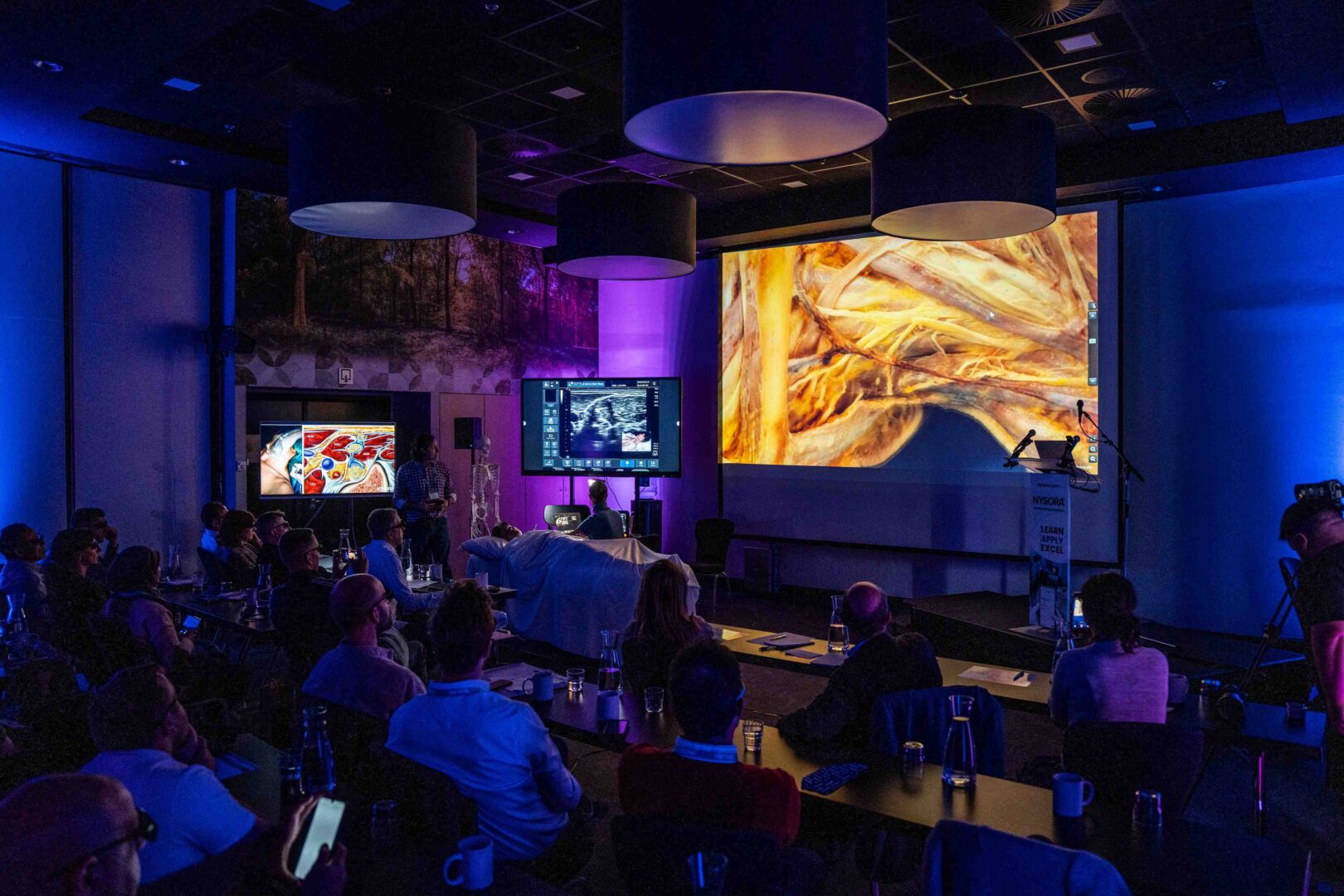
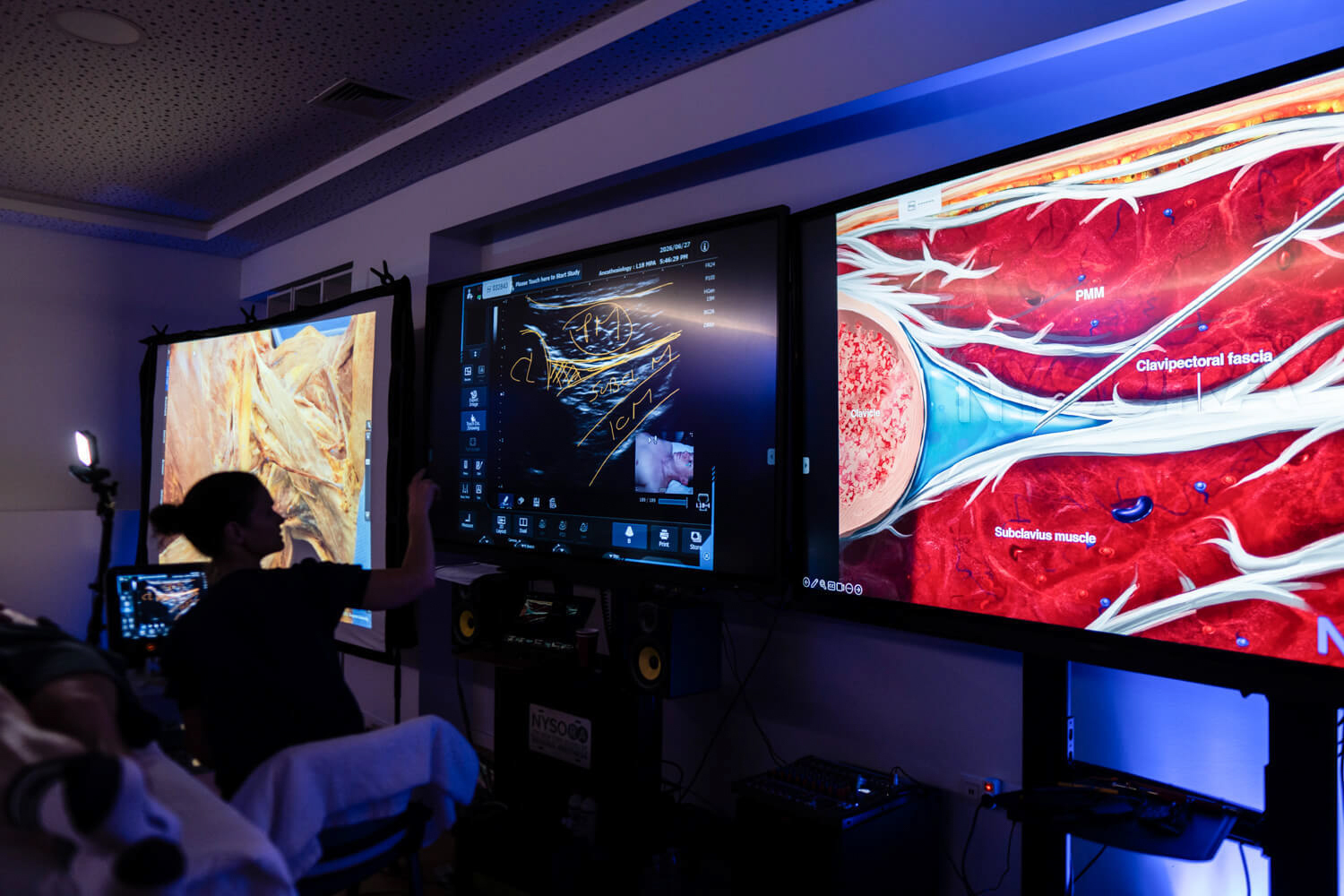
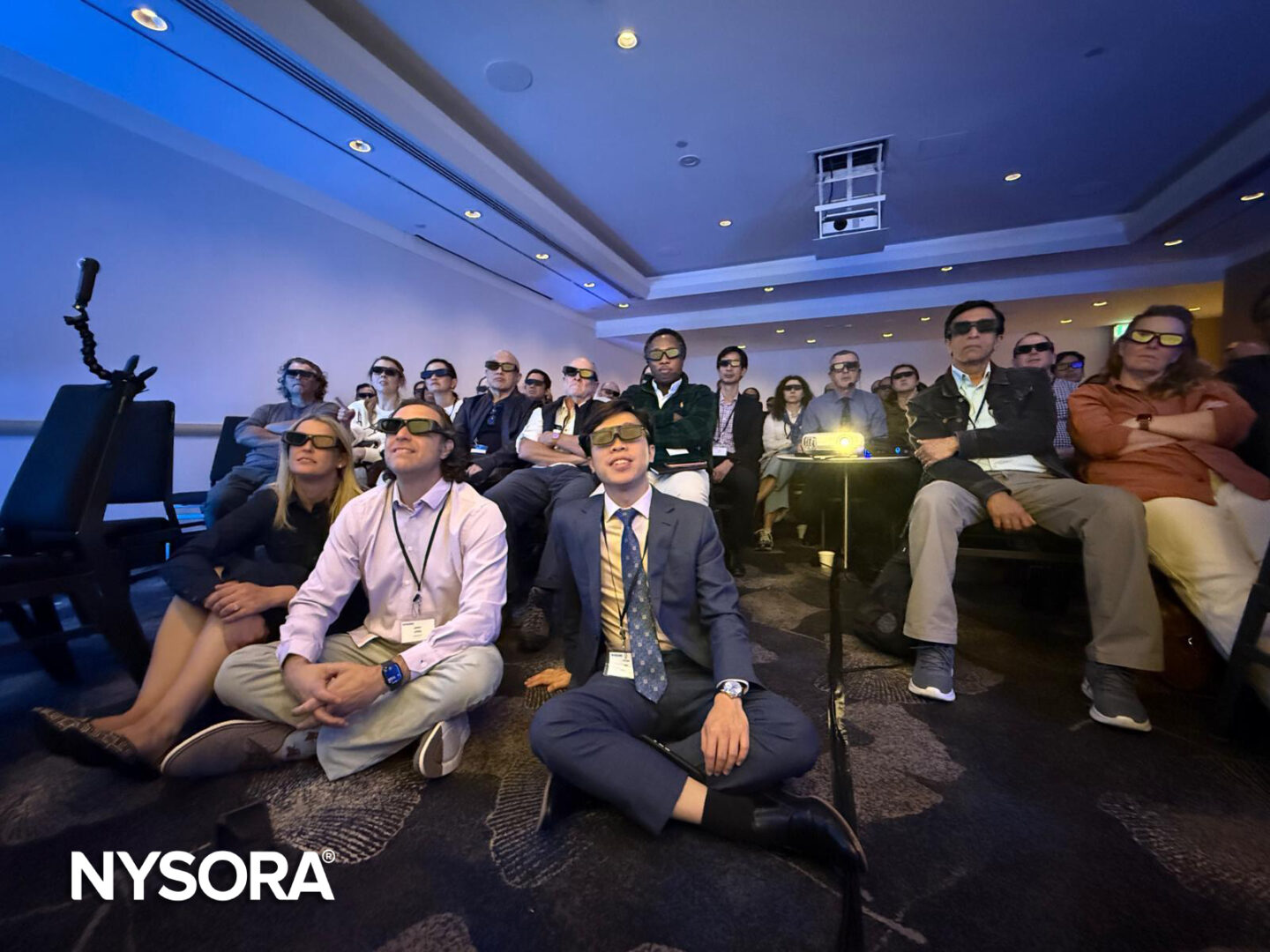
3D Anatomy Understanding

Understanding regional anesthesia requires seeing anatomy in layers.

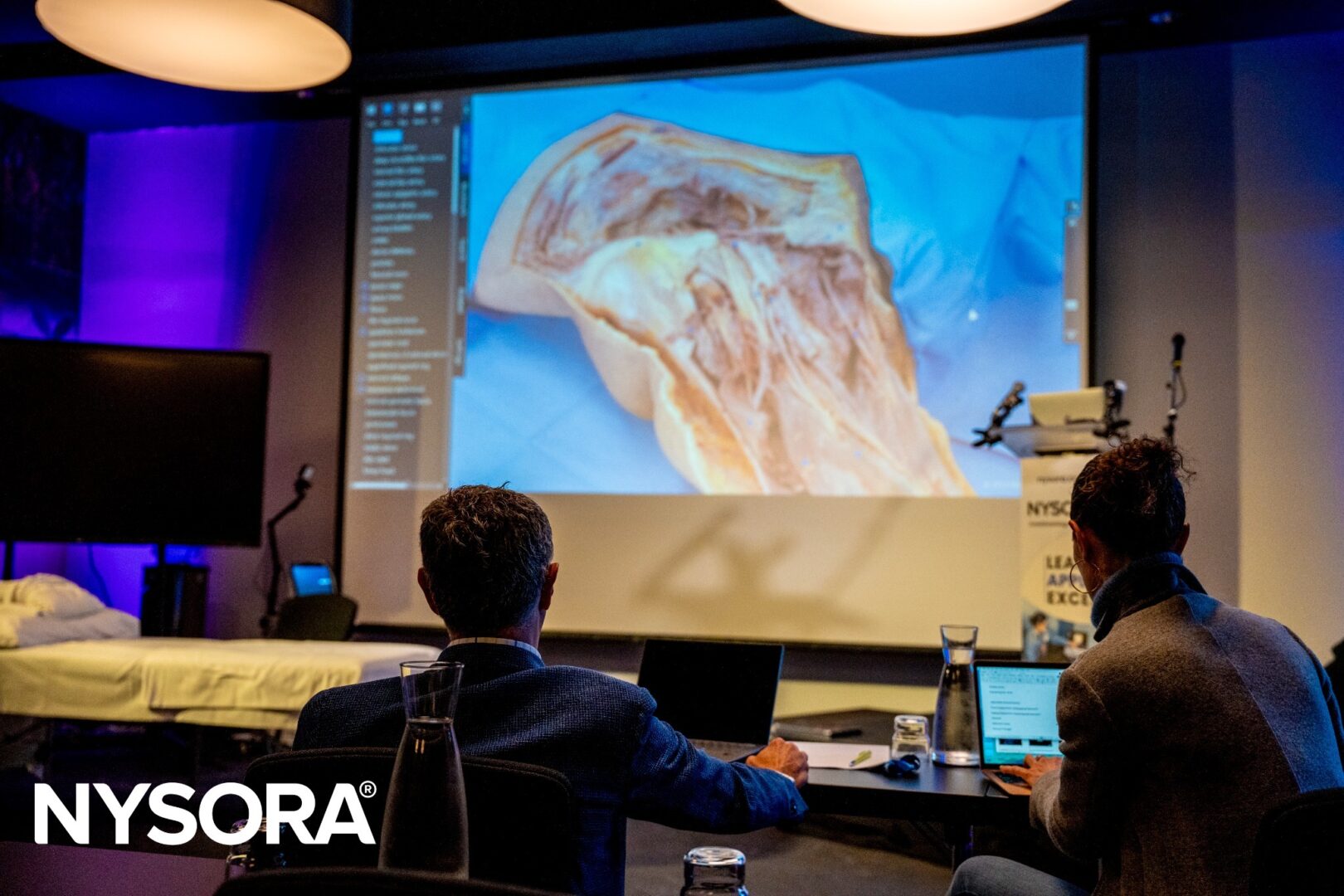
3D virtual cadaver dissection

Real clinical ultrasound images

Reverse ultrasound animations

NYSORA anatomical illustrations

Boutique Learning
Experience

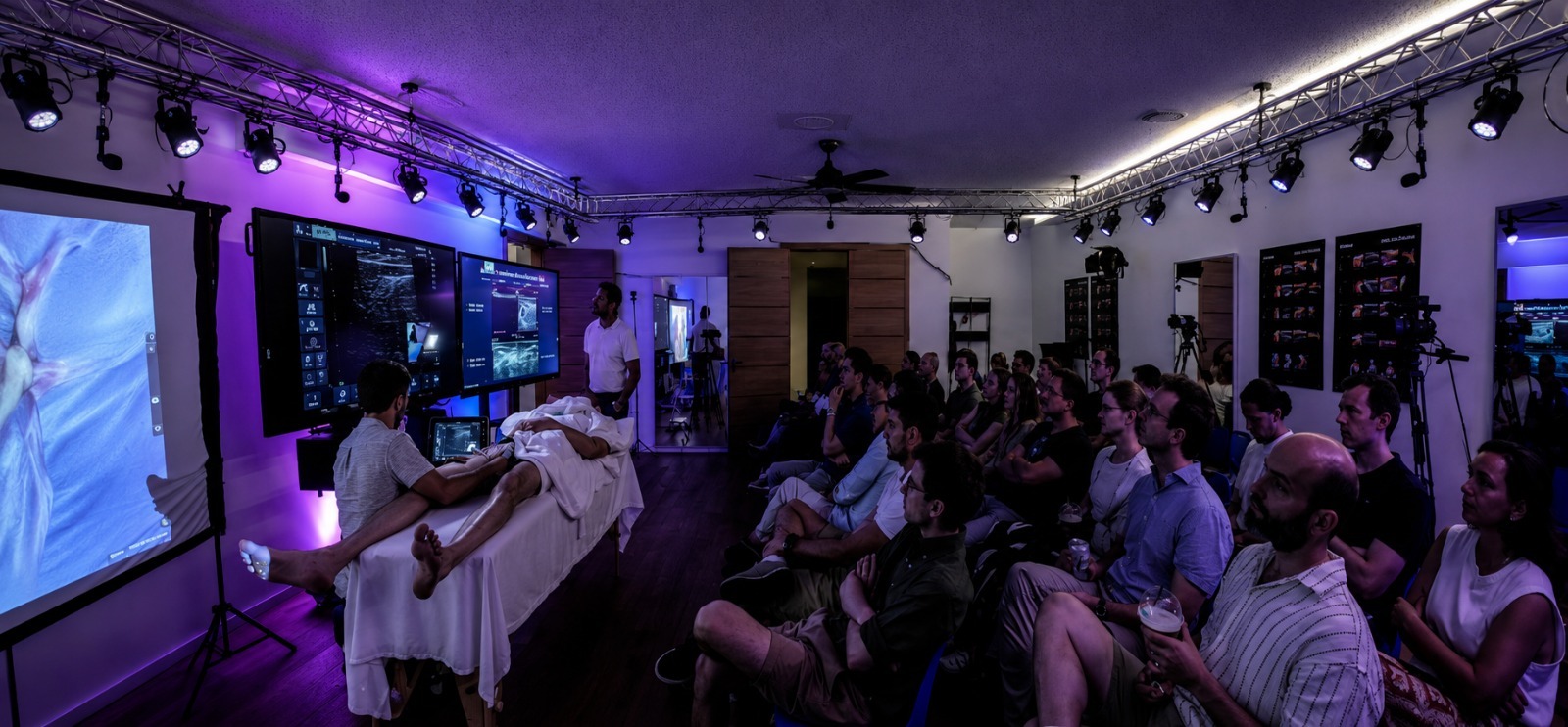
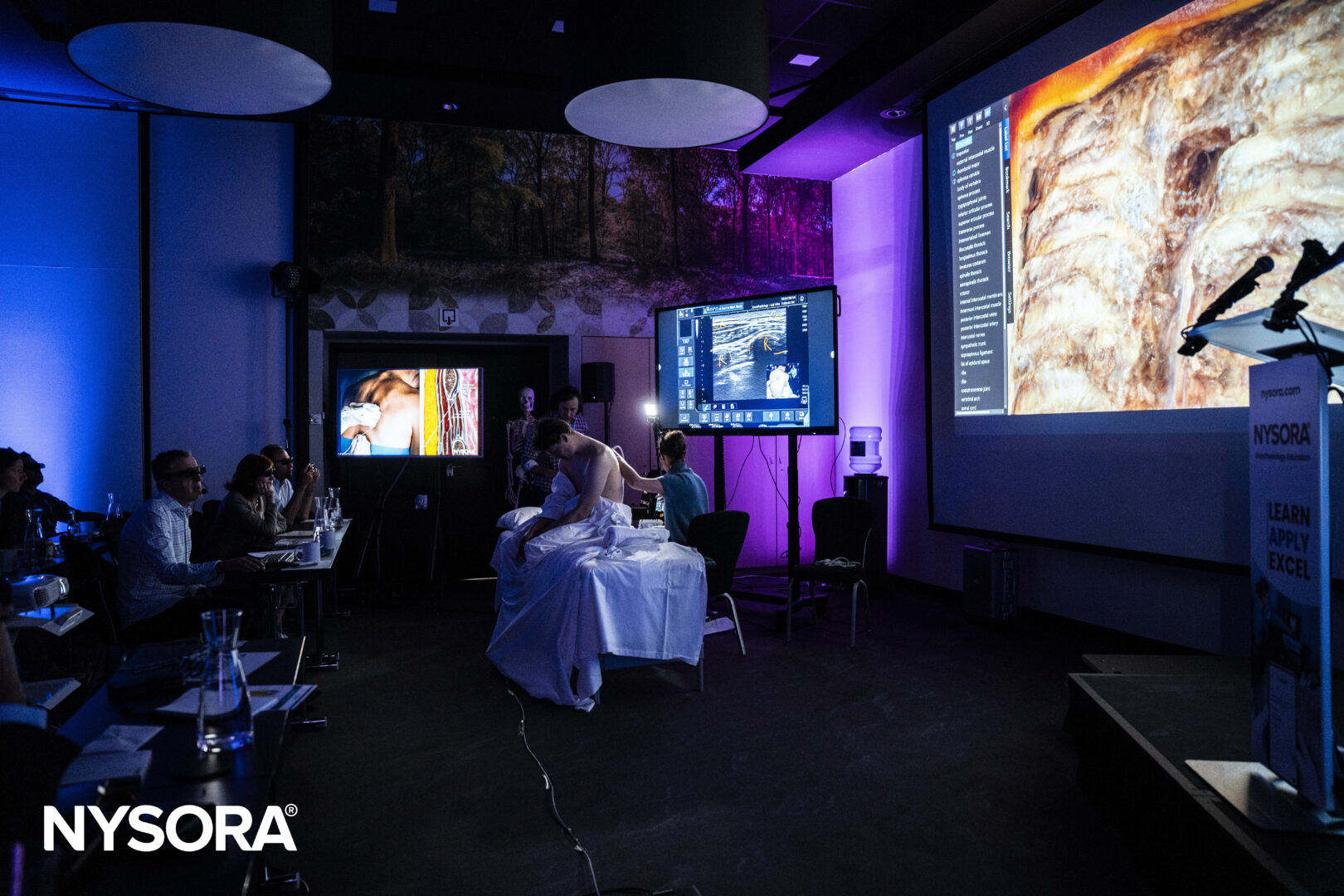
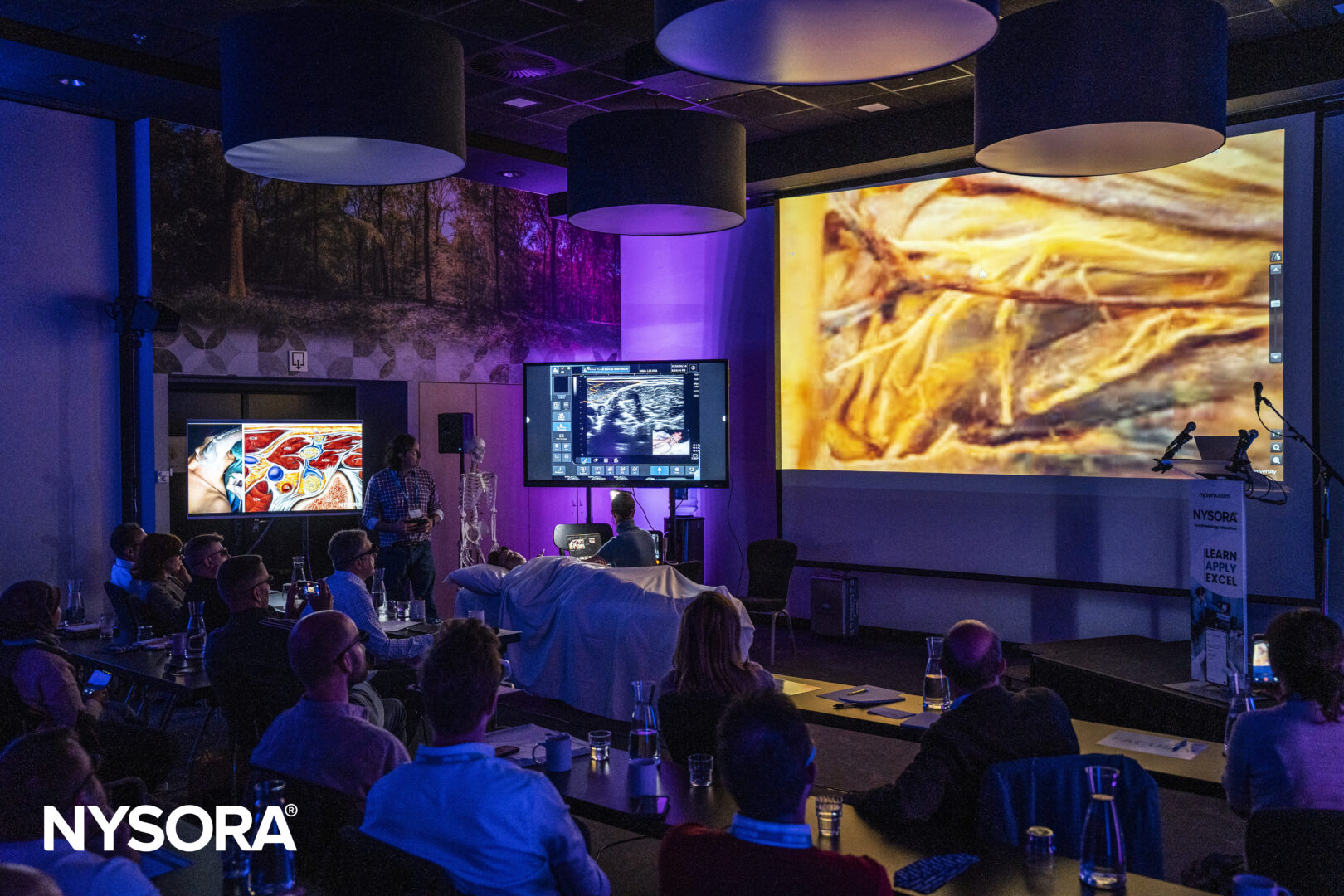
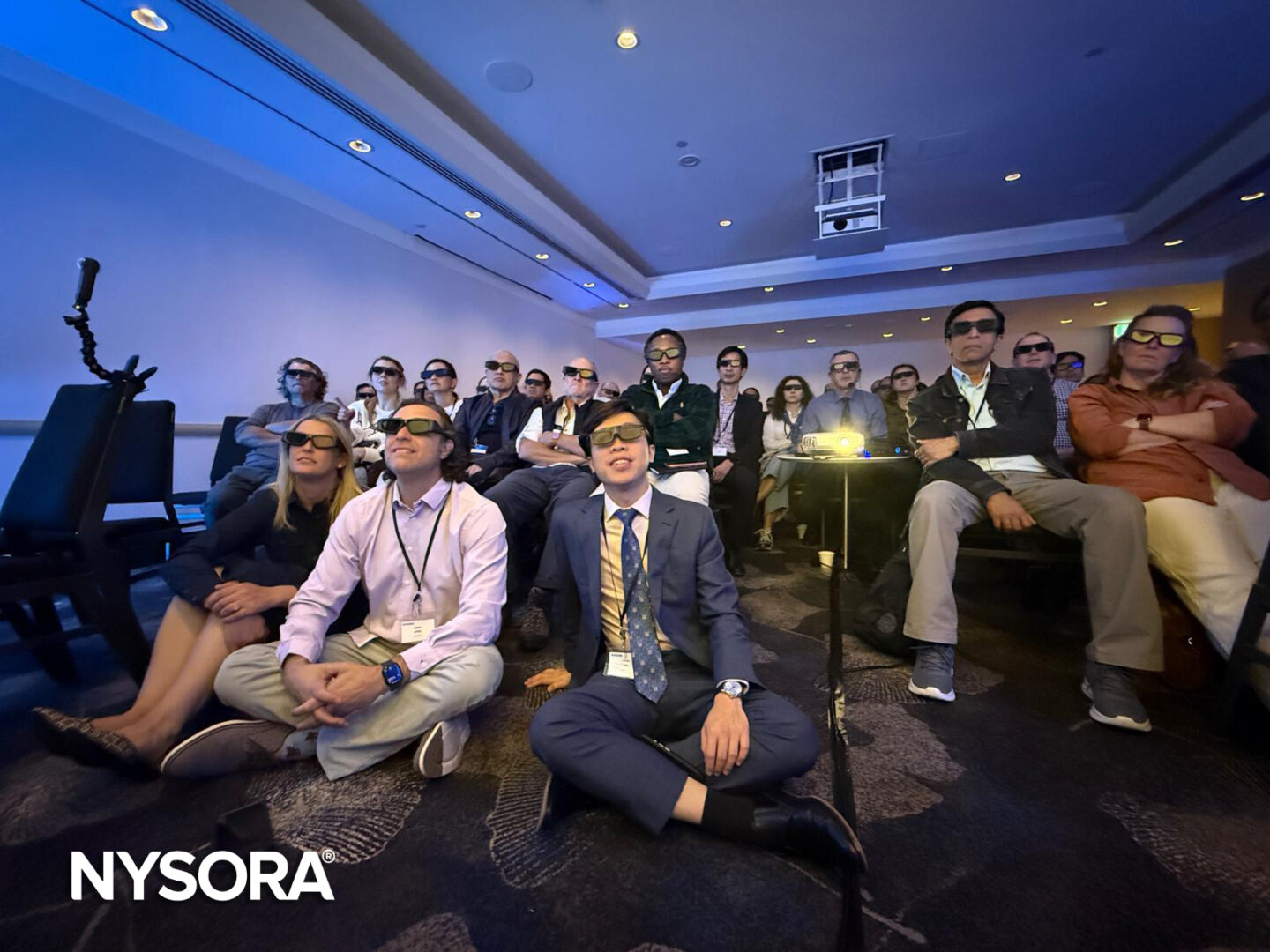
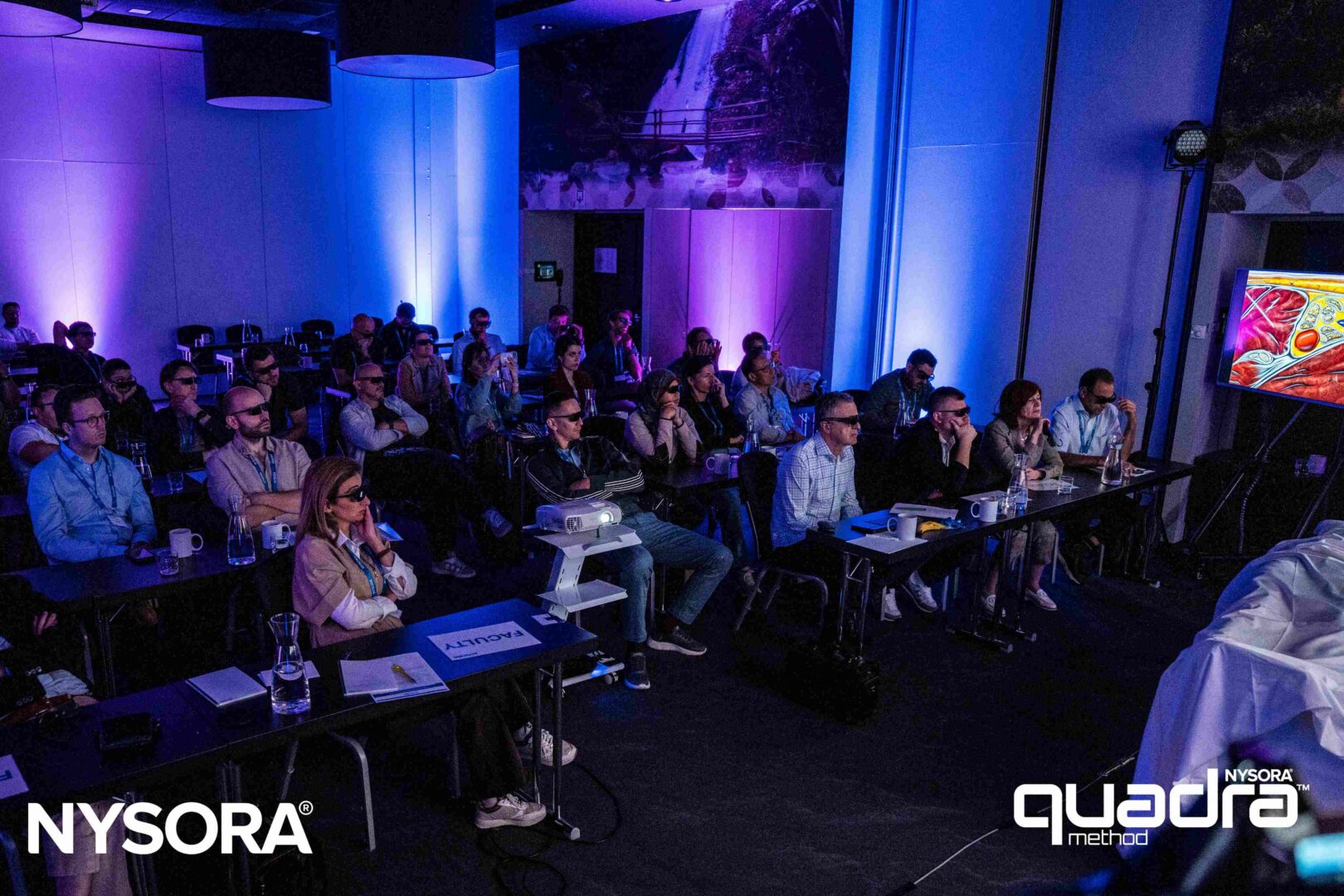
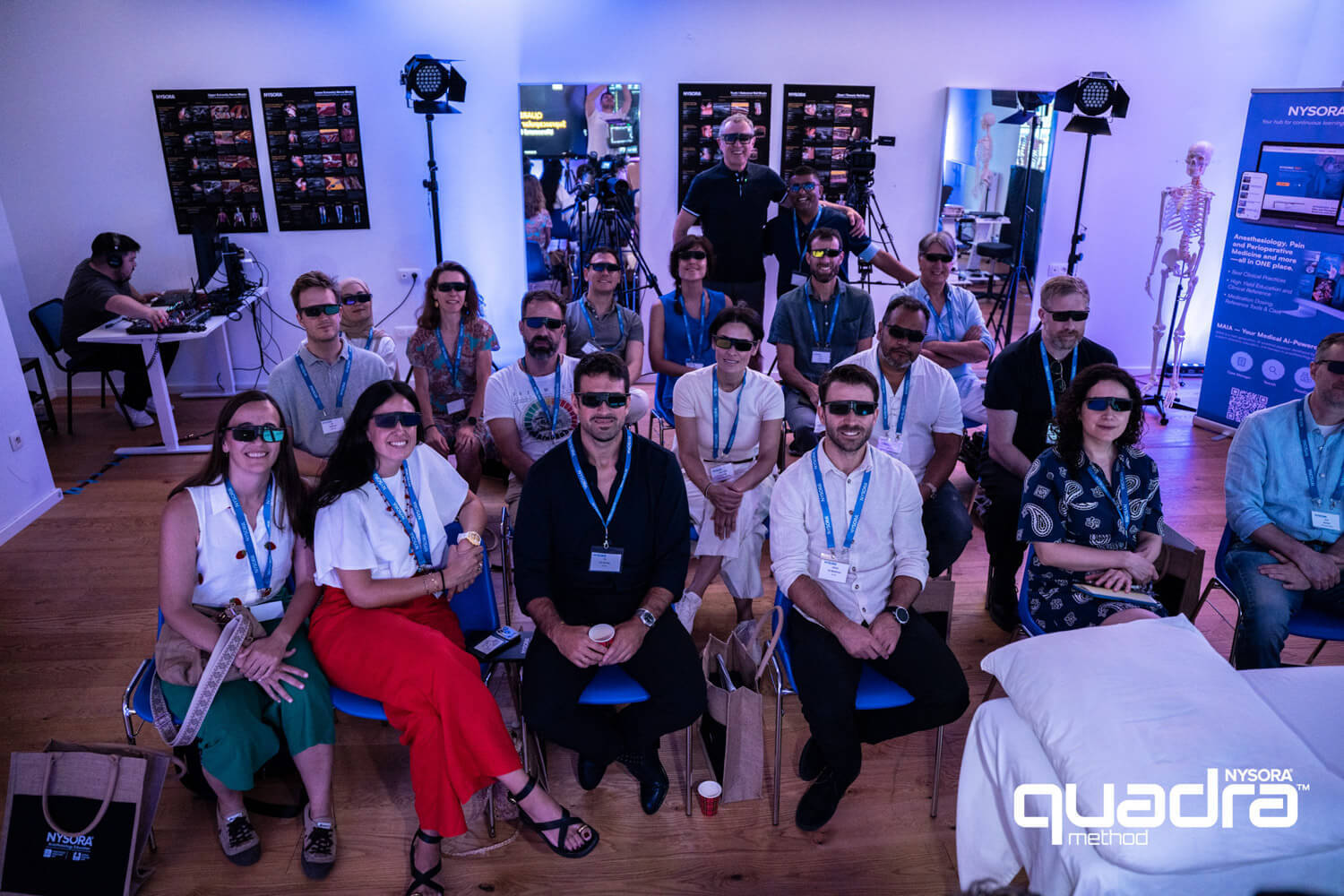
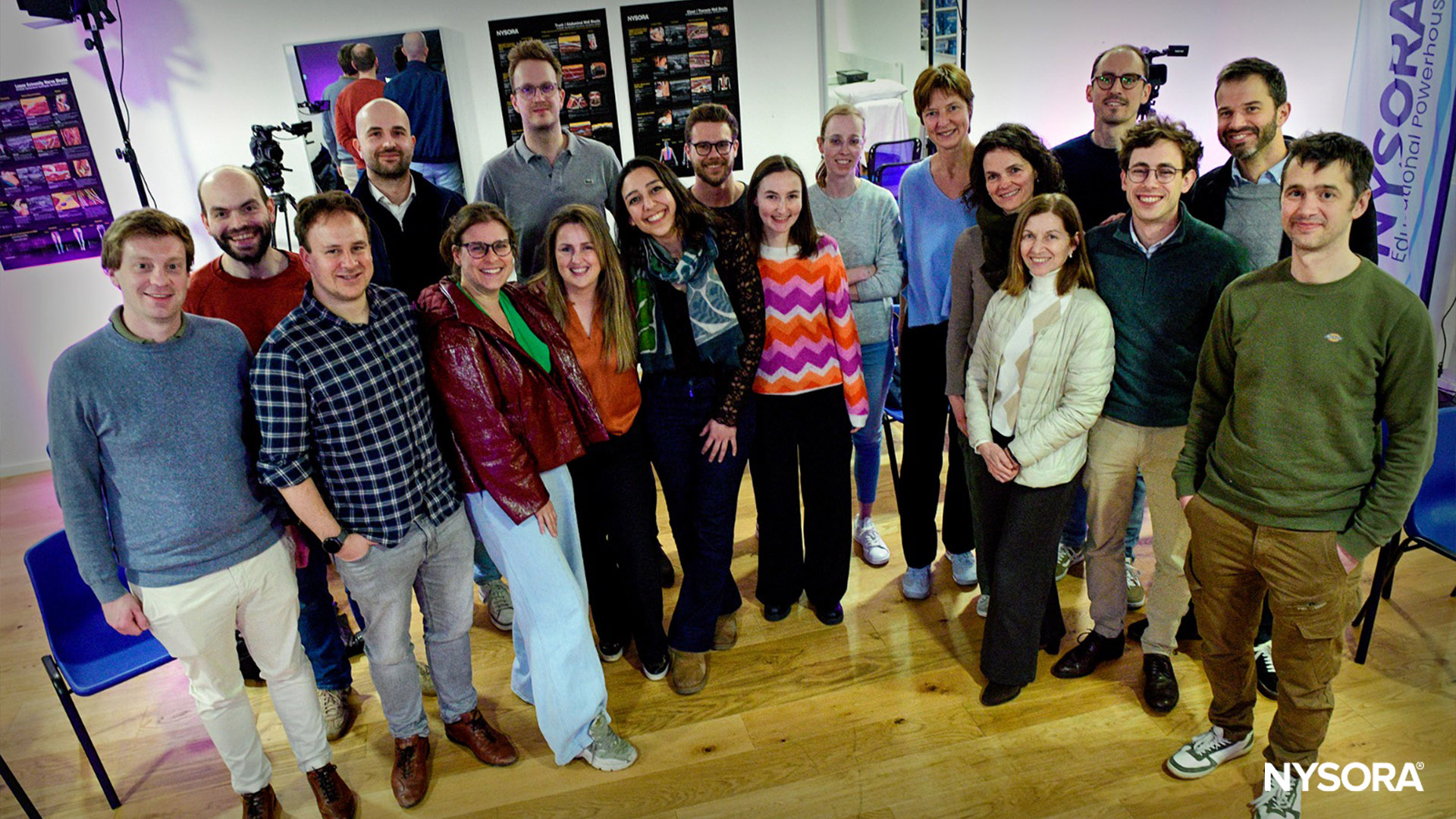
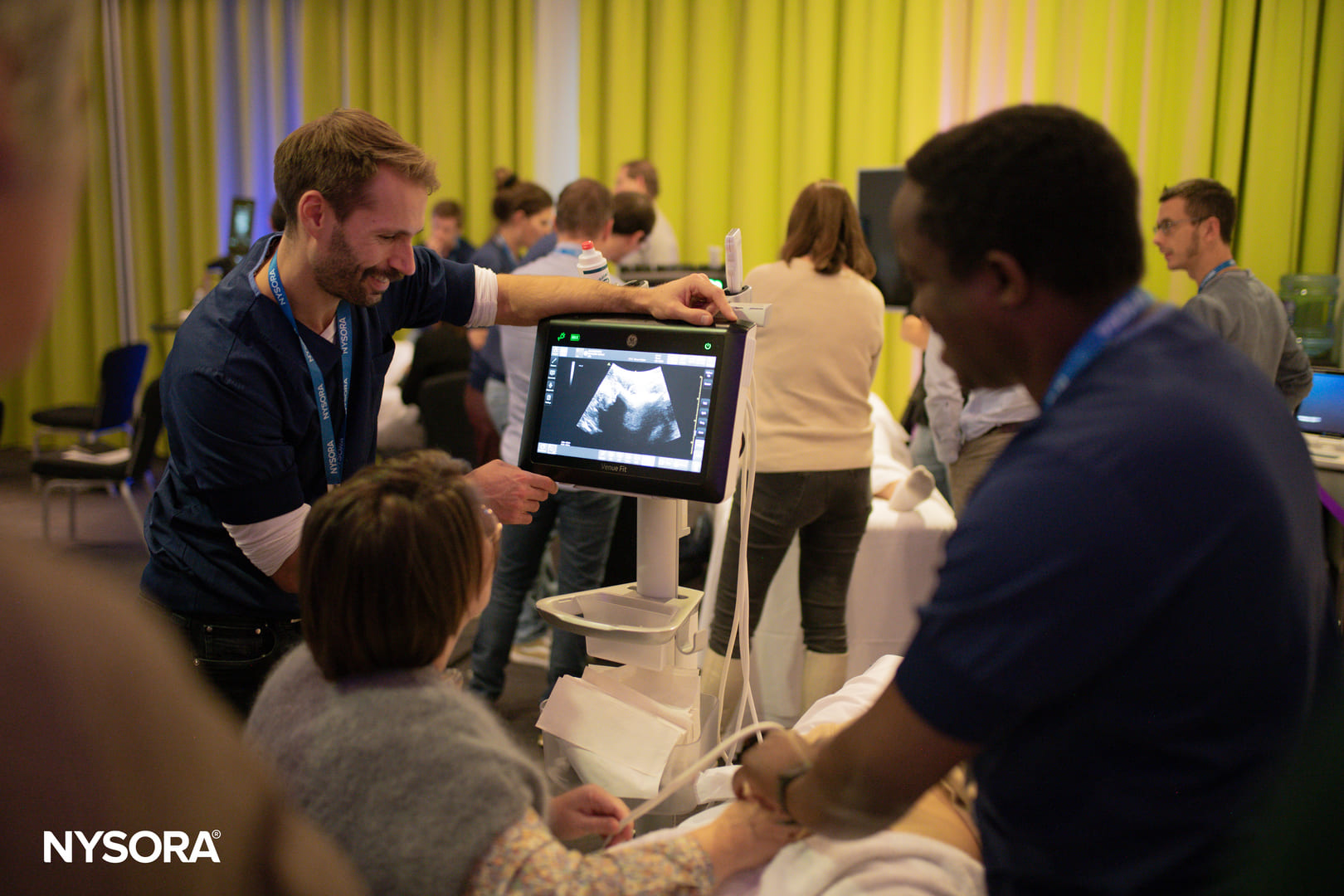
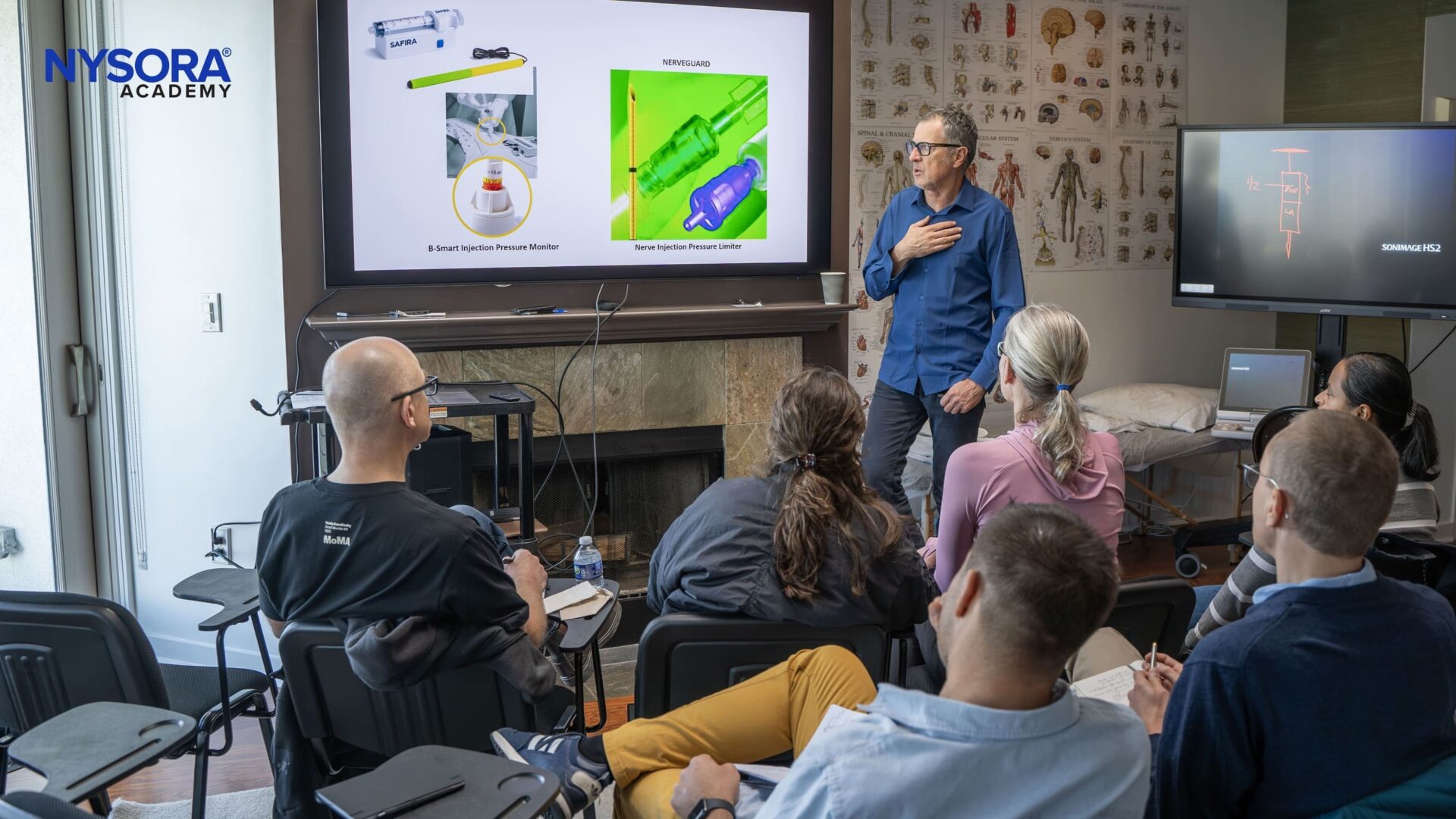
Unlike large conference courses, NYSORA workshops are designed as boutique learning environments.

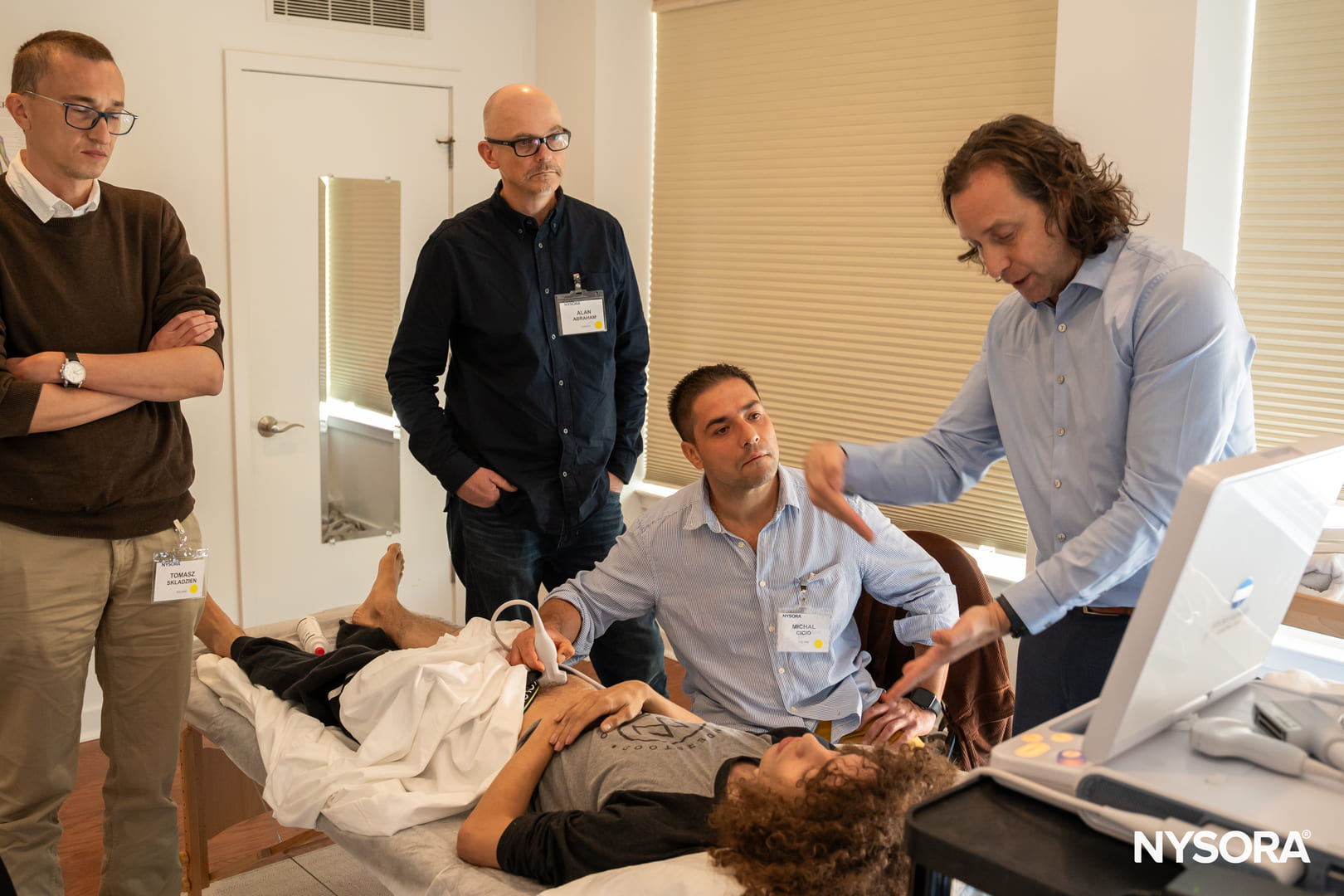
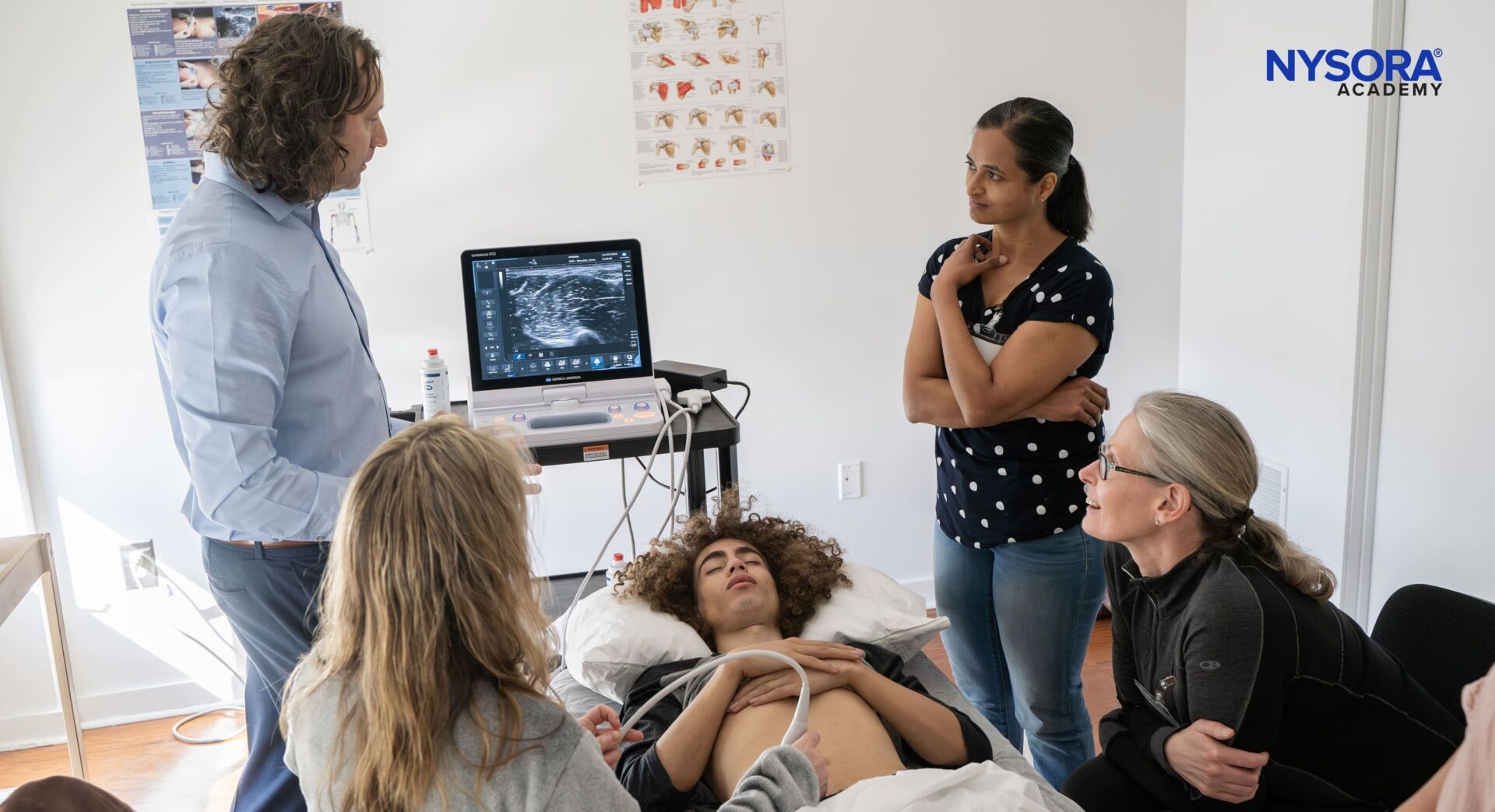
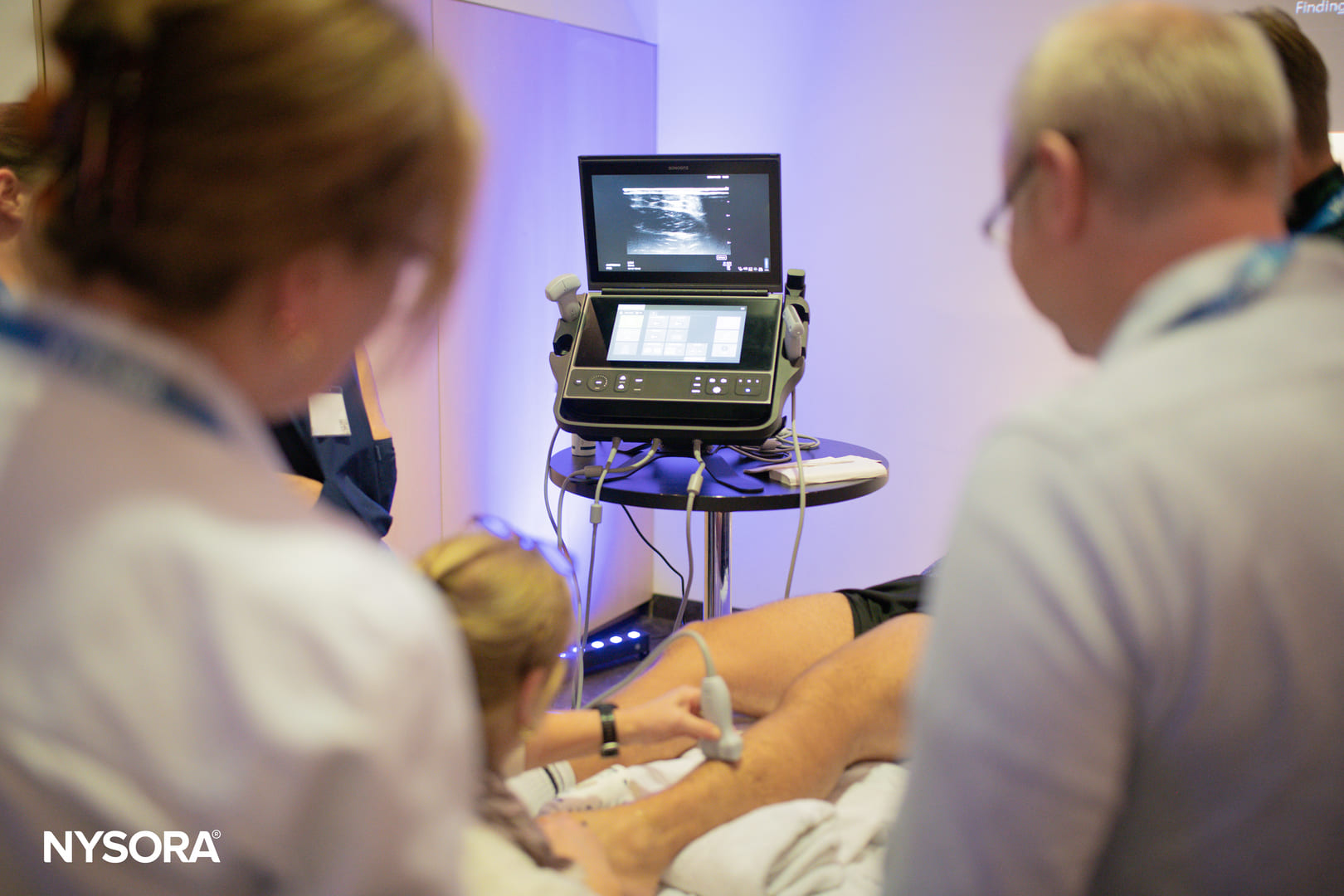
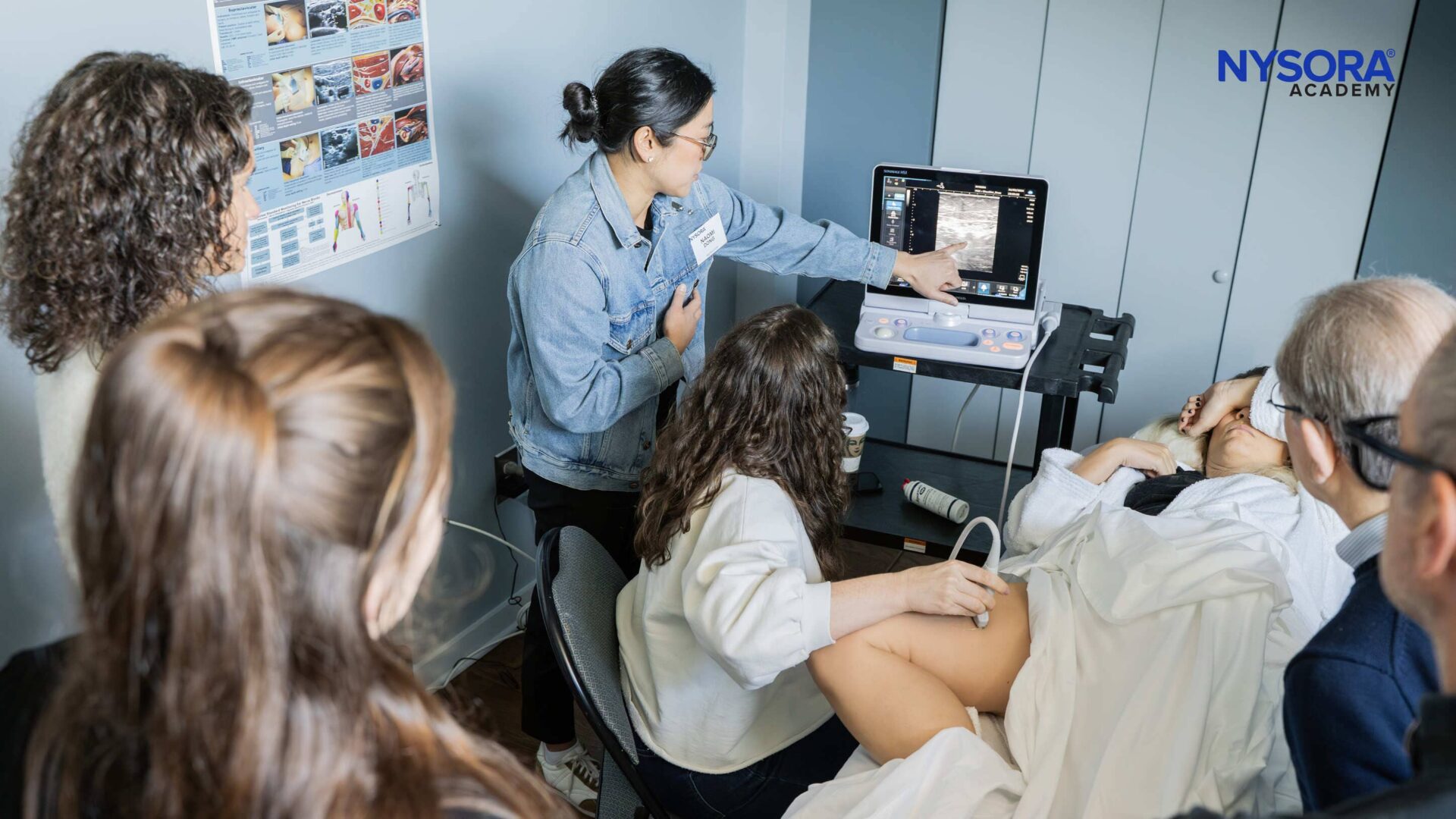
Small group interaction

Direct faculty access

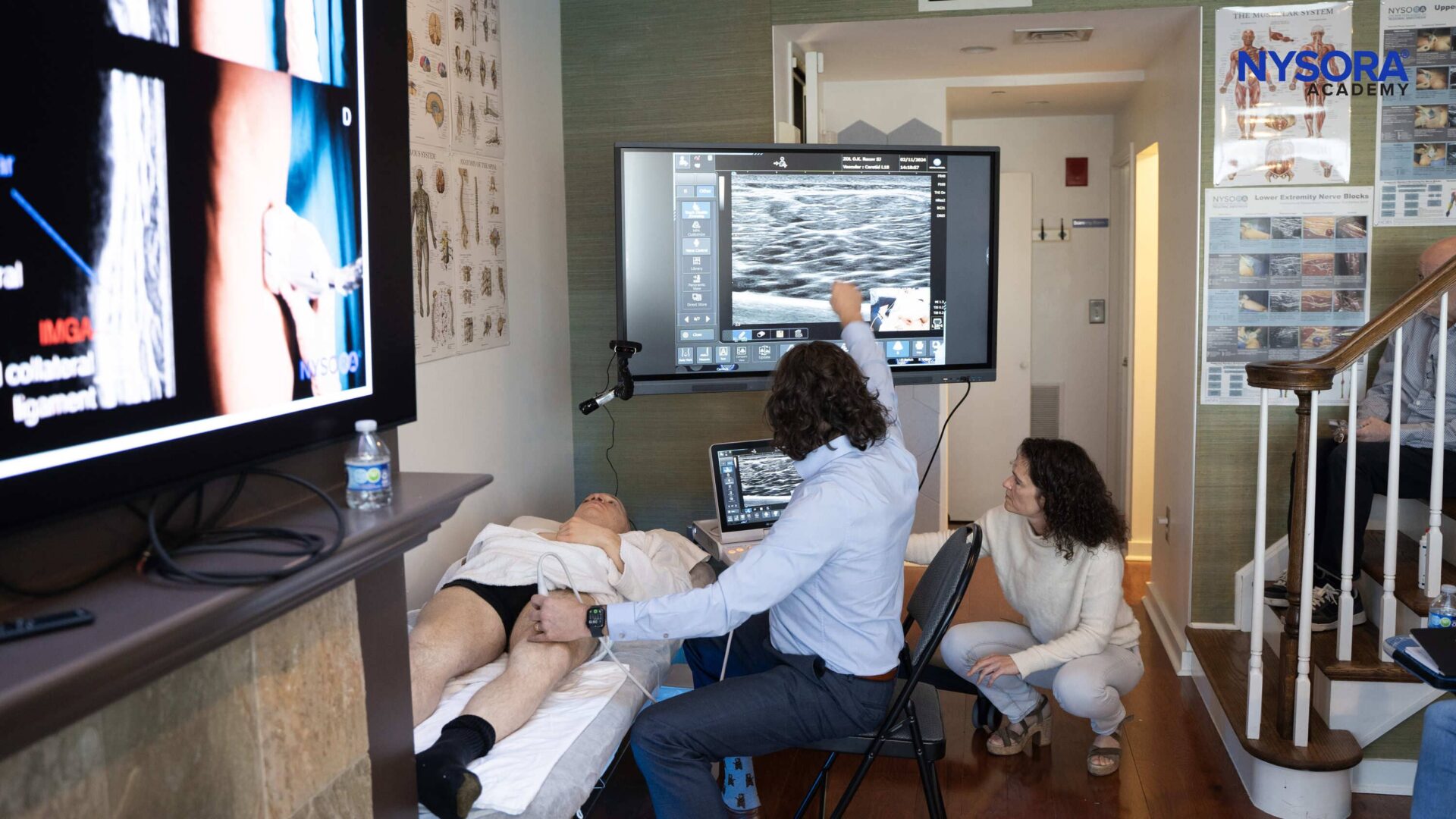
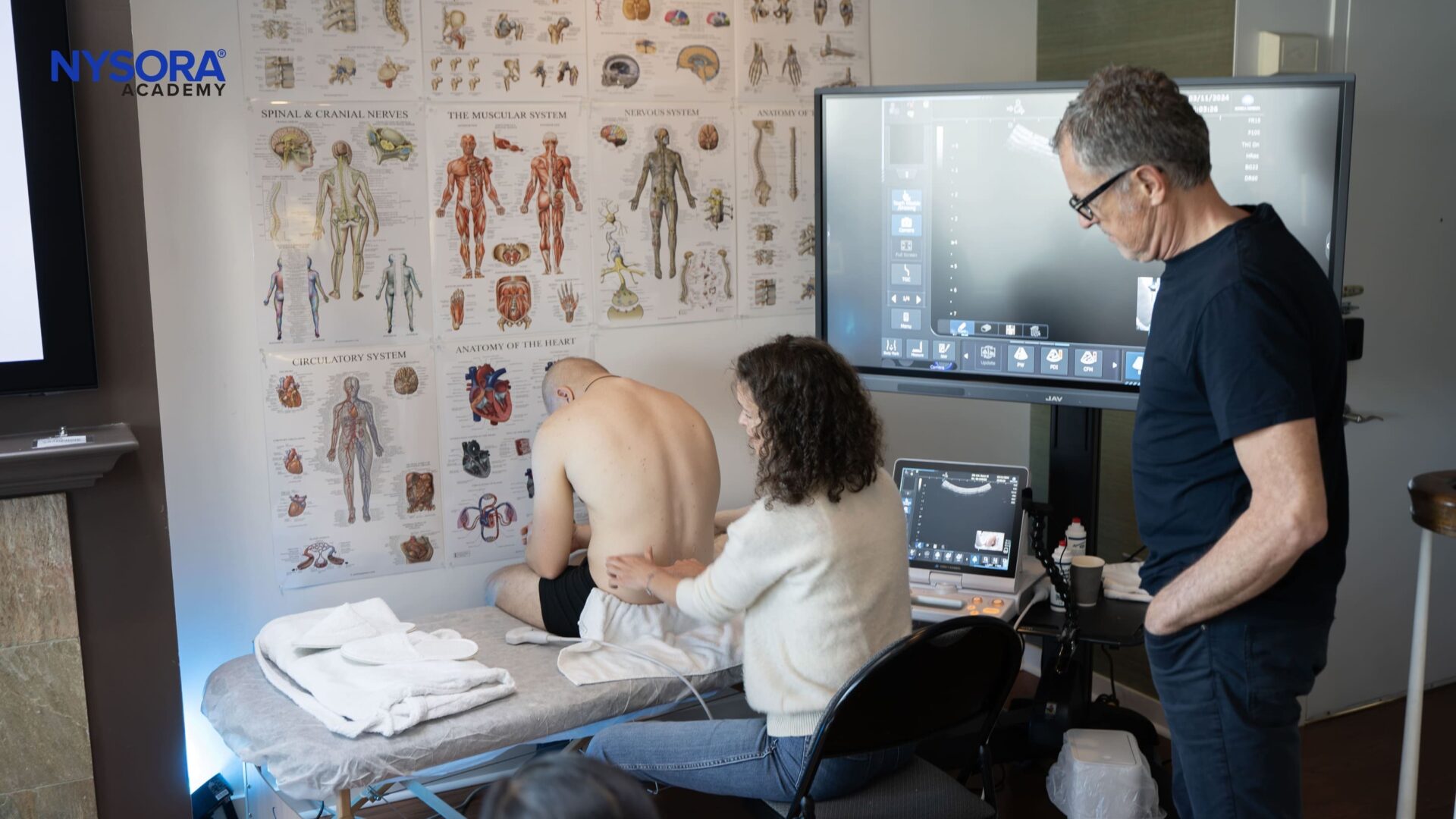
Intensive scanning practice

Real clinical discussion

NYSORA Academy
Learning Spaces

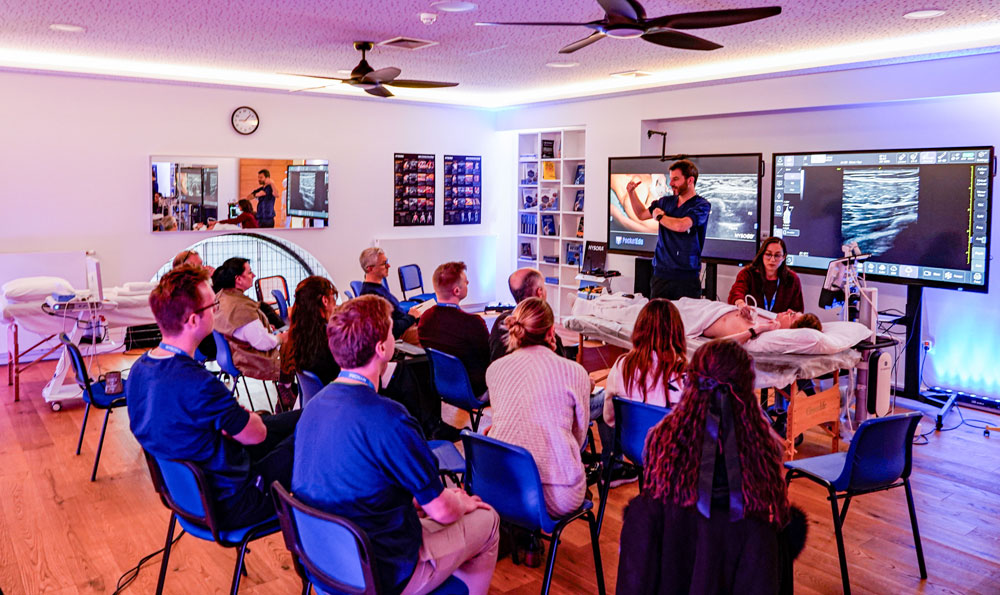
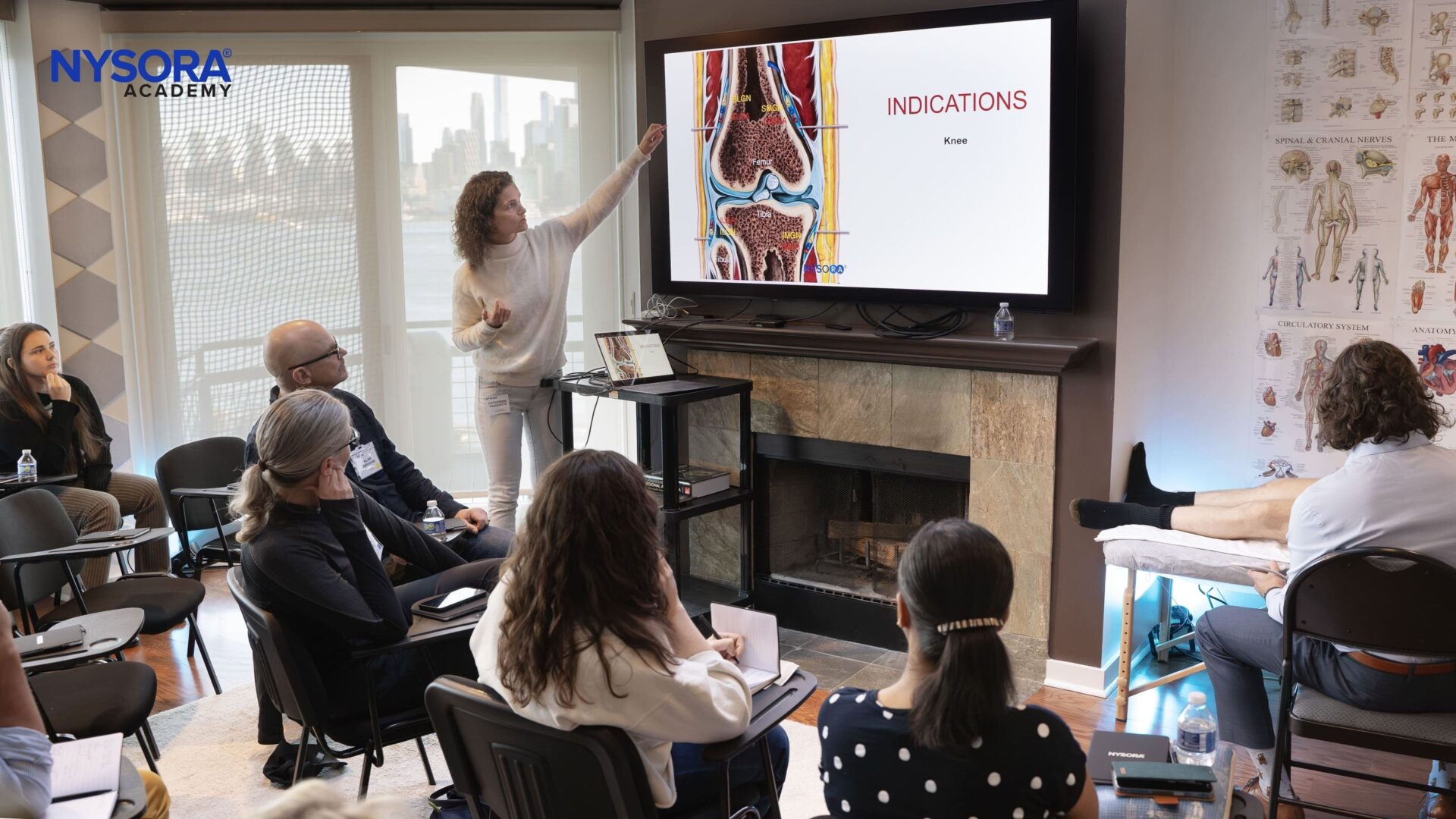
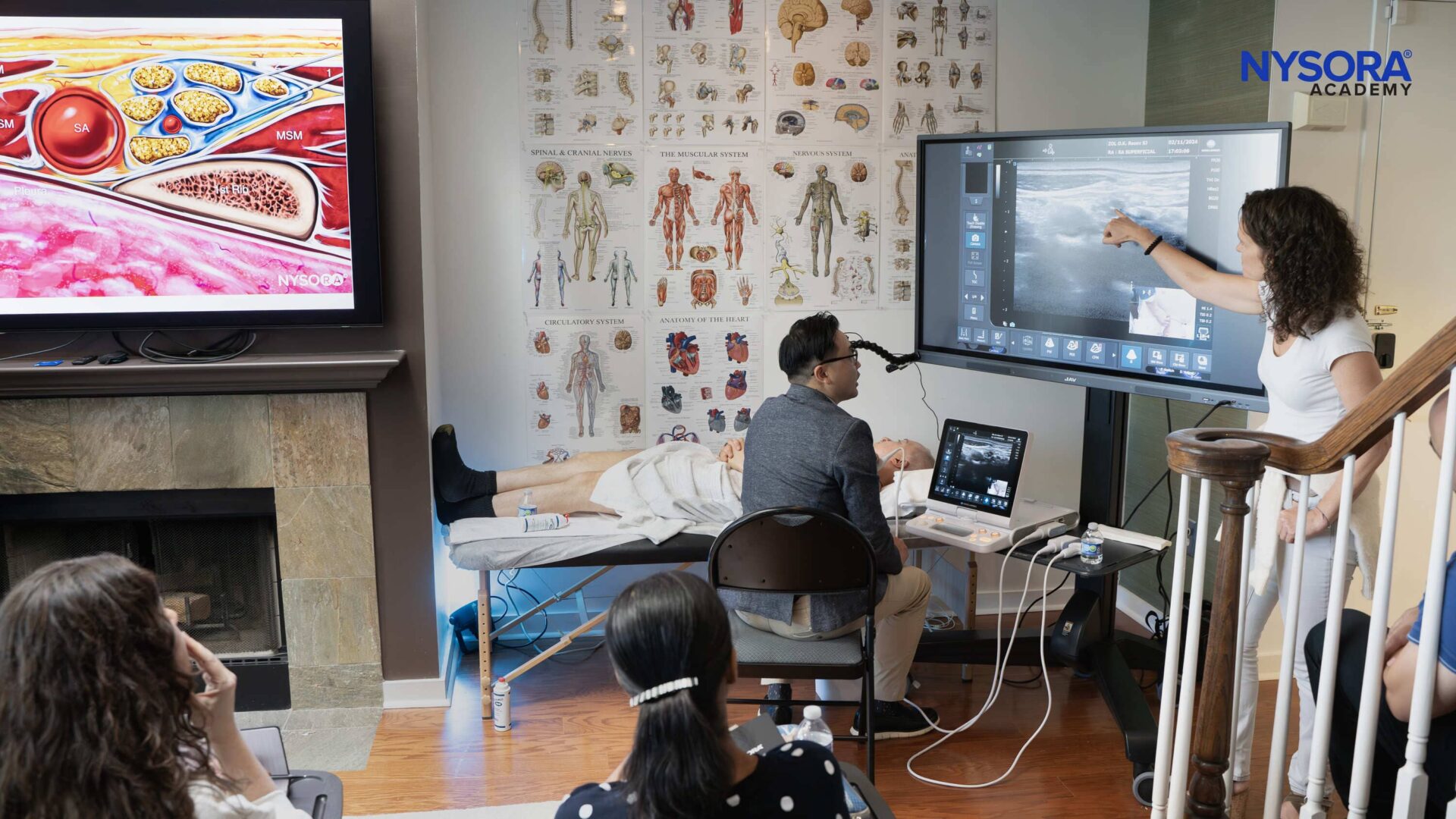
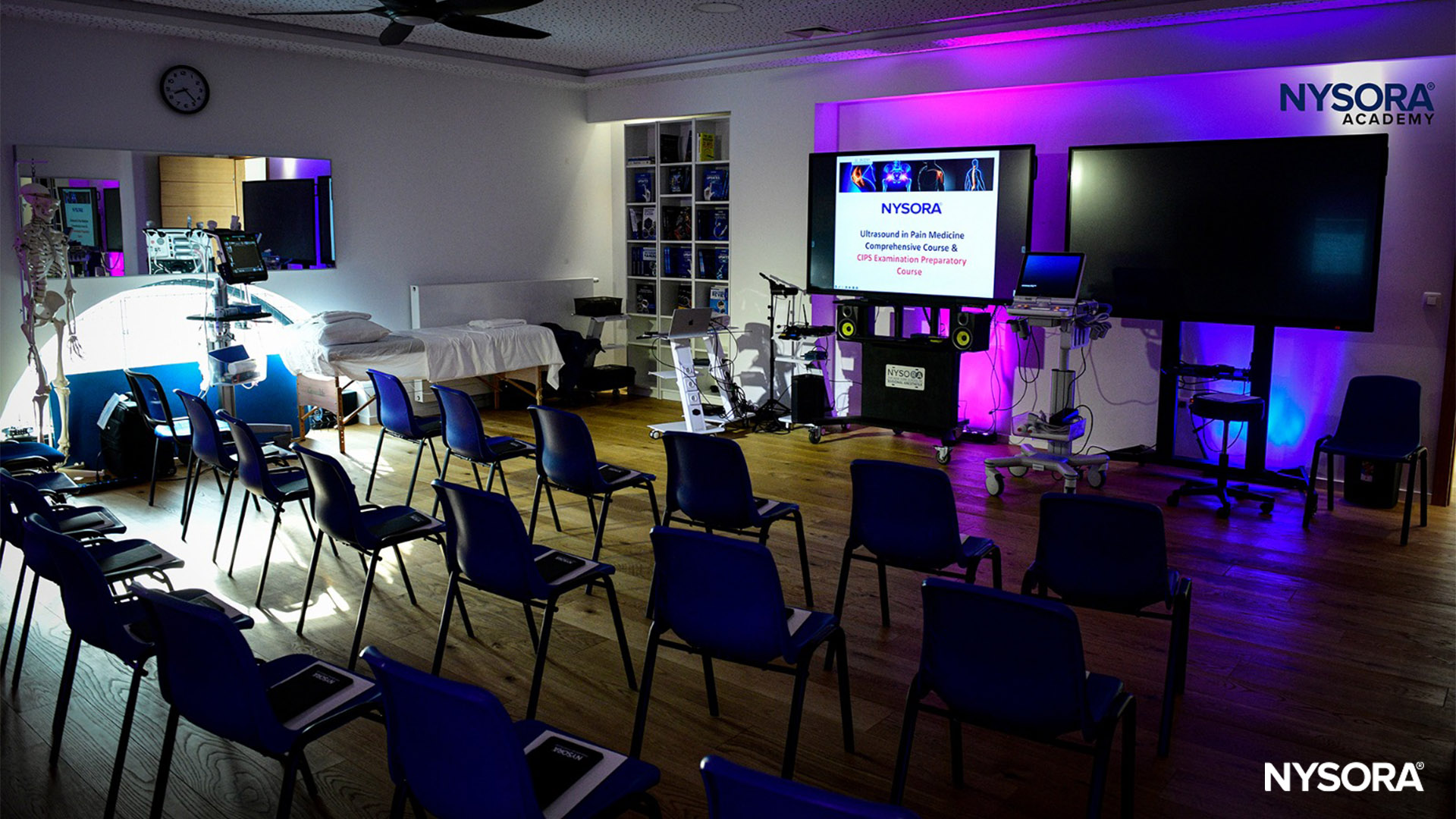
Many workshops take place in custom-built NYSORA Academy facilities designed specifically for regional anesthesia training.

Simulator-based needling stations

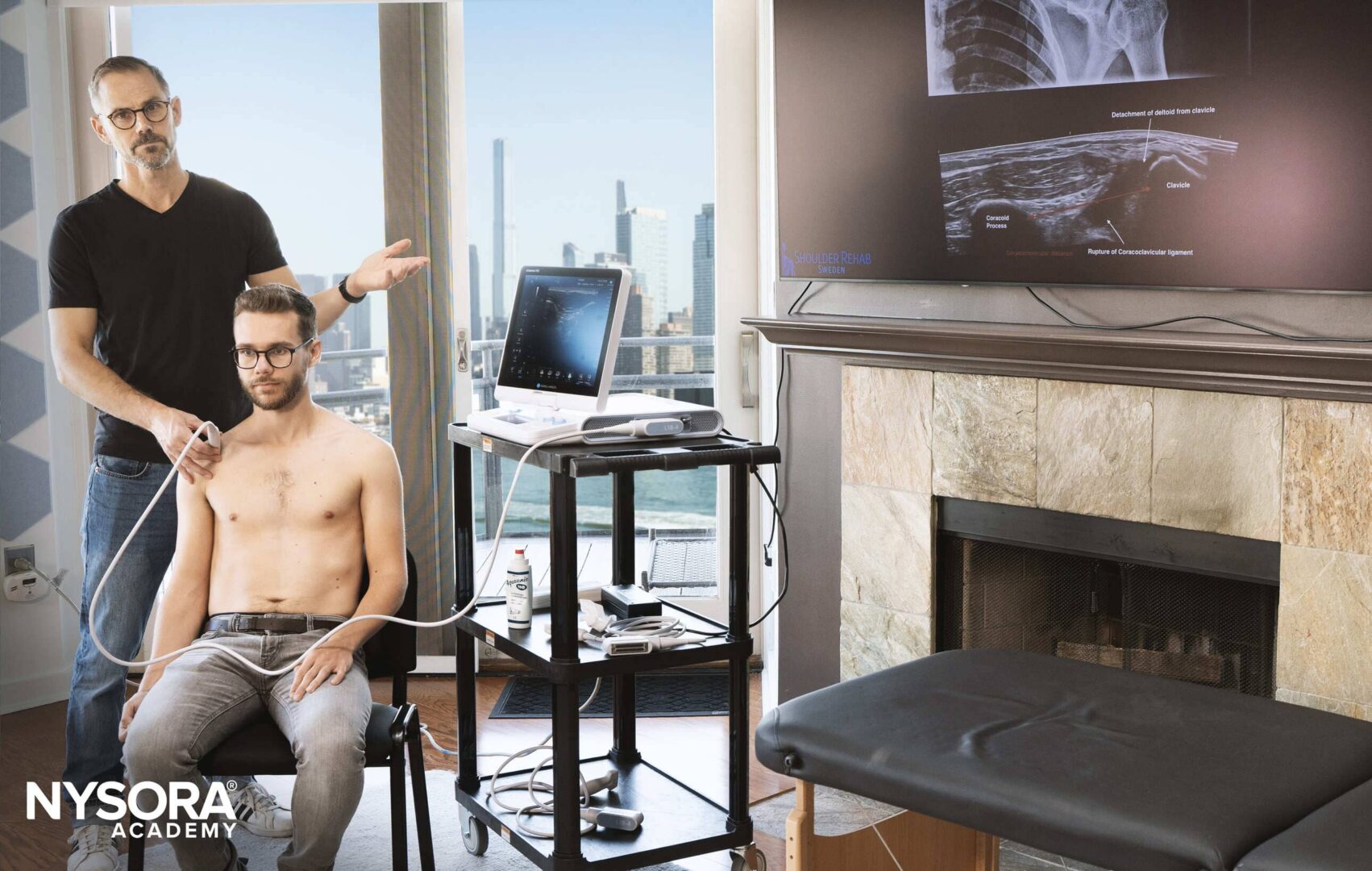
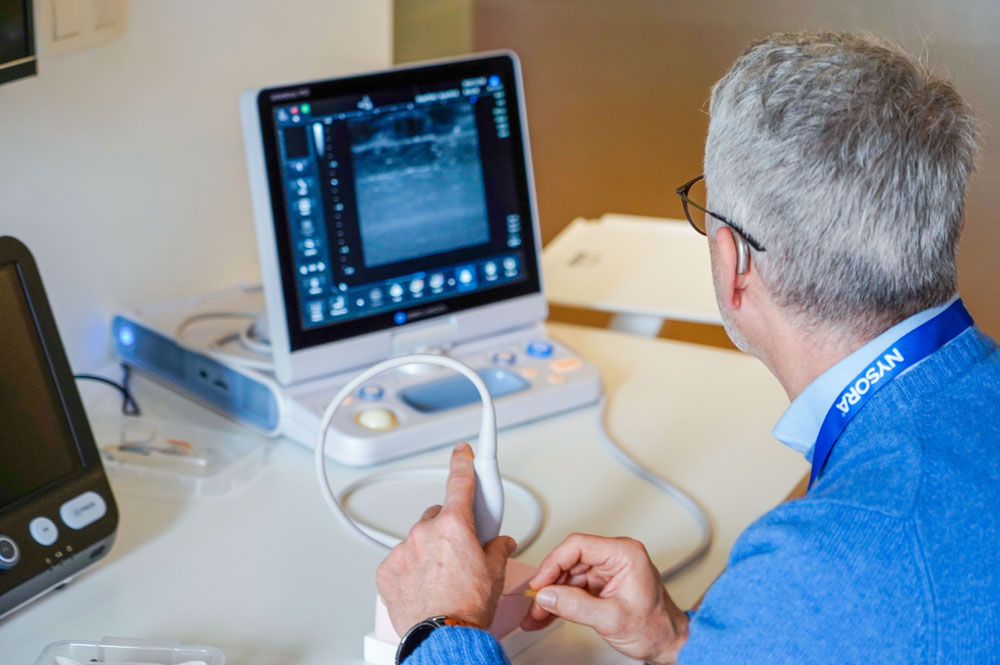
Dedicated ultrasound scanning stations

Permanent educational setups

Large visualization screens

Find the Right Workshop for Your Practice

Hands-On Training Designed for Every Stage of Clinical Practice

Whether you're advancing your regional anesthesia skills, expanding your pain management expertise, or integrating point-of-care ultrasound into daily practice, NYSORA workshops combine expert instruction, live scanning, and extensive hands-on training to help you translate knowledge into clinical confidence.

Regional Anesthesia Workshops Europe

Hands-on training featuring live scanning, ultrasound-guided nerve blocks, and NYSORA’s renowned teaching methodology.

See Dates

Regional Anesthesia Workshops North America

Gain practical experience in ultrasound-guided nerve blocks under expert faculty supervision.

See Dates

Interventional Pain Medicine Workshops

Join ultrasound-guided and fluoroscopy-informed interventions, immediately applicable in practice.

See Dates

POCUS Workshops

Learn to use ultrasound as a real-time diagnostic and decision-support tool across perioperative, critical care, emergency, and acute care settings.

See Dates

Pediatric Regional Anesthesia Workshops

Expert-led, hands-on workshops in ultrasound-guided pediatric regional anesthesia.

See Dates

Orthobiologics Workshop for MSK and Spine

Gain practical, evidence-based skills in orthobiologics for musculoskeletal and spine conditions through expert-led sessions and hands-on ultrasound training.

See Dates

Find the Right Workshop for Your Practice

The NYSORA Learning Experience

A NYSORA workshop is just one part of your learning journey. Every participant gains access to an integrated ecosystem of digital learning, clinical decision support, and continuing education designed to help you keep improving long after the course ends.

01

BEFORE THE WORKSHOP
Build the Foundation

Your learning begins before the workshop and continues long after you leave. Every participant receives complimentary access to the workshop-relevant NYSORA bestselling apps and educational resources to reinforce learning in clinical practice.

Included access (workshop-specific):

This allows you to:

  • Prepare before the workshop
  • Review techniques and protocols anytime
  • Reinforce after-workshop learning in daily practice
  • Access step-by-step clinical guidance
  • Build confidence with every patient

A NYSORA workshop is not a single event—it's the beginning of a continuous learning journey.

02

DURING THE WORKSHOP
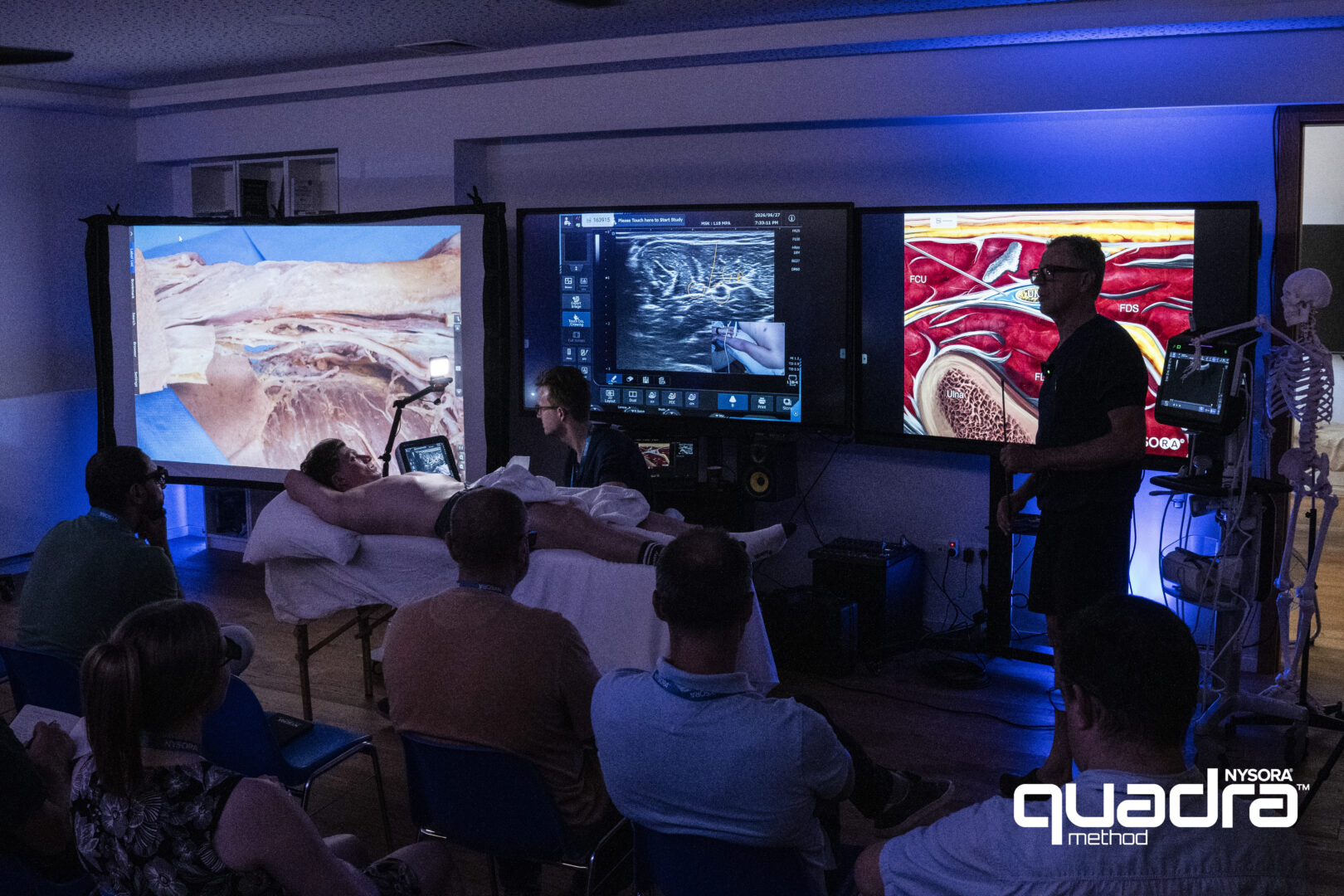
Hands-On Clinical Training

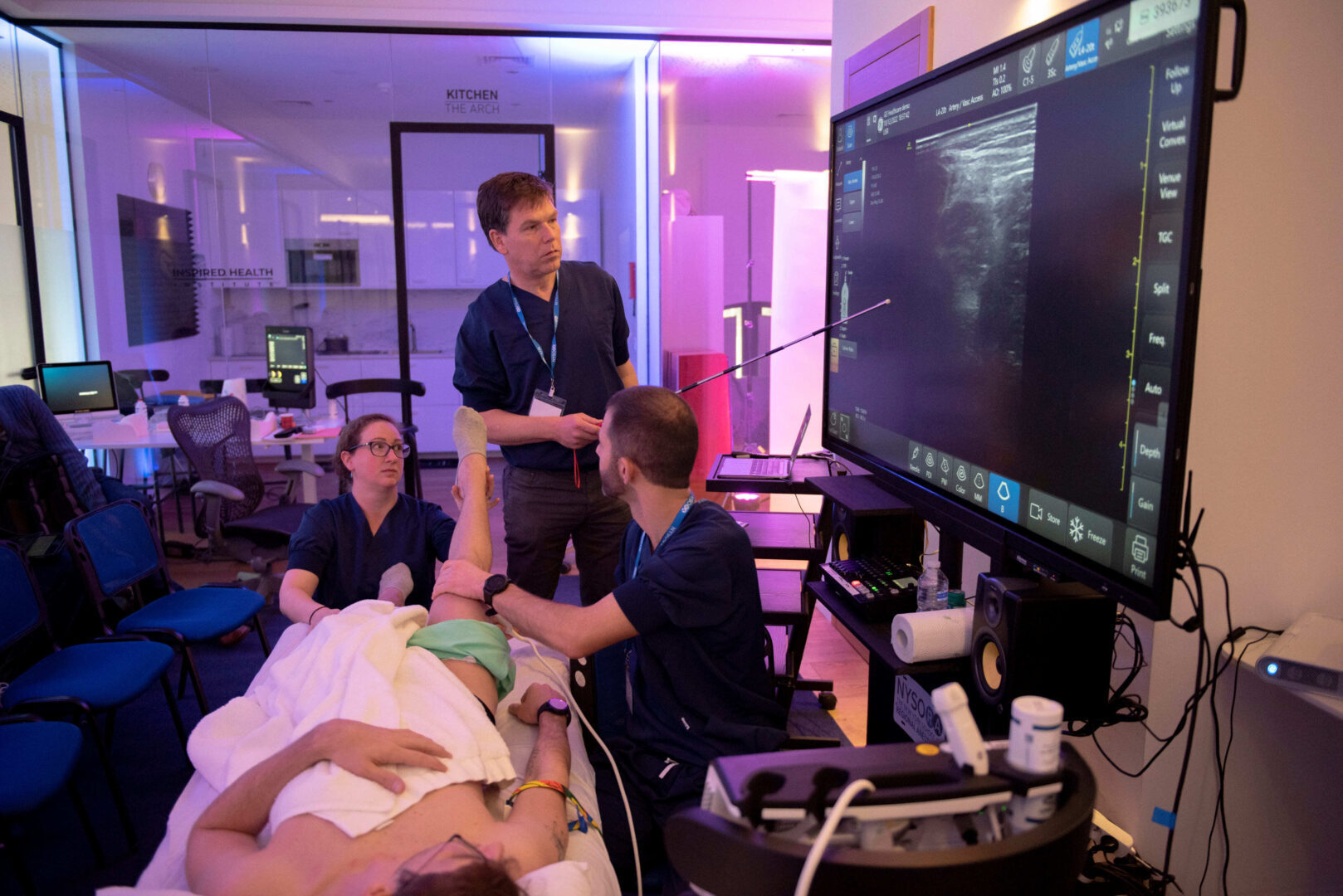
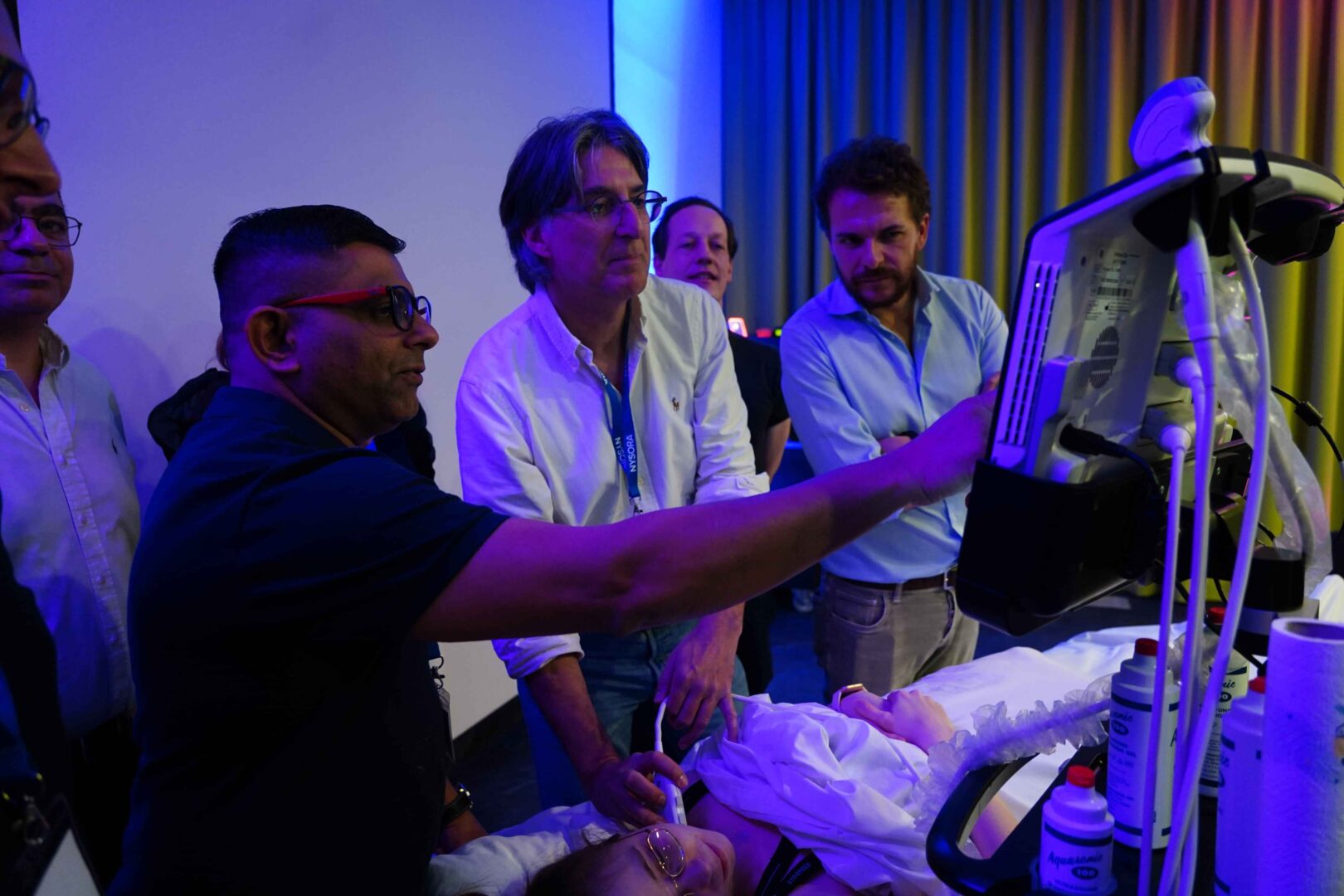
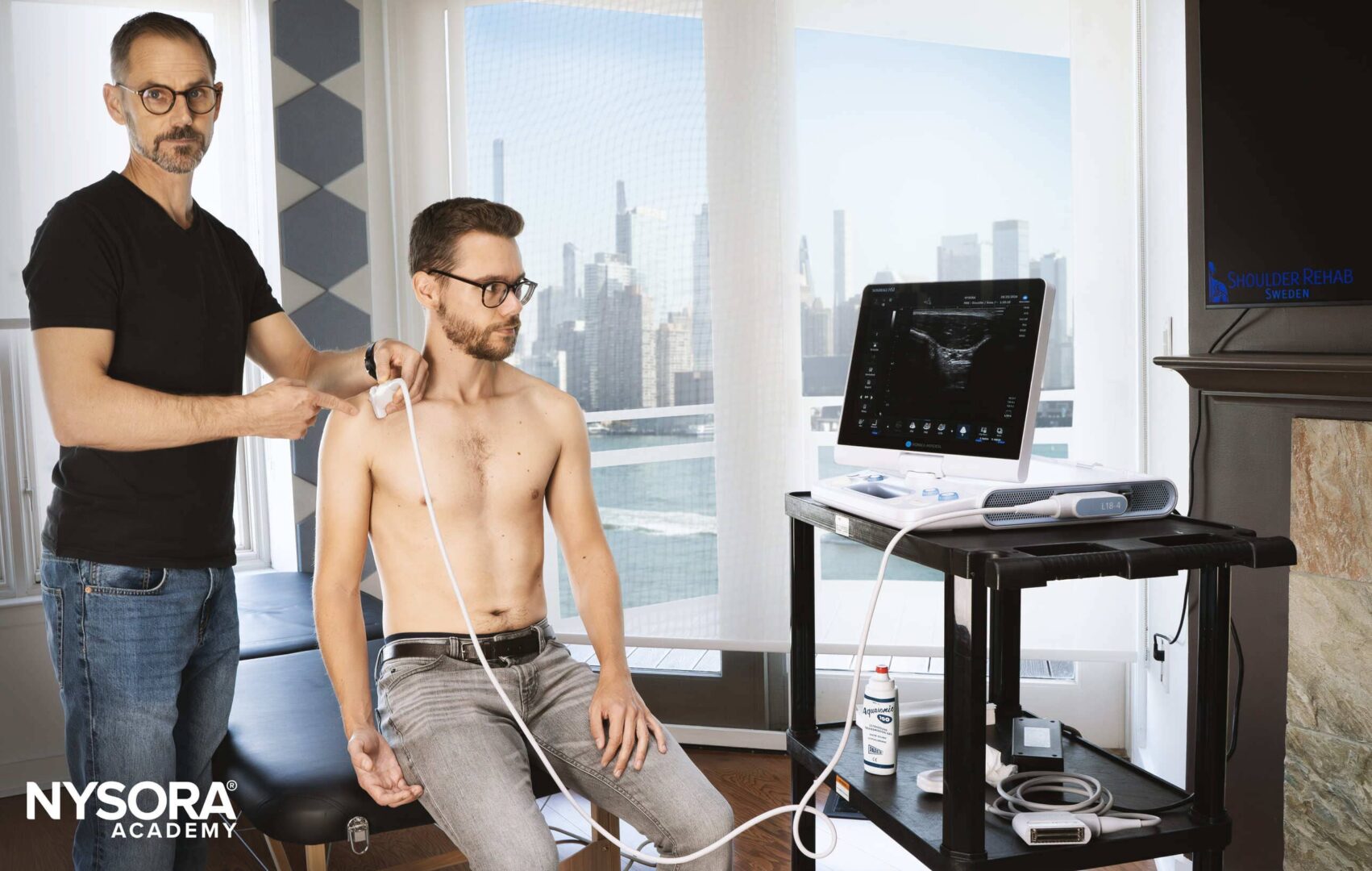
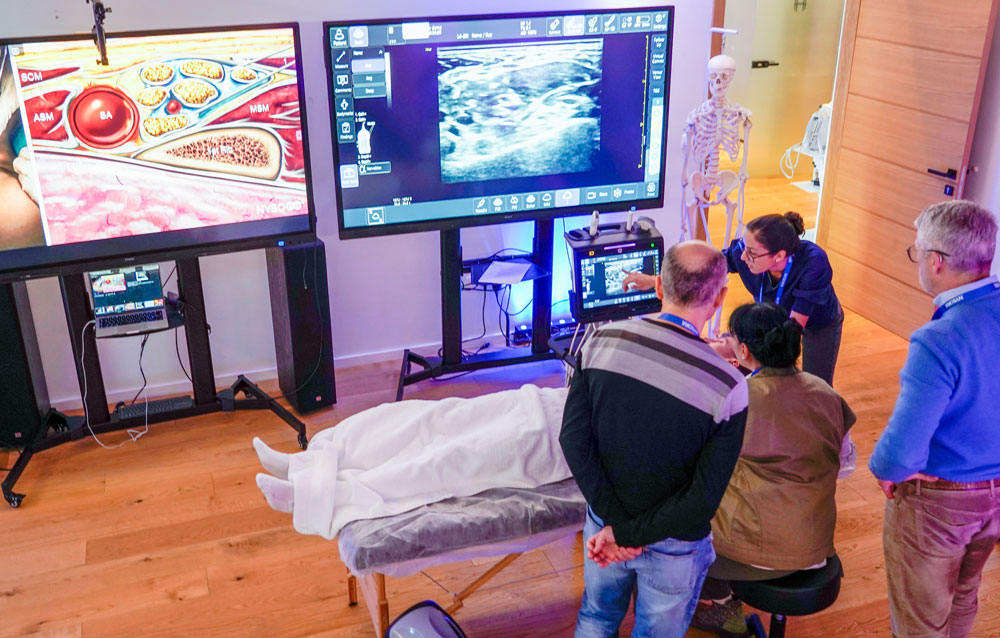
Transform ultrasound-guided regional anesthesia concepts into practical clinical skills through expert instruction and immersive hands-on training.

Experience:

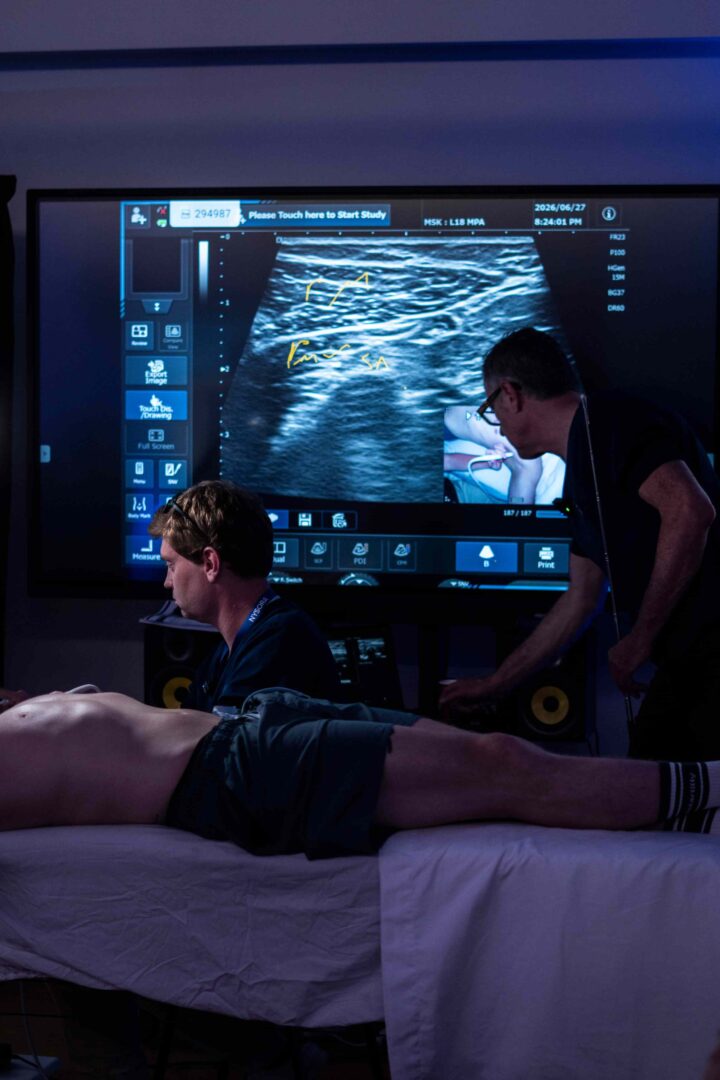
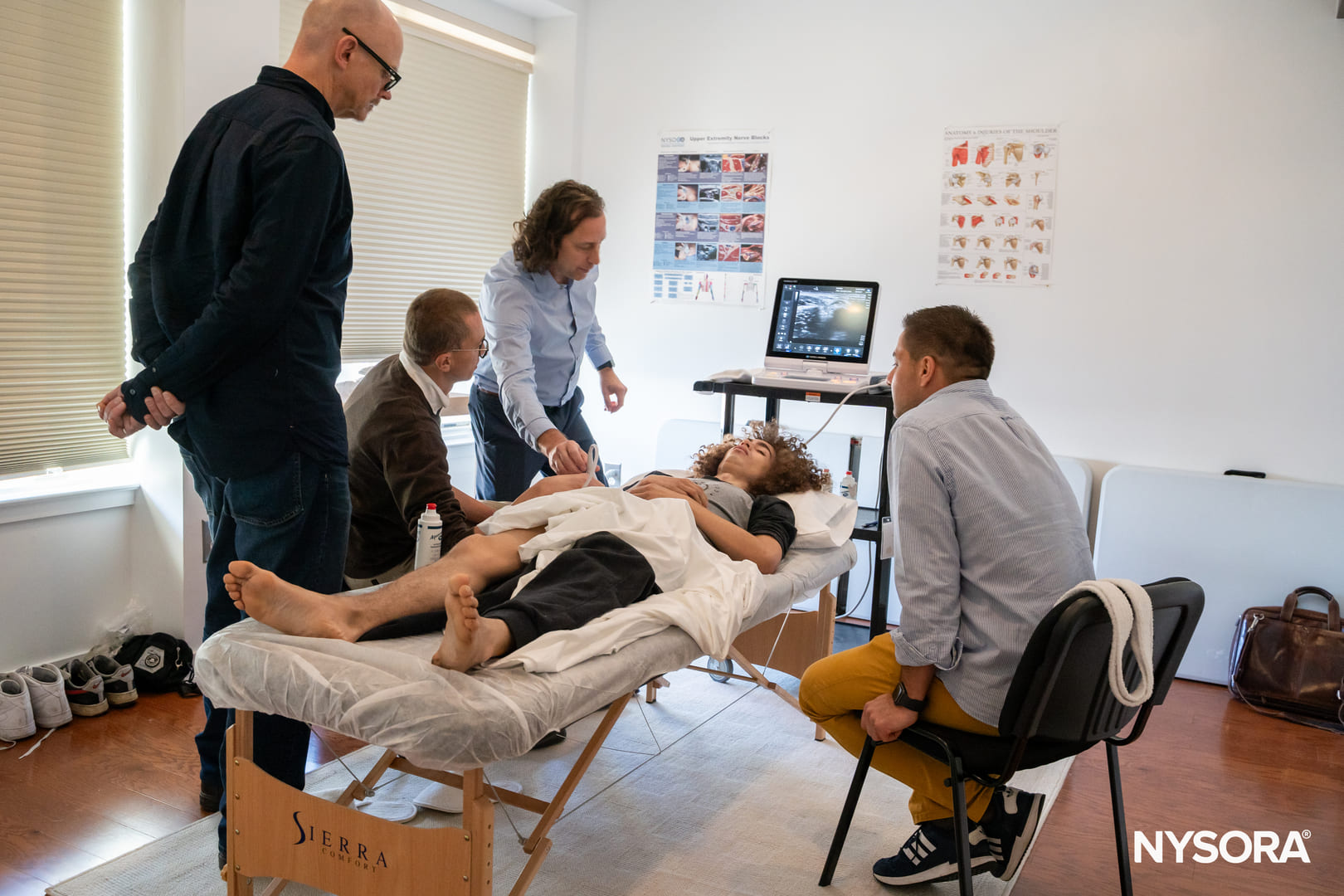
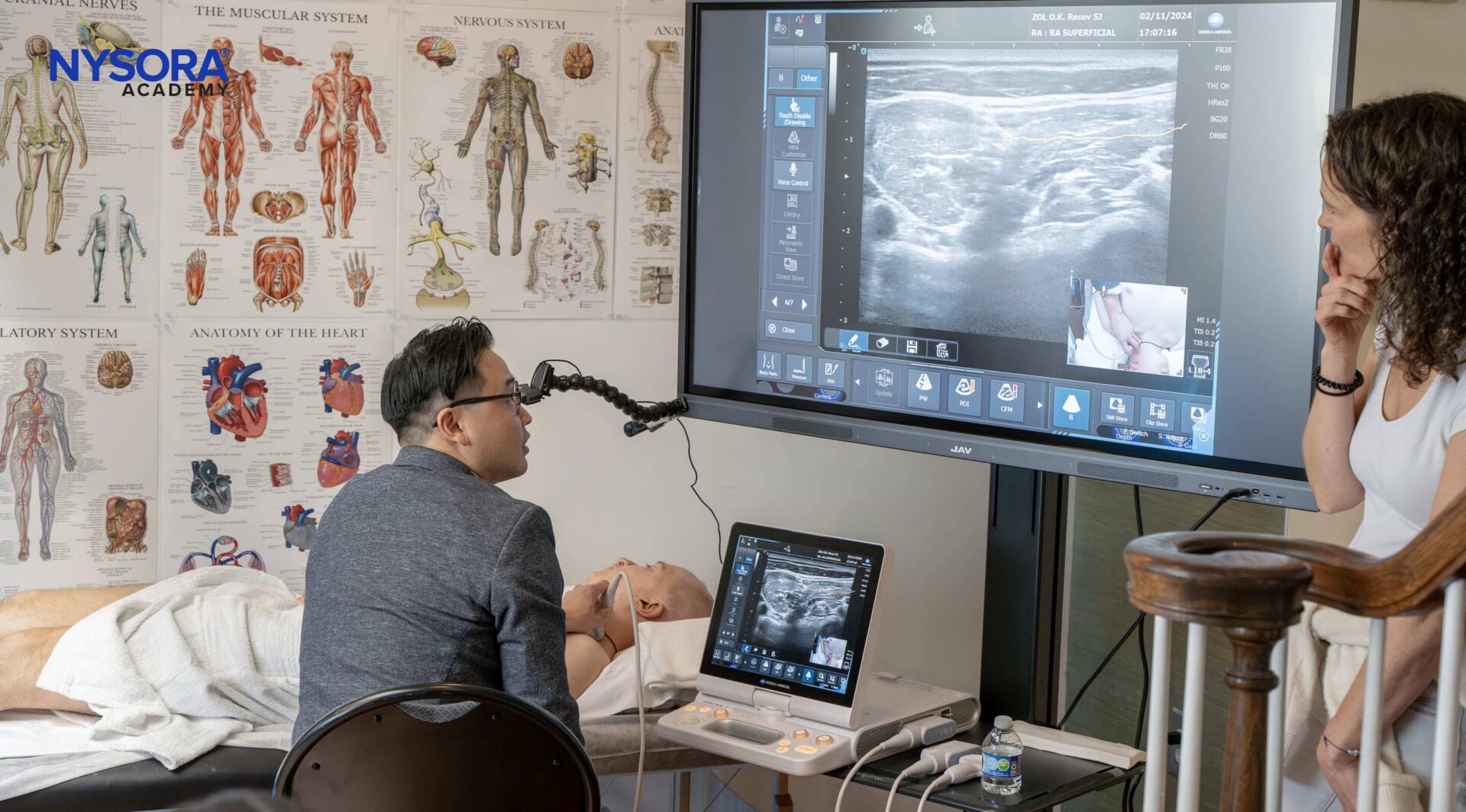
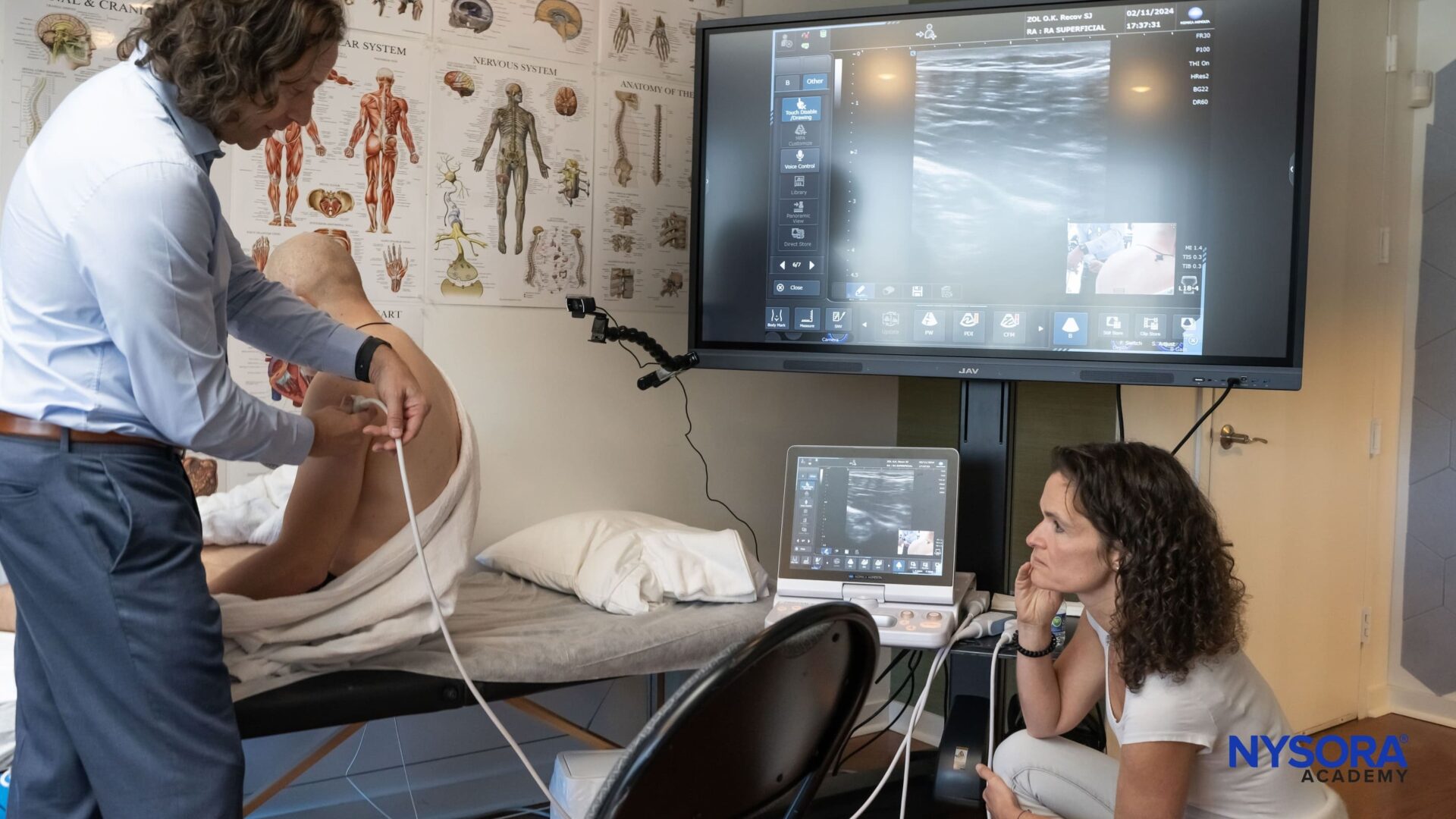
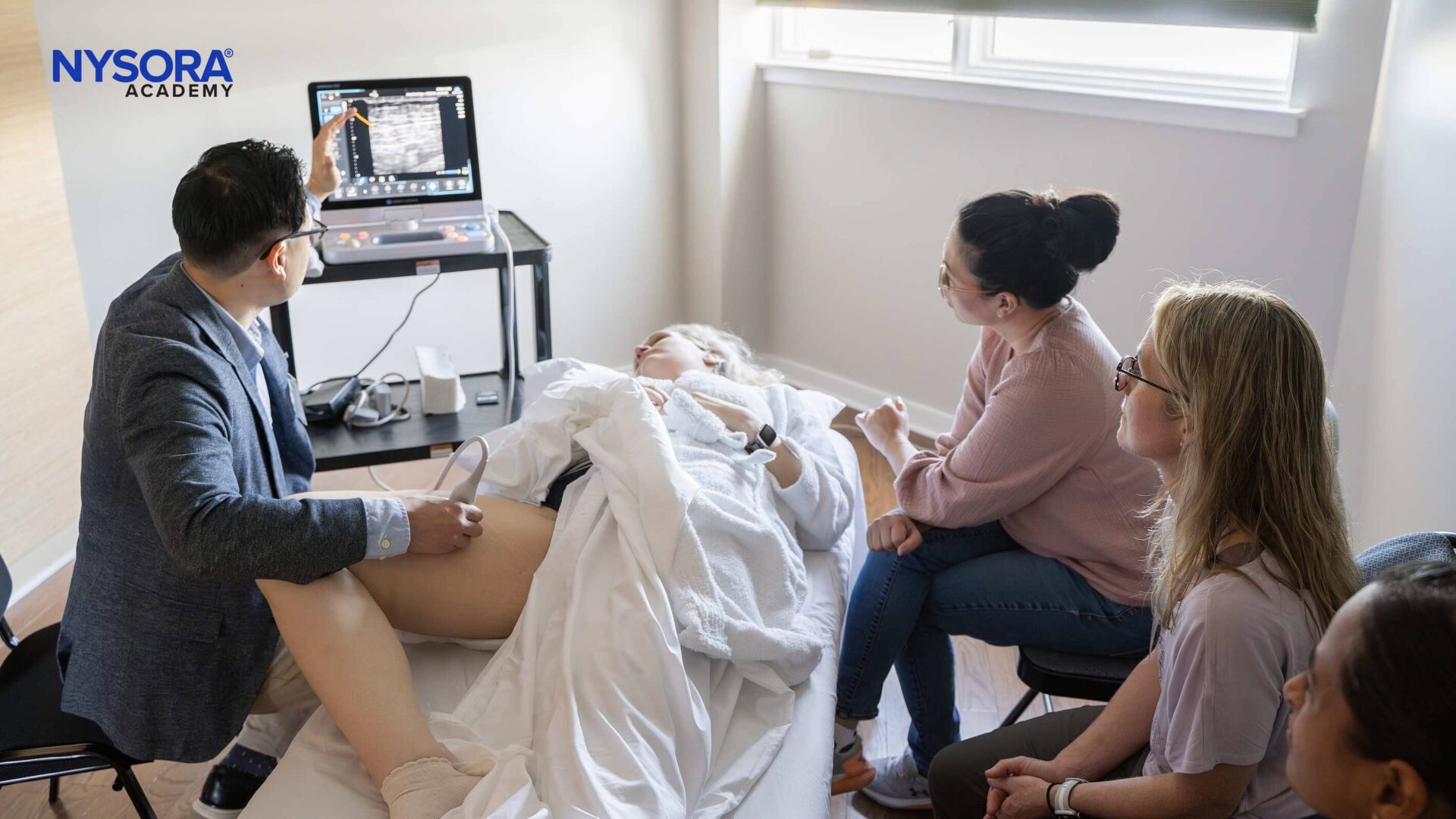
  • Live model scanning
  • Faculty-guided hands-on practice
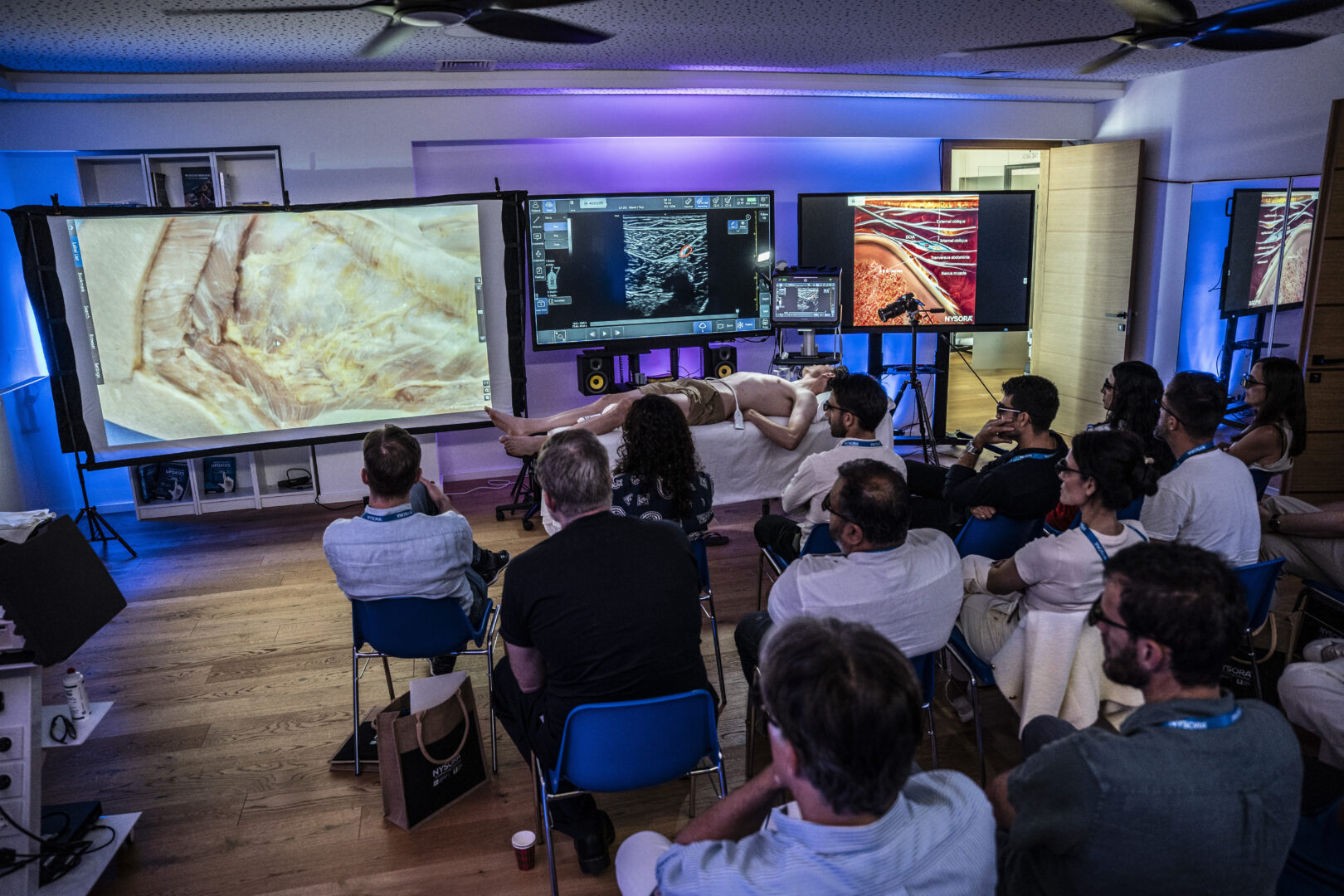
  • Picture-in-picture ultrasound visualization
  • Simulator needling stations
  • 3D virtual cadaver anatomy

Master NYSORA's 1-2-3 approach to:

  • Probe positioning
  • Sonoanatomy and landmark recognition
  • Needle guidance and injection strategy

Leave with greater confidence, sharper scanning skills, and techniques you can apply in your very next case.

03

AFTER THE WORKSHOP
Continue Learning with NYSORA360

In addition to 3 months of access to the relevant NYSORA apps, participants receive continued access to workshop presentations and course materials through NYSORA360.

With NYSORA360, you can:

  • Review workshop presentations and educational resources
  • Revisit key techniques and ultrasound anatomy
  • Reinforce practical skills anytime
  • Continue learning with structured digital content

Your workshop doesn't end when you leave—it becomes part of an integrated learning ecosystem designed to support your clinical practice long after the course.

Explore NYSORA360

Upcoming Workshops

Browse upcoming workshops across all locations to find the session that fits your schedule.

Date

Event

Location

Duration

2026

Aug

22-23

New York, USA, Aug 22-23

New York, USA

2 Days

Course Highlights
  • Interpret various sonographic artifacts and outline a plan for troubleshooting these using various transducer maneuvers and ultrasound machine setting adjustments;
  • Demonstrate the correct sonographic technique for identification of the brachial plexus and individual nerves of the lower extremity, and associated vascular and musculoskeletal structures;
  • Demonstrate the correct sonographic technique for performance of truncal blocks including transversus abdominis plane block, rectus sheath block, and paravertebral and neuraxial block;
  • Develop a framework for the establishment of a regional anesthesia service using strategies to increase surgical, anesthetic and hospital buy-in;
  • Discuss the rational choice of local anesthetics and adjuvants for various peripheral nerve blocks.
Schedule
Day 1

Morning Session (07:30 - 16:00)

  • Registration & Light Breakfast
  • Introduction: How to Make the Most of This Course
  • What We Will Teach
  • Practice on Simulators During Breaks
  • How to Transpose Techniques into Your Daily Practice: High Yield/Periop Management
  • MODULE 1: Shoulder & Proximal Humerus
  • Interscalene Block: When and How
  • Patient Selection Pearls (OSA, COPD, Outpatient Shoulder Surgery)
  • Diaphragm-Sparing Strategies To Reduce Phrenic Nerve Involvement( Selective Shoulder Strategies, Superior Trunk Block: Current Trends in Shoulder Analgesia, Suprascapular and Axillary Nerve Blocks)
  • Coffee Break & Simulation Training
  • MODULE 2: Clavicle & Upper Arm
  • Understanding Clavicle Coverage Concepts
  • Cervical Plexus Block and PEC I (Interpectoral) Block for Clavicle Analgesia
  • Clavipectoral Fascial Plane Block
  • Supraclavicular Block
  • Infraclavicular Block
  • Decision-Making: Supraclavicular Vs Infraclavicular When and Why
  • MODULE 3: Upper Extremit er Extremity (Elbow, Forearm & Hand orearm & Hand)
  • Axillary Brachial Plexus Block: A High-Yield Workhorse
  • Three Essential Distal Forearm Blocks (Median, Ulnar, Radial) - When: Clinical Indications - Where: Optimal Forearm Block Levels
  • Lunch Break & & Simulation Training
  • MODULE 4: Truncal Fascial Plane Blocks - Core Set Every Clinician Should Know
  • PECS Blocks (Interpectoral and Pecto-Serratus)
  • Serratus Anterior Plane (SAP) Block
  • TAP Block: Lateral Vs Subcostal vs Posterior Approaches
  • Quadratus Lumborum (QL) Block – Type I
  • LECTURE
  • Preventing Complications of Nerve Blocks
  • Adjuvants: Controversies and Practical Tips
  • Infectious Precautions: Sterility and Probe Covers
  • Q&A Panel Discussion
  • Coffee Break & Simulation Training
  • Scanning Practice: Consolidation and Repetition
  • Recap: What We Have Learned and Take-Home Messages
  • What We Will Learn Tomorrow (Program For The Next Day)
Day 2

Morning Session (07:30 - 14:45)

  • Registration & Light Breakfast (Simulation Training)
  • Review of Day 1: What We Learned TIPS & Q&A
  • MODULE 5: Lumbar Paraspinal & Posterior Wall Blocks
  • Neuraxial Ultrasound Scanning: Landmarks and Why It Matters
  • Four Critical Ultrasound Findings( Midline Identification, Spinal Level Determination, Estimated Depth To Epidural/Intrathecal Space, Best Interspace For Access)
  • Erector Spinae Plane (ESP) Block
  • Coffee Break & Simulation Training
  • LECTURE
  • Perioperative Management of Nerve Blocks for Success: Premeds/Intraop/Multimodal
  • When Not To Perform Nerve Blocks
  • Prevention and Management of Local Anesthetic Systemic Toxicity (LAST)
  • MODULE 6: Lower Extremity — Hip & Knee Pathways
  • Femoral Nerve Block
  • Fascia Iliaca Block: Infrainguinal vs Suprainguinal
  • PENG Block: When, Why, And How
  • When And Why: Femoral vs Fascia Iliaca vs PENG Blocks For Hip
  • Lunch Break & Simulation Training
  • Lower Extremity: Knee, Foot & Ankle
  • Femoral Triangle vs Adductor Canal Block: The Truth Is In The Middle
  • IPACK and Genicular Nerve Concepts for Knee Analgesia
  • Ankle Block( Tibial, Deep And Superficial Peroneal, Saphenous, Sural Nerves)
  • MODULE 7 REVIEW: More Scanning Top Down
  • Final Review & Q&A
  • What We Have Learned
  • Key Take-Home Messages
  • Must-Have Equipment, Documentation, and Sterility Principles
  • How to Safely Implement and Continue Developing These Techniques in Your Practice

Sep

05-06

Leuven, Belgium, Sep 05-06

Leuven, Belgium

2 Days

Course Highlights
  • Interpret various sonographic artifacts and outline a plan for troubleshooting these using various transducer maneuvers and ultrasound machine setting adjustments;
  • Demonstrate the correct sonographic technique for identification of the brachial plexus and individual nerves of the lower extremity, and associated vascular and musculoskeletal structures;
  • Demonstrate the correct sonographic technique for performance of truncal blocks including transversus abdominis plane block, rectus sheath block, and paravertebral and neuraxial block;
  • Develop a framework for the establishment of a regional anesthesia service using strategies to increase surgical, anesthetic and hospital buy-in;
  • Discuss the rational choice of local anesthetics and adjuvants for various peripheral nerve blocks.
Schedule
Day 1

Morning Session (07:30 - 16:00)

  • Registration & Light Breakfast
  • Introduction: How to Make the Most of This Course
  • What We Will Teach
  • Practice on Simulators During Breaks
  • How to Transpose Techniques into Your Daily Practice: High Yield/Periop Management
  • MODULE 1: Shoulder & Proximal Humerus
  • Interscalene Block: When and How
  • Patient Selection Pearls (OSA, COPD, Outpatient Shoulder Surgery)
  • Diaphragm-Sparing Strategies To Reduce Phrenic Nerve Involvement( Selective Shoulder Strategies, Superior Trunk Block: Current Trends in Shoulder Analgesia, Suprascapular and Axillary Nerve Blocks)
  • Coffee Break & Simulation Training
  • MODULE 2: Clavicle & Upper Arm
  • Understanding Clavicle Coverage Concepts
  • Cervical Plexus Block and PEC I (Interpectoral) Block for Clavicle Analgesia
  • Clavipectoral Fascial Plane Block
  • Supraclavicular Block
  • Infraclavicular Block
  • Decision-Making: Supraclavicular Vs Infraclavicular When and Why
  • MODULE 3: Upper Extremit er Extremity (Elbow, Forearm & Hand orearm & Hand)
  • Axillary Brachial Plexus Block: A High-Yield Workhorse
  • Three Essential Distal Forearm Blocks (Median, Ulnar, Radial) - When: Clinical Indications - Where: Optimal Forearm Block Levels
  • Lunch Break & Simulation Training
  • MODULE 4: Truncal Fascial Plane Blocks - Core Set Every Clinician Should Know
  • PECS Blocks (Interpectoral and Pecto-Serratus)
  • Serratus Anterior Plane (SAP) Block
  • TAP Block: Lateral Vs Subcostal vs Posterior Approaches
  • Quadratus Lumborum (QL) Block – Type I
  • LECTURE
  • Preventing Complications of Nerve Blocks
  • Adjuvants: Controversies and Practical Tips
  • Infectious Precautions: Sterility and Probe Covers
  • Q&A Panel Discussion
  • Coffee Break & Simulation Training
  • Scanning Practice: Consolidation and Repetition
  • Recap: What We Have Learned and Take-Home Messages
  • What We Will Learn Tomorrow (Program For The Next Day)
Day 2

Morning Session (07:30 - 14:45)

  • Registration & Light Breakfast (Simulation Training)
  • Review of Day 1: What We Learned TIPS & Q&A
  • MODULE 5: Lumbar Paraspinal & Posterior Wall Blocks
  • Neuraxial Ultrasound Scanning: Landmarks and Why It Matters
  • Four Critical Ultrasound Findings( Midline Identification, Spinal Level Determination, Estimated Depth To Epidural/Intrathecal Space, Best Interspace For Access)
  • Erector Spinae Plane (ESP) Block
  • Coffee Break & Simulation Training
  • LECTURE
  • Perioperative Management of Nerve Blocks for Success: Premeds/Intraop/Multimodal
  • When Not To Perform Nerve Blocks
  • Prevention and Management of Local Anesthetic Systemic Toxicity (LAST)
  • MODULE 6: Lower Extremity — Hip & Knee Pathways
  • Femoral Nerve Block
  • Fascia Iliaca Block: Infrainguinal vs Suprainguinal
  • PENG Block: When, Why, And How
  • When And Why: Femoral vs Fascia Iliaca vs PENG Blocks For Hip
  • Lunch Break & Simulation Training
  • Lower Extremity: Knee, Foot & Ankle
  • Femoral Triangle vs Adductor Canal Block: The Truth Is In The Middle
  • IPACK and Genicular Nerve Concepts for Knee Analgesia
  • Ankle Block( Tibial, Deep And Superficial Peroneal, Saphenous, Sural Nerves)
  • MODULE 7 REVIEW: More Scanning Top Down
  • Final Review & Q&A
  • What We Have Learned
  • Key Take-Home Messages
  • Must-Have Equipment, Documentation, and Sterility Principles
  • How to Safely Implement and Continue Developing These Techniques in Your Practice

Sep

12-13

New York, USA, Sep 12-13

New York, USA

2 Days

Course Highlights
  • Interpret various sonographic artifacts and outline a plan for troubleshooting these using various transducer maneuvers and ultrasound machine setting adjustments;
  • Demonstrate the correct sonographic technique for identification of the brachial plexus and individual nerves of the lower extremity, and associated vascular and musculoskeletal structures;
  • Demonstrate the correct sonographic technique for performance of truncal blocks including transversus abdominis plane block, rectus sheath block, and paravertebral and neuraxial block;
  • Develop a framework for the establishment of a regional anesthesia service using strategies to increase surgical, anesthetic and hospital buy-in;
  • Discuss the rational choice of local anesthetics and adjuvants for various peripheral nerve blocks.
Schedule
Day 1

Morning Session (07:30 - 16:00)

  • Registration & Light Breakfast
  • Introduction: How to Make the Most of This Course
  • What We Will Teach
  • Practice on Simulators During Breaks
  • How to Transpose Techniques into Your Daily Practice: High Yield/Periop Management
  • MODULE 1: Shoulder & Proximal Humerus
  • Interscalene Block: When and How
  • Patient Selection Pearls (OSA, COPD, Outpatient Shoulder Surgery)
  • Diaphragm-Sparing Strategies To Reduce Phrenic Nerve Involvement( Selective Shoulder Strategies, Superior Trunk Block: Current Trends in Shoulder Analgesia, Suprascapular and Axillary Nerve Blocks)
  • Coffee Break & Simulation Training
  • MODULE 2: Clavicle & Upper Arm
  • Understanding Clavicle Coverage Concepts
  • Cervical Plexus Block and PEC I (Interpectoral) Block for Clavicle Analgesia
  • Clavipectoral Fascial Plane Block
  • Supraclavicular Block
  • Infraclavicular Block
  • Decision-Making: Supraclavicular Vs Infraclavicular When and Why
  • MODULE 3: Upper Extremit er Extremity (Elbow, Forearm & Hand orearm & Hand)
  • Axillary Brachial Plexus Block: A High-Yield Workhorse
  • Three Essential Distal Forearm Blocks (Median, Ulnar, Radial) - When: Clinical Indications - Where: Optimal Forearm Block Levels
  • Lunch Break & Simulation Training
  • MODULE 4: Truncal Fascial Plane Blocks - Core Set Every Clinician Should Know
  • PECS Blocks (Interpectoral and Pecto-Serratus)
  • Serratus Anterior Plane (SAP) Block
  • TAP Block: Lateral Vs Subcostal vs Posterior Approaches
  • Quadratus Lumborum (QL) Block – Type I
  • LECTURE
  • Preventing Complications of Nerve Blocks
  • Adjuvants: Controversies and Practical Tips
  • Infectious Precautions: Sterility and Probe Covers
  • Q&A Panel Discussion
  • Coffee Break & Simulation Training
  • Scanning Practice: Consolidation and Repetition
  • Recap: What We Have Learned and Take-Home Messages
  • What We Will Learn Tomorrow (Program For The Next Day)
Day 2

Morning Session (07:30 - 14:45)

  • Registration & Light Breakfast (Simulation Training)
  • Review of Day 1: What We Learned TIPS & Q&A
  • MODULE 5: Lumbar Paraspinal & Posterior Wall Blocks
  • Neuraxial Ultrasound Scanning: Landmarks and Why It Matters
  • Four Critical Ultrasound Findings( Midline Identification, Spinal Level Determination, Estimated Depth To Epidural/Intrathecal Space, Best Interspace For Access)
  • Erector Spinae Plane (ESP) Block
  • Coffee Break & Simulation Training
  • LECTURE
  • Perioperative Management of Nerve Blocks for Success: Premeds/Intraop/Multimodal
  • When Not To Perform Nerve Blocks
  • Prevention and Management of Local Anesthetic Systemic Toxicity (LAST)
  • MODULE 6: Lower Extremity — Hip & Knee Pathways
  • Femoral Nerve Block
  • Fascia Iliaca Block: Infrainguinal vs Suprainguinal
  • PENG Block: When, Why, And How
  • When And Why: Femoral vs Fascia Iliaca vs PENG Blocks For Hip
  • Lunch Break & Simulation Training
  • Lower Extremity: Knee, Foot & Ankle
  • Femoral Triangle vs Adductor Canal Block: The Truth Is In The Middle
  • IPACK and Genicular Nerve Concepts for Knee Analgesia
  • Ankle Block( Tibial, Deep And Superficial Peroneal, Saphenous, Sural Nerves)
  • MODULE 7 REVIEW: More Scanning Top Down
  • Final Review & Q&A
  • What We Have Learned
  • Key Take-Home Messages
  • Must-Have Equipment, Documentation, and Sterility Principles
  • How to Safely Implement and Continue Developing These Techniques in Your Practice

Oct

03-04

New York, USA, Oct 03-04

New York, USA

2 Days

Course Highlights
  • Interpret various sonographic artifacts and outline a plan for troubleshooting these using various transducer maneuvers and ultrasound machine setting adjustments;
  • Demonstrate the correct sonographic technique for identification of the brachial plexus and individual nerves of the lower extremity, and associated vascular and musculoskeletal structures;
  • Demonstrate the correct sonographic technique for performance of truncal blocks including transversus abdominis plane block, rectus sheath block, and paravertebral and neuraxial block;
  • Develop a framework for the establishment of a regional anesthesia service using strategies to increase surgical, anesthetic and hospital buy-in;
  • Discuss the rational choice of local anesthetics and adjuvants for various peripheral nerve blocks.
Schedule
Day 1

Morning Session (07:30 - 16:00)

  • Registration & Light Breakfast
  • Introduction: How to Make the Most of This Course
  • What We Will Teach
  • Practice on Simulators During Breaks
  • How to Transpose Techniques into Your Daily Practice: High Yield/Periop Management
  • MODULE 1: Shoulder & Proximal Humerus
  • Interscalene Block: When and How
  • Patient Selection Pearls (OSA, COPD, Outpatient Shoulder Surgery)
  • Diaphragm-Sparing Strategies To Reduce Phrenic Nerve Involvement( Selective Shoulder Strategies, Superior Trunk Block: Current Trends in Shoulder Analgesia, Suprascapular and Axillary Nerve Blocks)
  • Coffee Break & Simulation Training
  • MODULE 2: Clavicle & Upper Arm
  • Understanding Clavicle Coverage Concepts
  • Cervical Plexus Block and PEC I (Interpectoral) Block for Clavicle Analgesia
  • Clavipectoral Fascial Plane Block
  • Supraclavicular Block
  • Infraclavicular Block
  • Decision-Making: Supraclavicular Vs Infraclavicular When and Why
  • MODULE 3: Upper Extremit er Extremity (Elbow, Forearm & Hand orearm & Hand)
  • Axillary Brachial Plexus Block: A High-Yield Workhorse
  • Three Essential Distal Forearm Blocks (Median, Ulnar, Radial) - When: Clinical Indications - Where: Optimal Forearm Block Levels
  • Lunch Break & Simulation Training
  • MODULE 4: Truncal Fascial Plane Blocks - Core Set Every Clinician Should Know
  • PECS Blocks (Interpectoral and Pecto-Serratus)
  • Serratus Anterior Plane (SAP) Block
  • TAP Block: Lateral Vs Subcostal vs Posterior Approaches
  • Quadratus Lumborum (QL) Block – Type I
  • LECTURE
  • Preventing Complications of Nerve Blocks
  • Adjuvants: Controversies and Practical Tips
  • Infectious Precautions: Sterility and Probe Covers
  • Q&A Panel Discussion
  • Coffee Break & Simulation Training
  • Scanning Practice: Consolidation and Repetition
  • Recap: What We Have Learned and Take-Home Messages
  • What We Will Learn Tomorrow (Program For The Next Day)
Day 2

Morning Session (07:30 - 14:45)

  • Registration & Light Breakfast (Simulation Training)
  • Review of Day 1: What We Learned TIPS & Q&A
  • MODULE 5: Lumbar Paraspinal & Posterior Wall Blocks
  • Neuraxial Ultrasound Scanning: Landmarks and Why It Matters
  • Four Critical Ultrasound Findings( Midline Identification, Spinal Level Determination, Estimated Depth To Epidural/Intrathecal Space, Best Interspace For Access)
  • Erector Spinae Plane (ESP) Block
  • Coffee Break & Simulation Training
  • LECTURE
  • Perioperative Management of Nerve Blocks for Success: Premeds/Intraop/Multimodal
  • When Not To Perform Nerve Blocks
  • Prevention and Management of Local Anesthetic Systemic Toxicity (LAST)
  • MODULE 6: Lower Extremity — Hip & Knee Pathways
  • Femoral Nerve Block
  • Fascia Iliaca Block: Infrainguinal vs Suprainguinal
  • PENG Block: When, Why, And How
  • When And Why: Femoral vs Fascia Iliaca vs PENG Blocks For Hip
  • Lunch Break & Simulation Training
  • Lower Extremity: Knee, Foot & Ankle
  • Femoral Triangle vs Adductor Canal Block: The Truth Is In The Middle
  • IPACK and Genicular Nerve Concepts for Knee Analgesia
  • Ankle Block( Tibial, Deep And Superficial Peroneal, Saphenous, Sural Nerves)
  • MODULE 7 REVIEW: More Scanning Top Down
  • Final Review & Q&A
  • What We Have Learned
  • Key Take-Home Messages
  • Must-Have Equipment, Documentation, and Sterility Principles
  • How to Safely Implement and Continue Developing These Techniques in Your Practice

Oct

24-25

Istanbul, Turkey, Oct 24-25

Istanbul, Turkey

2 Days

Course Highlights
  • Interpret various sonographic artifacts and outline a plan for troubleshooting these using various transducer maneuvers and ultrasound machine setting adjustments;
  • Demonstrate the correct sonographic technique for identification of the brachial plexus and individual nerves of the lower extremity, and associated vascular and musculoskeletal structures;
  • Demonstrate the correct sonographic technique for performance of truncal blocks including transversus abdominis plane block, rectus sheath block, and paravertebral and neuraxial block;
  • Develop a framework for the establishment of a regional anesthesia service using strategies to increase surgical, anesthetic and hospital buy-in;
  • Discuss the rational choice of local anesthetics and adjuvants for various peripheral nerve blocks.
Schedule
Day 1

Morning Session (07:30 - 16:00)

  • Registration & Light Breakfast
  • Introduction: How to Make the Most of This Course
  • What We Will Teach
  • Practice on Simulators During Breaks
  • How to Transpose Techniques into Your Daily Practice: High Yield/Periop Management
  • MODULE 1: Shoulder & Proximal Humerus
  • Interscalene Block: When and How
  • Patient Selection Pearls (OSA, COPD, Outpatient Shoulder Surgery)
  • Diaphragm-Sparing Strategies To Reduce Phrenic Nerve Involvement( Selective Shoulder Strategies, Superior Trunk Block: Current Trends in Shoulder Analgesia, Suprascapular and Axillary Nerve Blocks)
  • Coffee Break & Simulation Training
  • MODULE 2: Clavicle & Upper Arm
  • Understanding Clavicle Coverage Concepts
  • Cervical Plexus Block and PEC I (Interpectoral) Block for Clavicle Analgesia
  • Clavipectoral Fascial Plane Block
  • Supraclavicular Block
  • Infraclavicular Block
  • Decision-Making: Supraclavicular Vs Infraclavicular When and Why
  • MODULE 3: Upper Extremit er Extremity (Elbow, Forearm & Hand orearm & Hand)
  • Axillary Brachial Plexus Block: A High-Yield Workhorse
  • Three Essential Distal Forearm Blocks (Median, Ulnar, Radial) - When: Clinical Indications - Where: Optimal Forearm Block Levels
  • Lunch Break & Simulation Training
  • MODULE 4: Truncal Fascial Plane Blocks - Core Set Every Clinician Should Know
  • PECS Blocks (Interpectoral and Pecto-Serratus)
  • Serratus Anterior Plane (SAP) Block
  • TAP Block: Lateral Vs Subcostal vs Posterior Approaches
  • Quadratus Lumborum (QL) Block – Type I
  • LECTURE
  • Preventing Complications of Nerve Blocks
  • Adjuvants: Controversies and Practical Tips
  • Infectious Precautions: Sterility and Probe Covers
  • Q&A Panel Discussion
  • Coffee Break & Simulation Training
  • Scanning Practice: Consolidation and Repetition
  • Recap: What We Have Learned and Take-Home Messages
  • What We Will Learn Tomorrow (Program For The Next Day)
Day 2

Morning Session (07:30 - 14:45)

  • Registration & Light Breakfast (Simulation Training)
  • Review of Day 1: What We Learned TIPS & Q&A
  • MODULE 5: Lumbar Paraspinal & Posterior Wall Blocks
  • Neuraxial Ultrasound Scanning: Landmarks and Why It Matters
  • Four Critical Ultrasound Findings( Midline Identification, Spinal Level Determination, Estimated Depth To Epidural/Intrathecal Space, Best Interspace For Access)
  • Erector Spinae Plane (ESP) Block
  • Coffee Break & Simulation Training
  • LECTURE
  • Perioperative Management of Nerve Blocks for Success: Premeds/Intraop/Multimodal
  • When Not To Perform Nerve Blocks
  • Prevention and Management of Local Anesthetic Systemic Toxicity (LAST)
  • MODULE 6: Lower Extremity — Hip & Knee Pathways
  • Femoral Nerve Block
  • Fascia Iliaca Block: Infrainguinal vs Suprainguinal
  • PENG Block: When, Why, And How
  • When And Why: Femoral vs Fascia Iliaca vs PENG Blocks For Hip
  • Lunch Break & Simulation Training
  • Lower Extremity: Knee, Foot & Ankle
  • Femoral Triangle vs Adductor Canal Block: The Truth Is In The Middle
  • IPACK and Genicular Nerve Concepts for Knee Analgesia
  • Ankle Block( Tibial, Deep And Superficial Peroneal, Saphenous, Sural Nerves)
  • MODULE 7 REVIEW: More Scanning Top Down
  • Final Review & Q&A
  • What We Have Learned
  • Key Take-Home Messages
  • Must-Have Equipment, Documentation, and Sterility Principles
  • How to Safely Implement and Continue Developing These Techniques in Your Practice

Oct

31

-

Nov

01

New York, USA, Oct 31 - Nov 01

New York, USA

2 Days

Course Highlights
  • Interpret various sonographic artifacts and outline a plan for troubleshooting these using various transducer maneuvers and ultrasound machine setting adjustments;
  • Demonstrate the correct sonographic technique for identification of the brachial plexus and individual nerves of the lower extremity, and associated vascular and musculoskeletal structures;
  • Demonstrate the correct sonographic technique for performance of truncal blocks including transversus abdominis plane block, rectus sheath block, and paravertebral and neuraxial block;
  • Develop a framework for the establishment of a regional anesthesia service using strategies to increase surgical, anesthetic and hospital buy-in;
  • Discuss the rational choice of local anesthetics and adjuvants for various peripheral nerve blocks.
Schedule
Day 1

Morning Session (07:30 - 16:00)

  • Registration & Light Breakfast
  • Introduction: How to Make the Most of This Course
  • What We Will Teach
  • Practice on Simulators During Breaks
  • How to Transpose Techniques into Your Daily Practice: High Yield/Periop Management
  • MODULE 1: Shoulder & Proximal Humerus
  • Interscalene Block: When and How
  • Patient Selection Pearls (OSA, COPD, Outpatient Shoulder Surgery)
  • Diaphragm-Sparing Strategies To Reduce Phrenic Nerve Involvement( Selective Shoulder Strategies, Superior Trunk Block: Current Trends in Shoulder Analgesia, Suprascapular and Axillary Nerve Blocks)
  • Coffee Break & Simulation Training
  • MODULE 2: Clavicle & Upper Arm
  • Understanding Clavicle Coverage Concepts
  • Cervical Plexus Block and PEC I (Interpectoral) Block for Clavicle Analgesia
  • Clavipectoral Fascial Plane Block
  • Supraclavicular Block
  • Infraclavicular Block
  • Decision-Making: Supraclavicular Vs Infraclavicular When and Why
  • MODULE 3: Upper Extremit er Extremity (Elbow, Forearm & Hand orearm & Hand)
  • Axillary Brachial Plexus Block: A High-Yield Workhorse
  • Three Essential Distal Forearm Blocks (Median, Ulnar, Radial) - When: Clinical Indications - Where: Optimal Forearm Block Levels
  • Lunch Break & Simulation Training
  • MODULE 4: Truncal Fascial Plane Blocks - Core Set Every Clinician Should Know
  • PECS Blocks (Interpectoral and Pecto-Serratus)
  • Serratus Anterior Plane (SAP) Block
  • TAP Block: Lateral Vs Subcostal vs Posterior Approaches
  • Quadratus Lumborum (QL) Block – Type I
  • LECTURE
  • Preventing Complications of Nerve Blocks
  • Adjuvants: Controversies and Practical Tips
  • Infectious Precautions: Sterility and Probe Covers
  • Q&A Panel Discussion
  • Coffee Break & Simulation Training
  • Scanning Practice: Consolidation and Repetition
  • Recap: What We Have Learned and Take-Home Messages
  • What We Will Learn Tomorrow (Program For The Next Day)
Day 2

Morning Session (07:30 - 14:45)

  • Registration & Light Breakfast (Simulation Training)
  • Review of Day 1: What We Learned TIPS & Q&A
  • MODULE 5: Lumbar Paraspinal & Posterior Wall Blocks
  • Neuraxial Ultrasound Scanning: Landmarks and Why It Matters
  • Four Critical Ultrasound Findings( Midline Identification, Spinal Level Determination, Estimated Depth To Epidural/Intrathecal Space, Best Interspace For Access)
  • Erector Spinae Plane (ESP) Block
  • Coffee Break & Simulation Training
  • Perioperative Management of Nerve Blocks for Success: Premeds/Intraop/Multimodal
  • When Not To Perform Nerve Blocks
  • Prevention and Management of Local Anesthetic Systemic Toxicity (LAST)
  • MODULE 6: Lower Extremity — Hip & Knee Pathways
  • Femoral Nerve Block
  • Fascia Iliaca Block: Infrainguinal vs Suprainguinal
  • PENG Block: When, Why, And How
  • When And Why: Femoral vs Fascia Iliaca vs PENG Blocks For Hip
  • Lunch Break & Simulation Training
  • Lower Extremity: Knee, Foot & Ankle
  • Femoral Triangle vs Adductor Canal Block: The Truth Is In The Middle
  • IPACK and Genicular Nerve Concepts for Knee Analgesia
  • Ankle Block( Tibial, Deep And Superficial Peroneal, Saphenous, Sural Nerves)
  • MODULE 7 REVIEW: More Scanning Top Down
  • Final Review & Q&A
  • What We Have Learned
  • Key Take-Home Messages
  • Must-Have Equipment, Documentation, and Sterility Principles
  • How to Safely Implement and Continue Developing These Techniques in Your Practice

Nov

14-15

Toronto, Canada, Nov 14-15

Toronto, Canada

2 Days

Course Highlights
  • Interpret various sonographic artifacts and outline a plan for troubleshooting these using various transducer maneuvers and ultrasound machine setting adjustments;
  • Demonstrate the correct sonographic technique for identification of the brachial plexus and individual nerves of the lower extremity, and associated vascular and musculoskeletal structures;
  • Demonstrate the correct sonographic technique for performance of truncal blocks including transversus abdominis plane block, rectus sheath block, and paravertebral and neuraxial block;
  • Develop a framework for the establishment of a regional anesthesia service using strategies to increase surgical, anesthetic and hospital buy-in;
  • Discuss the rational choice of local anesthetics and adjuvants for various peripheral nerve blocks.
Schedule
Day 1

Morning Session (07:30 - 16:00)

  • Registration & Light Breakfast
  • Introduction: How to Make the Most of This Course
  • What We Will Teach
  • Practice on Simulators During Breaks
  • How to Transpose Techniques into Your Daily Practice: High Yield/Periop Management
  • MODULE 1: Shoulder & Proximal Humerus
  • Interscalene Block: When and How
  • Patient Selection Pearls (OSA, COPD, Outpatient Shoulder Surgery)
  • Diaphragm-Sparing Strategies To Reduce Phrenic Nerve Involvement( Selective Shoulder Strategies, Superior Trunk Block: Current Trends in Shoulder Analgesia, Suprascapular and Axillary Nerve Blocks)
  • Coffee Break & Simulation Training
  • MODULE 2: Clavicle & Upper Arm
  • Understanding Clavicle Coverage Concepts
  • Cervical Plexus Block and PEC I (Interpectoral) Block for Clavicle Analgesia
  • Clavipectoral Fascial Plane Block
  • Supraclavicular Block
  • Infraclavicular Block
  • Decision-Making: Supraclavicular Vs Infraclavicular When and Why
  • MODULE 3: Upper Extremit er Extremity (Elbow, Forearm & Hand orearm & Hand)
  • Axillary Brachial Plexus Block: A High-Yield Workhorse
  • Three Essential Distal Forearm Blocks (Median, Ulnar, Radial) - When: Clinical Indications - Where: Optimal Forearm Block Levels
  • Lunch Break & Simulation Training
  • MODULE 4: Truncal Fascial Plane Blocks - Core Set Every Clinician Should Know
  • PECS Blocks (Interpectoral and Pecto-Serratus)
  • Serratus Anterior Plane (SAP) Block
  • TAP Block: Lateral Vs Subcostal vs Posterior Approaches
  • Quadratus Lumborum (QL) Block – Type I
  • LECTURE
  • Preventing Complications of Nerve Blocks
  • Adjuvants: Controversies and Practical Tips
  • Infectious Precautions: Sterility and Probe Covers
  • Q&A Panel Discussion
  • Coffee Break & Simulation Training
  • Scanning Practice: Consolidation and Repetition
  • Recap: What We Have Learned and Take-Home Messages
  • What We Will Learn Tomorrow (Program For The Next Day)
Day 2

Morning Session (07:30 - 14:45)

  • Registration & Light Breakfast (Simulation Training)
  • Review of Day 1: What We Learned TIPS & Q&A
  • MODULE 5: Lumbar Paraspinal & Posterior Wall Blocks
  • Neuraxial Ultrasound Scanning: Landmarks and Why It Matters
  • Four Critical Ultrasound Findings( Midline Identification, Spinal Level Determination, Estimated Depth To Epidural/Intrathecal Space, Best Interspace For Access)
  • Erector Spinae Plane (ESP) Block
  • Coffee Break & Simulation Training
  • LECTURE
  • Perioperative Management of Nerve Blocks for Success: Premeds/Intraop/Multimodal
  • When Not To Perform Nerve Blocks
  • Prevention and Management of Local Anesthetic Systemic Toxicity (LAST)
  • MODULE 6: Lower Extremity — Hip & Knee Pathways
  • Femoral Nerve Block
  • Fascia Iliaca Block: Infrainguinal vs Suprainguinal
  • PENG Block: When, Why, And How
  • When And Why: Femoral vs Fascia Iliaca vs PENG Blocks For Hip
  • Lunch Break & Simulation Training
  • Lower Extremity: Knee, Foot & Ankle
  • Femoral Triangle vs Adductor Canal Block: The Truth Is In The Middle
  • IPACK and Genicular Nerve Concepts for Knee Analgesia
  • Ankle Block( Tibial, Deep And Superficial Peroneal, Saphenous, Sural Nerves)
  • MODULE 7 REVIEW: More Scanning Top Down
  • Final Review & Q&A
  • What We Have Learned
  • Key Take-Home Messages
  • Must-Have Equipment, Documentation, and Sterility Principles
  • How to Safely Implement and Continue Developing These Techniques in Your Practice

Nov

21-22

New York, USA, Nov 21-22

New York, USA

2 Days

Course Highlights
  • Interpret various sonographic artifacts and outline a plan for troubleshooting these using various transducer maneuvers and ultrasound machine setting adjustments;
  • Demonstrate the correct sonographic technique for identification of the brachial plexus and individual nerves of the lower extremity, and associated vascular and musculoskeletal structures;
  • Demonstrate the correct sonographic technique for performance of truncal blocks including transversus abdominis plane block, rectus sheath block, and paravertebral and neuraxial block;
  • Develop a framework for the establishment of a regional anesthesia service using strategies to increase surgical, anesthetic and hospital buy-in;
  • Discuss the rational choice of local anesthetics and adjuvants for various peripheral nerve blocks.
Schedule
Day 1

Morning Session (07:30 - 16:00)

  • Registration & Light Breakfast
  • Introduction: How to Make the Most of This Course
  • What We Will Teach
  • Practice on Simulators During Breaks
  • How to Transpose Techniques into Your Daily Practice: High Yield/Periop Management
  • MODULE 1: Shoulder & Proximal Humerus
  • Interscalene Block: When and How
  • Patient Selection Pearls (OSA, COPD, Outpatient Shoulder Surgery)
  • Diaphragm-Sparing Strategies To Reduce Phrenic Nerve Involvement( Selective Shoulder Strategies, Superior Trunk Block: Current Trends in Shoulder Analgesia, Suprascapular and Axillary Nerve Blocks)
  • Coffee Break & Simulation Training
  • MODULE 2: Clavicle & Upper Arm
  • Understanding Clavicle Coverage Concepts
  • Cervical Plexus Block and PEC I (Interpectoral) Block for Clavicle Analgesia
  • Clavipectoral Fascial Plane Block
  • Supraclavicular Block
  • Infraclavicular Block
  • Decision-Making: Supraclavicular Vs Infraclavicular When and Why
  • MODULE 3: Upper Extremit er Extremity (Elbow, Forearm & Hand orearm & Hand)
  • Axillary Brachial Plexus Block: A High-Yield Workhorse
  • Three Essential Distal Forearm Blocks (Median, Ulnar, Radial) - When: Clinical Indications - Where: Optimal Forearm Block Levels
  • Lunch Break & Simulation Training
  • MODULE 4: Truncal Fascial Plane Blocks - Core Set Every Clinician Should Know
  • PECS Blocks (Interpectoral and Pecto-Serratus)
  • Serratus Anterior Plane (SAP) Block
  • TAP Block: Lateral Vs Subcostal vs Posterior Approaches
  • Quadratus Lumborum (QL) Block – Type I
  • LECTURE
  • Preventing Complications of Nerve Blocks
  • Adjuvants: Controversies and Practical Tips
  • Infectious Precautions: Sterility and Probe Covers
  • Q&A Panel Discussion
  • Coffee Break & Simulation Training
  • Scanning Practice: Consolidation and Repetition
  • Recap: What We Have Learned and Take-Home Messages
  • What We Will Learn Tomorrow (Program For The Next Day)
Day 2

Morning Session (07:30 - 14:45)

  • Registration & Light Breakfast (Simulation Training)
  • Review of Day 1: What We Learned TIPS & Q&A
  • MODULE 5: Lumbar Paraspinal & Posterior Wall Blocks
  • Neuraxial Ultrasound Scanning: Landmarks and Why It Matters
  • Four Critical Ultrasound Findings( Midline Identification, Spinal Level Determination, Estimated Depth To Epidural/Intrathecal Space, Best Interspace For Access)
  • Erector Spinae Plane (ESP) Block
  • Coffee Break & Simulation Training
  • LECTURE
  • Perioperative Management of Nerve Blocks for Success: Premeds/Intraop/Multimodal
  • When Not To Perform Nerve Blocks
  • Prevention and Management of Local Anesthetic Systemic Toxicity (LAST)
  • MODULE 6: Lower Extremity — Hip & Knee Pathways
  • Femoral Nerve Block
  • Fascia Iliaca Block: Infrainguinal vs Suprainguinal
  • PENG Block: When, Why, And How
  • When And Why: Femoral vs Fascia Iliaca vs PENG Blocks For Hip
  • Lunch Break & Simulation Training
  • Lower Extremity: Knee, Foot & Ankle
  • Femoral Triangle vs Adductor Canal Block: The Truth Is In The Middle
  • IPACK and Genicular Nerve Concepts for Knee Analgesia
  • Ankle Block( Tibial, Deep And Superficial Peroneal, Saphenous, Sural Nerves)
  • MODULE 7 REVIEW: More Scanning Top Down
  • Final Review & Q&A
  • What We Have Learned
  • Key Take-Home Messages
  • Must-Have Equipment, Documentation, and Sterility Principles
  • How to Safely Implement and Continue Developing These Techniques in Your Practice

Nov

28-29

Leuven, Belgium, Nov 28-29

Leuven, Belgium

2 Days

Course Highlights
  • Interpret various sonographic artifacts and outline a plan for troubleshooting these using various transducer maneuvers and ultrasound machine setting adjustments;
  • Demonstrate the correct sonographic technique for identification of the brachial plexus and individual nerves of the lower extremity, and associated vascular and musculoskeletal structures;
  • Demonstrate the correct sonographic technique for performance of truncal blocks including transversus abdominis plane block, rectus sheath block, and paravertebral and neuraxial block;
  • Develop a framework for the establishment of a regional anesthesia service using strategies to increase surgical, anesthetic and hospital buy-in;
  • Discuss the rational choice of local anesthetics and adjuvants for various peripheral nerve blocks.
Schedule
Day 1

Morning Session (07:30 - 16:00)

  • Registration & Light Breakfast
  • Introduction: How to Make the Most of This Course
  • What We Will Teach
  • Practice on Simulators During Breaks
  • How to Transpose Techniques into Your Daily Practice: High Yield/Periop Management
  • MODULE 1: Shoulder & Proximal Humerus
  • Interscalene Block: When and How
  • Patient Selection Pearls (OSA, COPD, Outpatient Shoulder Surgery)
  • Diaphragm-Sparing Strategies To Reduce Phrenic Nerve Involvement( Selective Shoulder Strategies, Superior Trunk Block: Current Trends in Shoulder Analgesia, Suprascapular and Axillary Nerve Blocks)
  • Coffee Break & Simulation Training
  • MODULE 2: Clavicle & Upper Arm
  • Understanding Clavicle Coverage Concepts
  • Cervical Plexus Block and PEC I (Interpectoral) Block for Clavicle Analgesia
  • Clavipectoral Fascial Plane Block
  • Supraclavicular Block
  • Infraclavicular Block
  • Decision-Making: Supraclavicular Vs Infraclavicular When and Why
  • MODULE 3: Upper Extremit er Extremity (Elbow, Forearm & Hand orearm & Hand)
  • Axillary Brachial Plexus Block: A High-Yield Workhorse
  • Three Essential Distal Forearm Blocks (Median, Ulnar, Radial) - When: Clinical Indications - Where: Optimal Forearm Block Levels
  • Lunch Break & Simulation Training
  • MODULE 4: Truncal Fascial Plane Blocks - Core Set Every Clinician Should Know
  • PECS Blocks (Interpectoral and Pecto-Serratus)
  • Serratus Anterior Plane (SAP) Block
  • TAP Block: Lateral Vs Subcostal vs Posterior Approaches
  • Quadratus Lumborum (QL) Block – Type I
  • LECTURE
  • Preventing Complications of Nerve Blocks
  • Adjuvants: Controversies and Practical Tips
  • Infectious Precautions: Sterility and Probe Covers
  • Q&A Panel Discussion
  • Coffee Break & Simulation Training
  • Scanning Practice: Consolidation and Repetition
  • Recap: What We Have Learned and Take-Home Messages
  • What We Will Learn Tomorrow (Program For The Next Day)
Day 2

Morning Session (07:30 - 14:45)

  • Registration & Light Breakfast (Simulation Training)
  • Review of Day 1: What We Learned TIPS & Q&A
  • MODULE 5: Lumbar Paraspinal & Posterior Wall Blocks
  • Neuraxial Ultrasound Scanning: Landmarks and Why It Matters
  • Four Critical Ultrasound Findings( Midline Identification, Spinal Level Determination, Estimated Depth To Epidural/Intrathecal Space, Best Interspace For Access)
  • Erector Spinae Plane (ESP) Block
  • Coffee Break & Simulation Training
  • LECTURE
  • Perioperative Management of Nerve Blocks for Success: Premeds/Intraop/Multimodal
  • When Not To Perform Nerve Blocks
  • Prevention and Management of Local Anesthetic Systemic Toxicity (LAST)
  • MODULE 6: Lower Extremity — Hip & Knee Pathways
  • Femoral Nerve Block
  • Fascia Iliaca Block: Infrainguinal vs Suprainguinal
  • PENG Block: When, Why, And How
  • When And Why: Femoral vs Fascia Iliaca vs PENG Blocks For Hip
  • Lunch Break & Simulation Training
  • Lower Extremity: Knee, Foot & Ankle
  • Femoral Triangle vs Adductor Canal Block: The Truth Is In The Middle
  • IPACK and Genicular Nerve Concepts for Knee Analgesia
  • Ankle Block( Tibial, Deep And Superficial Peroneal, Saphenous, Sural Nerves)
  • MODULE 7 REVIEW: More Scanning Top Down
  • Final Review & Q&A
  • What We Have Learned
  • Key Take-Home Messages
  • Must-Have Equipment, Documentation, and Sterility Principles
  • How to Safely Implement and Continue Developing These Techniques in Your Practice

Dec

12-13

New York, USA, Dec 12-13

New York, USA

2 Days

Course Highlights
  • Interpret various sonographic artifacts and outline a plan for troubleshooting these using various transducer maneuvers and ultrasound machine setting adjustments;
  • Demonstrate the correct sonographic technique for identification of the brachial plexus and individual nerves of the lower extremity, and associated vascular and musculoskeletal structures;
  • Demonstrate the correct sonographic technique for performance of truncal blocks including transversus abdominis plane block, rectus sheath block, and paravertebral and neuraxial block;
  • Develop a framework for the establishment of a regional anesthesia service using strategies to increase surgical, anesthetic and hospital buy-in;
  • Discuss the rational choice of local anesthetics and adjuvants for various peripheral nerve blocks.
Schedule
Day 1

Morning Session (07:30 - 16:00)

  • Registration & Light Breakfast
  • Introduction: How to Make the Most of This Course
  • What We Will Teach
  • Practice on Simulators During Breaks
  • How to Transpose Techniques into Your Daily Practice: High Yield/Periop Management
  • MODULE 1: Shoulder & Proximal Humerus
  • Interscalene Block: When and How
  • Patient Selection Pearls (OSA, COPD, Outpatient Shoulder Surgery)
  • Diaphragm-Sparing Strategies To Reduce Phrenic Nerve Involvement( Selective Shoulder Strategies, Superior Trunk Block: Current Trends in Shoulder Analgesia, Suprascapular and Axillary Nerve Blocks)
  • Coffee Break & Simulation Training
  • MODULE 2: Clavicle & Upper Arm
  • Understanding Clavicle Coverage Concepts
  • Cervical Plexus Block and PEC I (Interpectoral) Block for Clavicle Analgesia
  • Clavipectoral Fascial Plane Block
  • Supraclavicular Block
  • Infraclavicular Block
  • Decision-Making: Supraclavicular Vs Infraclavicular When and Why
  • MODULE 3: Upper Extremit er Extremity (Elbow, Forearm & Hand orearm & Hand)
  • Axillary Brachial Plexus Block: A High-Yield Workhorse
  • Three Essential Distal Forearm Blocks (Median, Ulnar, Radial) - When: Clinical Indications - Where: Optimal Forearm Block Levels
  • Lunch Break & Simulation Training
  • MODULE 4: Truncal Fascial Plane Blocks - Core Set Every Clinician Should Know
  • PECS Blocks (Interpectoral and Pecto-Serratus)
  • Serratus Anterior Plane (SAP) Block
  • TAP Block: Lateral Vs Subcostal vs Posterior Approaches
  • Quadratus Lumborum (QL) Block – Type I
  • LECTURE
  • Preventing Complications of Nerve Blocks
  • Adjuvants: Controversies and Practical Tips
  • Infectious Precautions: Sterility and Probe Covers
  • Q&A Panel Discussion
  • Coffee Break & Simulation Training
  • Scanning Practice: Consolidation and Repetition
  • Recap: What We Have Learned and Take-Home Messages
  • What We Will Learn Tomorrow (Program For The Next Day)
Day 2

Morning Session (07:30 - 14:45)

  • Registration & Light Breakfast (Simulation Training)
  • Review of Day 1: What We Learned TIPS & Q&A
  • MODULE 5: Lumbar Paraspinal & Posterior Wall Blocks
  • Neuraxial Ultrasound Scanning: Landmarks and Why It Matters
  • Four Critical Ultrasound Findings( Midline Identification, Spinal Level Determination, Estimated Depth To Epidural/Intrathecal Space, Best Interspace For Access)
  • Erector Spinae Plane (ESP) Block
  • Coffee Break & Simulation Training
  • LECTURE
  • Perioperative Management of Nerve Blocks for Success: Premeds/Intraop/Multimodal
  • When Not To Perform Nerve Blocks
  • Prevention and Management of Local Anesthetic Systemic Toxicity (LAST)
  • MODULE 6: Lower Extremity — Hip & Knee Pathways
  • Femoral Nerve Block
  • Fascia Iliaca Block: Infrainguinal vs Suprainguinal
  • PENG Block: When, Why, And How
  • When And Why: Femoral vs Fascia Iliaca vs PENG Blocks For Hip
  • Lunch Break & Simulation Training
  • Lower Extremity: Knee, Foot & Ankle
  • Femoral Triangle vs Adductor Canal Block: The Truth Is In The Middle
  • IPACK and Genicular Nerve Concepts for Knee Analgesia
  • Ankle Block( Tibial, Deep And Superficial Peroneal, Saphenous, Sural Nerves)
  • MODULE 7 REVIEW: More Scanning Top Down
  • Final Review & Q&A
  • What We Have Learned
  • Key Take-Home Messages
  • Must-Have Equipment, Documentation, and Sterility Principles
  • How to Safely Implement and Continue Developing These Techniques in Your Practice
2027

Jan

30-31

New York, USA, Jan 30-31

New York, USA

2 Days

Course Highlights
  • Interpret various sonographic artifacts and outline a plan for troubleshooting these using various transducer maneuvers and ultrasound machine setting adjustments;
  • Demonstrate the correct sonographic technique for identification of the brachial plexus and individual nerves of the lower extremity, and associated vascular and musculoskeletal structures;
  • Demonstrate the correct sonographic technique for performance of truncal blocks including transversus abdominis plane block, rectus sheath block, and paravertebral and neuraxial block;
  • Develop a framework for the establishment of a regional anesthesia service using strategies to increase surgical, anesthetic and hospital buy-in;
  • Discuss the rational choice of local anesthetics and adjuvants for various peripheral nerve blocks.
Schedule
Day 1

Morning Session (07:30 - 00:15)

  • Registration & Light Breakfast
  • Introduction: How to Make the Most of This Course
  • What We Will Teach
  • Practice on Simulators During Breaks
  • How to Transpose Techniques into Your Daily Practice: High Yield/Periop Management
  • MODULE 1: Shoulder & Proximal Humerus
  • Interscalene Block: When and How
  • Patient Selection Pearls (OSA, COPD, Outpatient Shoulder Surgery)
  • Diaphragm-Sparing Strategies To Reduce Phrenic Nerve Involvement: Selective Shoulder Strategies, Superior Trunk Block: Current Trends in Shoulder Analgesia, Suprascapular and Axillary Nerve Blocks
  • Coffee Break & Simulation Training
  • MODULE 2: Clavicle & Upper Arm
  • Understanding “Clavicle Coverage” Concepts
  • Cervical Plexus Block and PEC I (Interpectoral) Block for Clavicle Analgesia
  • Clavipectoral Fascial Plane Block
  • Supraclavicular Block
  • Infraclavicular Block
  • Decision-Making: Supraclavicular Vs Infraclavicular—When and Why
  • MODULE 3: Upper Extremity (Elbow, Forearm & Hand)
  • Axillary Brachial Plexus Block: A High-Yield Workhorse
  • Three Essential Distal Forearm Blocks (Median, Ulnar, Radial) - When: Clinical Indications, Where: Optimal Forearm Block Levels

Afternoon Session (12:15 - 16:00)

  • Lunch Break & & Simulation Training
  • MODULE 4: Truncal Fascial Plane Blocks
  • Core Set Every Clinician Should Know
  • PECS Blocks (Interpectoral and Pecto-Serratus)
  • Serratus Anterior Plane (SAP) Block
  • TAP Block: Lateral Vs Subcostal vs Posterior Approaches
  • Quadratus Lumborum (QL) Block – Type I
  • LECTURE
  • Preventing Complications of Nerve Blocks
  • Adjuvants: Controversies and Practical Tips
  • Infectious Precautions: Sterility and Probe Covers
  • Q&A Panel Discussion
  • Coffee Break & Simulation Training
  • Scanning Practice: Consolidation and Repetition
  • Recap: What We Have Learned and Take-Home Messages
  • What We Will Learn Tomorrow (Program For The Next Day)
Day 2

Morning Session (07:30 - 12:00)

  • Registration & Light Breakfast (Simulation Training)
  • Review of Day 1: What We Learned – TIPS & Q&A
  • MODULE 5: Lumbar Paraspinal & Posterior Wall Blocks
  • Neuraxial Ultrasound Scanning: Landmarks and Why It Matters
  • Four Critical Ultrasound Findings: Midline Identification, Spinal Level Determination, Estimated Depth To Epidural/Intrathecal Space, Best Interspace For Access
  • Erector Spinae Plane (ESP) Block
  • Coffee Break & Simulation Training
  • LECTURE
  • Perioperative Management of Nerve Blocks for Success: Premeds/Intraop/Multimodal
  • When Not To Perform Nerve Blocks
  • Prevention and Management of Local Anesthetic Systemic Toxicity (LAST)
  • MODULE 6: Lower Extremity — Hip & Knee Pathways
  • Femoral Nerve Block
  • Fascia Iliaca Block: Infrainguinal vs Suprainguinal
  • PENG Block: When, Why, And How
  • When And Why: Femoral vs Fascia Iliaca vs PENG Blocks For Hip

Afternoon Session (12:00 - 14:45)

  • Lunch Break & Simulation Training
  • Lower Extremity: Knee, Foot & Ankle
  • Femoral Triangle vs Adductor Canal Block: The Truth Is In The Middle
  • IPACK and Genicular Nerve Concepts for Knee Analgesia
  • Ankle Block: Tibial, Deep And Superficial Peroneal, Saphenous, Sural Nerves
  • MODULE 7 REVIEW: More Scanning Top-Down
  • Final Review & Q&A
  • What We Have Learned
  • Key Take-Home Messages
  • Must-Have Equipment, Documentation, and Sterility Principles
  • How to Safely Implement and Continue Developing These Techniques in Your Practice

Feb

27-28

New York, USA, Feb 27-28

New York, USA

2 Days

Course Highlights
  • Interpret various sonographic artifacts and outline a plan for troubleshooting these using various transducer maneuvers and ultrasound machine setting adjustments;
  • Demonstrate the correct sonographic technique for identification of the brachial plexus and individual nerves of the lower extremity, and associated vascular and musculoskeletal structures;
  • Demonstrate the correct sonographic technique for performance of truncal blocks including transversus abdominis plane block, rectus sheath block, and paravertebral and neuraxial block;
  • Develop a framework for the establishment of a regional anesthesia service using strategies to increase surgical, anesthetic and hospital buy-in;
  • Discuss the rational choice of local anesthetics and adjuvants for various peripheral nerve blocks.
Schedule
Day 1

Morning Session (07:30 - 00:15)

  • Registration & Light Breakfast
  • Introduction: How to Make the Most of This Course
  • What We Will Teach
  • Practice on Simulators During Breaks
  • How to Transpose Techniques into Your Daily Practice: High Yield/Periop Management
  • MODULE 1: Shoulder & Proximal Humerus
  • Interscalene Block: When and How
  • Patient Selection Pearls (OSA, COPD, Outpatient Shoulder Surgery)
  • Diaphragm-Sparing Strategies To Reduce Phrenic Nerve Involvement: Selective Shoulder Strategies, Superior Trunk Block: Current Trends in Shoulder Analgesia, Suprascapular and Axillary Nerve Blocks
  • Coffee Break & Simulation Training
  • MODULE 2: Clavicle & Upper Arm
  • Understanding “Clavicle Coverage” Concepts
  • Cervical Plexus Block and PEC I (Interpectoral) Block for Clavicle Analgesia
  • Clavipectoral Fascial Plane Block
  • Supraclavicular Block
  • Infraclavicular Block
  • Decision-Making: Supraclavicular Vs Infraclavicular—When and Why
  • MODULE 3: Upper Extremity (Elbow, Forearm & Hand)
  • Axillary Brachial Plexus Block: A High-Yield Workhorse
  • Three Essential Distal Forearm Blocks (Median, Ulnar, Radial) - When: Clinical Indications, Where: Optimal Forearm Block Levels

Afternoon Session (12:15 - 16:00)

  • Lunch Break & & Simulation Training
  • MODULE 4: Truncal Fascial Plane Blocks
  • Core Set Every Clinician Should Know
  • PECS Blocks (Interpectoral and Pecto-Serratus)
  • Serratus Anterior Plane (SAP) Block
  • TAP Block: Lateral Vs Subcostal vs Posterior Approaches
  • Quadratus Lumborum (QL) Block – Type I
  • LECTURE
  • Preventing Complications of Nerve Blocks
  • Adjuvants: Controversies and Practical Tips
  • Infectious Precautions: Sterility and Probe Covers
  • Q&A Panel Discussion
  • Coffee Break & Simulation Training
  • Scanning Practice: Consolidation and Repetition
  • Recap: What We Have Learned and Take-Home Messages
  • What We Will Learn Tomorrow (Program For The Next Day)
Day 2

Morning Session (07:30 - 12:00)

  • Registration & Light Breakfast (Simulation Training)
  • Review of Day 1: What We Learned – TIPS & Q&A
  • MODULE 5: Lumbar Paraspinal & Posterior Wall Blocks
  • Neuraxial Ultrasound Scanning: Landmarks and Why It Matters
  • Four Critical Ultrasound Findings: Midline Identification, Spinal Level Determination, Estimated Depth To Epidural/Intrathecal Space, Best Interspace For Access
  • Erector Spinae Plane (ESP) Block
  • Coffee Break & Simulation Training
  • LECTURE
  • Perioperative Management of Nerve Blocks for Success: Premeds/Intraop/Multimodal
  • When Not To Perform Nerve Blocks
  • Prevention and Management of Local Anesthetic Systemic Toxicity (LAST)
  • MODULE 6: Lower Extremity — Hip & Knee Pathways
  • Femoral Nerve Block
  • Fascia Iliaca Block: Infrainguinal vs Suprainguinal
  • PENG Block: When, Why, And How
  • When And Why: Femoral vs Fascia Iliaca vs PENG Blocks For Hip

Afternoon Session (12:00 - 14:45)

  • Lunch Break & Simulation Training
  • Lower Extremity: Knee, Foot & Ankle
  • Femoral Triangle vs Adductor Canal Block: The Truth Is In The Middle
  • IPACK and Genicular Nerve Concepts for Knee Analgesia
  • Ankle Block: Tibial, Deep And Superficial Peroneal, Saphenous, Sural Nerves
  • MODULE 7 REVIEW: More Scanning Top-Down
  • Final Review & Q&A
  • What We Have Learned
  • Key Take-Home Messages
  • Must-Have Equipment, Documentation, and Sterility Principles
  • How to Safely Implement and Continue Developing These Techniques in Your Practice

Mar

06-07

Leuven, Belgium, Mar 06-07

Leuven, Belgium

2 Days

Course Highlights
  • Interpret various sonographic artifacts and outline a plan for troubleshooting these using various transducer maneuvers and ultrasound machine setting adjustments;
  • Demonstrate the correct sonographic technique for identification of the brachial plexus and individual nerves of the lower extremity, and associated vascular and musculoskeletal structures;
  • Demonstrate the correct sonographic technique for performance of truncal blocks including transversus abdominis plane block, rectus sheath block, and paravertebral and neuraxial block;
  • Develop a framework for the establishment of a regional anesthesia service using strategies to increase surgical, anesthetic and hospital buy-in;
  • Discuss the rational choice of local anesthetics and adjuvants for various peripheral nerve blocks.
Schedule
Day 1

Morning Session (07:30 - 00:15)

  • Registration & Light Breakfast
  • Introduction: How to Make the Most of This Course
  • What We Will Teach
  • Practice on Simulators During Breaks
  • How to Transpose Techniques into Your Daily Practice: High Yield/Periop Management
  • MODULE 1: Shoulder & Proximal Humerus
  • Interscalene Block: When and How
  • Patient Selection Pearls (OSA, COPD, Outpatient Shoulder Surgery)
  • Diaphragm-Sparing Strategies To Reduce Phrenic Nerve Involvement: Selective Shoulder Strategies, Superior Trunk Block: Current Trends in Shoulder Analgesia, Suprascapular and Axillary Nerve Blocks
  • Coffee Break & Simulation Training
  • MODULE 2: Clavicle & Upper Arm
  • Understanding “Clavicle Coverage” Concepts
  • Cervical Plexus Block and PEC I (Interpectoral) Block for Clavicle Analgesia
  • Clavipectoral Fascial Plane Block
  • Supraclavicular Block
  • Infraclavicular Block
  • Decision-Making: Supraclavicular Vs Infraclavicular—When and Why
  • MODULE 3: Upper Extremity (Elbow, Forearm & Hand)
  • Axillary Brachial Plexus Block: A High-Yield Workhorse
  • Three Essential Distal Forearm Blocks (Median, Ulnar, Radial) - When: Clinical Indications, Where: Optimal Forearm Block Levels

Afternoon Session (12:15 - 16:00)

  • Lunch Break & & Simulation Training
  • MODULE 4: Truncal Fascial Plane Blocks
  • Core Set Every Clinician Should Know
  • PECS Blocks (Interpectoral and Pecto-Serratus)
  • Serratus Anterior Plane (SAP) Block
  • TAP Block: Lateral Vs Subcostal vs Posterior Approaches
  • Quadratus Lumborum (QL) Block – Type I
  • LECTURE
  • Preventing Complications of Nerve Blocks
  • Adjuvants: Controversies and Practical Tips
  • Infectious Precautions: Sterility and Probe Covers
  • Q&A Panel Discussion
  • Coffee Break & Simulation Training
  • Scanning Practice: Consolidation and Repetition
  • Recap: What We Have Learned and Take-Home Messages
  • What We Will Learn Tomorrow (Program For The Next Day)
Day 2

Morning Session (07:30 - 12:00)

  • Registration & Light Breakfast (Simulation Training)
  • Review of Day 1: What We Learned – TIPS & Q&A
  • MODULE 5: NYSORA QUADRA A 360° Immersive Learning Experience
  • 3D Anatomy
  • Live Ultrasound Demonstration
  • Probe Position & Scanning Technique
  • NYSORA RUA Animations & Local Anesthetic Spread
  • Coffee Break & Simulation Training
  • LECTURE
  • Perioperative Management of Nerve Blocks for Success: Premeds/Intraop/Multimodal
  • When Not To Perform Nerve Blocks
  • Prevention and Management of Local Anesthetic Systemic Toxicity (LAST)
  • MODULE 6: Lower Extremity — Hip & Knee Pathways
  • Femoral Nerve Block
  • Fascia Iliaca Block: Infrainguinal vs Suprainguinal
  • PENG Block: When, Why, And How
  • When And Why: Femoral vs Fascia Iliaca vs PENG Blocks For Hip

Afternoon Session (12:00 - 14:45)

  • Lunch Break & Simulation Training
  • Lower Extremity: Knee, Foot & Ankle
  • Femoral Triangle vs Adductor Canal Block: The Truth Is In The Middle
  • IPACK and Genicular Nerve Concepts for Knee Analgesia
  • Ankle Block: Tibial, Deep And Superficial Peroneal, Saphenous, Sural Nerves
  • MODULE 7: Lumbar Paraspinal & Posterior Wall Blocks
  • Neuraxial Ultrasound Scanning: Landmarks And Why It Matters
  • Four Critical Ultrasound Findings: Midline Identification, Spinal Level Determination, Estimated Depth To Epidural/Intrathecal Space, Best Interspace For Access
  • Final Review & Q&A
  • What We Have Learned
  • Key Take-Home Messages
  • Must-Have Equipment, Documentation, and Sterility Principles
  • How to Safely Implement and Continue Developing These Techniques in Your Practice

Mar

20-21

New York, USA, Mar 20-21

New York, USA

2 Days

Course Highlights
  • Interpret various sonographic artifacts and outline a plan for troubleshooting these using various transducer maneuvers and ultrasound machine setting adjustments;
  • Demonstrate the correct sonographic technique for identification of the brachial plexus and individual nerves of the lower extremity, and associated vascular and musculoskeletal structures;
  • Demonstrate the correct sonographic technique for performance of truncal blocks including transversus abdominis plane block, rectus sheath block, and paravertebral and neuraxial block;
  • Develop a framework for the establishment of a regional anesthesia service using strategies to increase surgical, anesthetic and hospital buy-in;
  • Discuss the rational choice of local anesthetics and adjuvants for various peripheral nerve blocks.
Schedule
Day 1

Morning Session (07:30 - 00:15)

  • Registration & Light Breakfast
  • Introduction: How to Make the Most of This Course
  • What We Will Teach
  • Practice on Simulators During Breaks
  • How to Transpose Techniques into Your Daily Practice: High Yield/Periop Management
  • MODULE 1: Shoulder & Proximal Humerus
  • Interscalene Block: When and How
  • Patient Selection Pearls (OSA, COPD, Outpatient Shoulder Surgery)
  • Diaphragm-Sparing Strategies To Reduce Phrenic Nerve Involvement: Selective Shoulder Strategies, Superior Trunk Block: Current Trends in Shoulder Analgesia, Suprascapular and Axillary Nerve Blocks
  • Coffee Break & Simulation Training
  • MODULE 2: Clavicle & Upper Arm
  • Understanding “Clavicle Coverage” Concepts
  • Cervical Plexus Block and PEC I (Interpectoral) Block for Clavicle Analgesia
  • Clavipectoral Fascial Plane Block
  • Supraclavicular Block
  • Infraclavicular Block
  • Decision-Making: Supraclavicular Vs Infraclavicular—When and Why
  • MODULE 3: Upper Extremity (Elbow, Forearm & Hand)
  • Axillary Brachial Plexus Block: A High-Yield Workhorse
  • Three Essential Distal Forearm Blocks (Median, Ulnar, Radial) - When: Clinical Indications, Where: Optimal Forearm Block Levels

Afternoon Session (12:15 - 16:00)

  • Lunch Break & & Simulation Training
  • MODULE 4: Truncal Fascial Plane Blocks
  • Core Set Every Clinician Should Know
  • PECS Blocks (Interpectoral and Pecto-Serratus)
  • Serratus Anterior Plane (SAP) Block
  • TAP Block: Lateral Vs Subcostal vs Posterior Approaches
  • Quadratus Lumborum (QL) Block – Type I
  • LECTURE
  • Preventing Complications of Nerve Blocks
  • Adjuvants: Controversies and Practical Tips
  • Infectious Precautions: Sterility and Probe Covers
  • Q&A Panel Discussion
  • Coffee Break & Simulation Training
  • Scanning Practice: Consolidation and Repetition
  • Recap: What We Have Learned and Take-Home Messages
  • What We Will Learn Tomorrow (Program For The Next Day)
Day 2

Morning Session (07:30 - 12:00)

  • Registration & Light Breakfast (Simulation Training)
  • Review of Day 1: What We Learned – TIPS & Q&A
  • MODULE 5: Lumbar Paraspinal & Posterior Wall Blocks
  • Neuraxial Ultrasound Scanning: Landmarks and Why It Matters
  • Four Critical Ultrasound Findings: Midline Identification, Spinal Level Determination, Estimated Depth To Epidural/Intrathecal Space, Best Interspace For Access
  • Erector Spinae Plane (ESP) Block
  • Coffee Break & Simulation Training
  • LECTURE
  • Perioperative Management of Nerve Blocks for Success: Premeds/Intraop/Multimodal
  • When Not To Perform Nerve Blocks
  • Prevention and Management of Local Anesthetic Systemic Toxicity (LAST)
  • MODULE 6: Lower Extremity — Hip & Knee Pathways
  • Femoral Nerve Block
  • Fascia Iliaca Block: Infrainguinal vs Suprainguinal
  • PENG Block: When, Why, And How
  • When And Why: Femoral vs Fascia Iliaca vs PENG Blocks For Hip

Afternoon Session (12:00 - 14:45)

  • Lunch Break & Simulation Training
  • Lower Extremity: Knee, Foot & Ankle
  • Femoral Triangle vs Adductor Canal Block: The Truth Is In The Middle
  • IPACK and Genicular Nerve Concepts for Knee Analgesia
  • Ankle Block: Tibial, Deep And Superficial Peroneal, Saphenous, Sural Nerves
  • MODULE 7 REVIEW: More Scanning Top-Down
  • Final Review & Q&A
  • What We Have Learned
  • Key Take-Home Messages
  • Must-Have Equipment, Documentation, and Sterility Principles
  • How to Safely Implement and Continue Developing These Techniques in Your Practice

Apr

17-18

New York, USA, Apr 17-18

New York, USA

2 Days

Course Highlights
  • Interpret various sonographic artifacts and outline a plan for troubleshooting these using various transducer maneuvers and ultrasound machine setting adjustments;
  • Demonstrate the correct sonographic technique for identification of the brachial plexus and individual nerves of the lower extremity, and associated vascular and musculoskeletal structures;
  • Demonstrate the correct sonographic technique for performance of truncal blocks including transversus abdominis plane block, rectus sheath block, and paravertebral and neuraxial block;
  • Develop a framework for the establishment of a regional anesthesia service using strategies to increase surgical, anesthetic and hospital buy-in;
  • Discuss the rational choice of local anesthetics and adjuvants for various peripheral nerve blocks.
Schedule
Day 1

Morning Session (07:30 - 00:15)

  • Registration & Light Breakfast
  • Introduction: How to Make the Most of This Course
  • What We Will Teach
  • Practice on Simulators During Breaks
  • How to Transpose Techniques into Your Daily Practice: High Yield/Periop Management
  • MODULE 1: Shoulder & Proximal Humerus
  • Interscalene Block: When and How
  • Patient Selection Pearls (OSA, COPD, Outpatient Shoulder Surgery)
  • Diaphragm-Sparing Strategies To Reduce Phrenic Nerve Involvement: Selective Shoulder Strategies, Superior Trunk Block: Current Trends in Shoulder Analgesia, Suprascapular and Axillary Nerve Blocks
  • Coffee Break & Simulation Training
  • MODULE 2: Clavicle & Upper Arm
  • Understanding “Clavicle Coverage” Concepts
  • Cervical Plexus Block and PEC I (Interpectoral) Block for Clavicle Analgesia
  • Clavipectoral Fascial Plane Block
  • Supraclavicular Block
  • Infraclavicular Block
  • Decision-Making: Supraclavicular Vs Infraclavicular—When and Why
  • MODULE 3: Upper Extremity (Elbow, Forearm & Hand)
  • Axillary Brachial Plexus Block: A High-Yield Workhorse
  • Three Essential Distal Forearm Blocks (Median, Ulnar, Radial) - When: Clinical Indications, Where: Optimal Forearm Block Levels

Afternoon Session (12:15 - 16:00)

  • Lunch Break & & Simulation Training
  • MODULE 4: Truncal Fascial Plane Blocks
  • Core Set Every Clinician Should Know
  • PECS Blocks (Interpectoral and Pecto-Serratus)
  • Serratus Anterior Plane (SAP) Block
  • TAP Block: Lateral Vs Subcostal vs Posterior Approaches
  • Quadratus Lumborum (QL) Block – Type I
  • LECTURE
  • Preventing Complications of Nerve Blocks
  • Adjuvants: Controversies and Practical Tips
  • Infectious Precautions: Sterility and Probe Covers
  • Q&A Panel Discussion
  • Coffee Break & Simulation Training
  • Scanning Practice: Consolidation and Repetition
  • Recap: What We Have Learned and Take-Home Messages
  • What We Will Learn Tomorrow (Program For The Next Day)
Day 2

Morning Session (07:30 - 12:00)

  • Registration & Light Breakfast (Simulation Training)
  • Review of Day 1: What We Learned – TIPS & Q&A
  • MODULE 5: Lumbar Paraspinal & Posterior Wall Blocks
  • Neuraxial Ultrasound Scanning: Landmarks and Why It Matters
  • Four Critical Ultrasound Findings: Midline Identification, Spinal Level Determination, Estimated Depth To Epidural/Intrathecal Space, Best Interspace For Access
  • Erector Spinae Plane (ESP) Block
  • Coffee Break & Simulation Training
  • LECTURE
  • Perioperative Management of Nerve Blocks for Success: Premeds/Intraop/Multimodal
  • When Not To Perform Nerve Blocks
  • Prevention and Management of Local Anesthetic Systemic Toxicity (LAST)
  • MODULE 6: Lower Extremity — Hip & Knee Pathways
  • Femoral Nerve Block
  • Fascia Iliaca Block: Infrainguinal vs Suprainguinal
  • PENG Block: When, Why, And How
  • When And Why: Femoral vs Fascia Iliaca vs PENG Blocks For Hip

Afternoon Session (12:00 - 14:45)

  • Lunch Break & Simulation Training
  • Lower Extremity: Knee, Foot & Ankle
  • Femoral Triangle vs Adductor Canal Block: The Truth Is In The Middle
  • IPACK and Genicular Nerve Concepts for Knee Analgesia
  • Ankle Block: Tibial, Deep And Superficial Peroneal, Saphenous, Sural Nerves
  • MODULE 7 REVIEW: More Scanning Top-Down
  • Final Review & Q&A
  • What We Have Learned
  • Key Take-Home Messages
  • Must-Have Equipment, Documentation, and Sterility Principles
  • How to Safely Implement and Continue Developing These Techniques in Your Practice

May

15-16

New York, USA, May 15-16

New York, USA

2 Days

Course Highlights
  • Interpret various sonographic artifacts and outline a plan for troubleshooting these using various transducer maneuvers and ultrasound machine setting adjustments;
  • Demonstrate the correct sonographic technique for identification of the brachial plexus and individual nerves of the lower extremity, and associated vascular and musculoskeletal structures;
  • Demonstrate the correct sonographic technique for performance of truncal blocks including transversus abdominis plane block, rectus sheath block, and paravertebral and neuraxial block;
  • Develop a framework for the establishment of a regional anesthesia service using strategies to increase surgical, anesthetic and hospital buy-in;
  • Discuss the rational choice of local anesthetics and adjuvants for various peripheral nerve blocks.
Schedule
Day 1

Morning Session (07:30 - 00:15)

  • Registration & Light Breakfast
  • Introduction: How to Make the Most of This Course
  • What We Will Teach
  • Practice on Simulators During Breaks
  • How to Transpose Techniques into Your Daily Practice: High Yield/Periop Management
  • MODULE 1: Shoulder & Proximal Humerus
  • Interscalene Block: When and How
  • Patient Selection Pearls (OSA, COPD, Outpatient Shoulder Surgery)
  • Diaphragm-Sparing Strategies To Reduce Phrenic Nerve Involvement: Selective Shoulder Strategies, Superior Trunk Block: Current Trends in Shoulder Analgesia, Suprascapular and Axillary Nerve Blocks
  • Coffee Break & Simulation Training
  • MODULE 2: Clavicle & Upper Arm
  • Understanding “Clavicle Coverage” Concepts
  • Cervical Plexus Block and PEC I (Interpectoral) Block for Clavicle Analgesia
  • Clavipectoral Fascial Plane Block
  • Supraclavicular Block
  • Infraclavicular Block
  • Decision-Making: Supraclavicular Vs Infraclavicular—When and Why
  • MODULE 3: Upper Extremity (Elbow, Forearm & Hand)
  • Axillary Brachial Plexus Block: A High-Yield Workhorse
  • Three Essential Distal Forearm Blocks (Median, Ulnar, Radial) - When: Clinical Indications, Where: Optimal Forearm Block Levels

Afternoon Session (12:15 - 16:00)

  • Lunch Break & & Simulation Training
  • MODULE 4: Truncal Fascial Plane Blocks
  • Core Set Every Clinician Should Know
  • PECS Blocks (Interpectoral and Pecto-Serratus)
  • Serratus Anterior Plane (SAP) Block
  • TAP Block: Lateral Vs Subcostal vs Posterior Approaches
  • Quadratus Lumborum (QL) Block – Type I
  • LECTURE
  • Preventing Complications of Nerve Blocks
  • Adjuvants: Controversies and Practical Tips
  • Infectious Precautions: Sterility and Probe Covers
  • Q&A Panel Discussion
  • Coffee Break & Simulation Training
  • Scanning Practice: Consolidation and Repetition
  • Recap: What We Have Learned and Take-Home Messages
  • What We Will Learn Tomorrow (Program For The Next Day)
Day 2

Morning Session (07:30 - 12:00)

  • Registration & Light Breakfast (Simulation Training)
  • Review of Day 1: What We Learned – TIPS & Q&A
  • MODULE 5: Lumbar Paraspinal & Posterior Wall Blocks
  • Neuraxial Ultrasound Scanning: Landmarks and Why It Matters
  • Four Critical Ultrasound Findings: Midline Identification, Spinal Level Determination, Estimated Depth To Epidural/Intrathecal Space, Best Interspace For Access
  • Erector Spinae Plane (ESP) Block
  • Coffee Break & Simulation Training
  • LECTURE
  • Perioperative Management of Nerve Blocks for Success: Premeds/Intraop/Multimodal
  • When Not To Perform Nerve Blocks
  • Prevention and Management of Local Anesthetic Systemic Toxicity (LAST)
  • MODULE 6: Lower Extremity — Hip & Knee Pathways
  • Femoral Nerve Block
  • Fascia Iliaca Block: Infrainguinal vs Suprainguinal
  • PENG Block: When, Why, And How
  • When And Why: Femoral vs Fascia Iliaca vs PENG Blocks For Hip

Afternoon Session (12:00 - 14:45)

  • Lunch Break & Simulation Training
  • Lower Extremity: Knee, Foot & Ankle
  • Femoral Triangle vs Adductor Canal Block: The Truth Is In The Middle
  • IPACK and Genicular Nerve Concepts for Knee Analgesia
  • Ankle Block: Tibial, Deep And Superficial Peroneal, Saphenous, Sural Nerves
  • MODULE 7 REVIEW: More Scanning Top-Down
  • Final Review & Q&A
  • What We Have Learned
  • Key Take-Home Messages
  • Must-Have Equipment, Documentation, and Sterility Principles
  • How to Safely Implement and Continue Developing These Techniques in Your Practice

Jun

26-27

New York, USA, Jun 26-27

New York, USA

2 Days

Course Highlights
  • Interpret various sonographic artifacts and outline a plan for troubleshooting these using various transducer maneuvers and ultrasound machine setting adjustments;
  • Demonstrate the correct sonographic technique for identification of the brachial plexus and individual nerves of the lower extremity, and associated vascular and musculoskeletal structures;
  • Demonstrate the correct sonographic technique for performance of truncal blocks including transversus abdominis plane block, rectus sheath block, and paravertebral and neuraxial block;
  • Develop a framework for the establishment of a regional anesthesia service using strategies to increase surgical, anesthetic and hospital buy-in;
  • Discuss the rational choice of local anesthetics and adjuvants for various peripheral nerve blocks.
Schedule
Day 1

Morning Session (07:30 - 00:15)

  • Registration & Light Breakfast
  • Introduction: How to Make the Most of This Course
  • What We Will Teach
  • Practice on Simulators During Breaks
  • How to Transpose Techniques into Your Daily Practice: High Yield/Periop Management
  • MODULE 1: Shoulder & Proximal Humerus
  • Interscalene Block: When and How
  • Patient Selection Pearls (OSA, COPD, Outpatient Shoulder Surgery)
  • Diaphragm-Sparing Strategies To Reduce Phrenic Nerve Involvement: Selective Shoulder Strategies, Superior Trunk Block: Current Trends in Shoulder Analgesia, Suprascapular and Axillary Nerve Blocks
  • Coffee Break & Simulation Training
  • MODULE 2: Clavicle & Upper Arm
  • Understanding “Clavicle Coverage” Concepts
  • Cervical Plexus Block and PEC I (Interpectoral) Block for Clavicle Analgesia
  • Clavipectoral Fascial Plane Block
  • Supraclavicular Block
  • Infraclavicular Block
  • Decision-Making: Supraclavicular Vs Infraclavicular—When and Why
  • MODULE 3: Upper Extremity (Elbow, Forearm & Hand)
  • Axillary Brachial Plexus Block: A High-Yield Workhorse
  • Three Essential Distal Forearm Blocks (Median, Ulnar, Radial) - When: Clinical Indications, Where: Optimal Forearm Block Levels

Afternoon Session (12:15 - 16:00)

  • Lunch Break & & Simulation Training
  • MODULE 4: Truncal Fascial Plane Blocks
  • Core Set Every Clinician Should Know
  • PECS Blocks (Interpectoral and Pecto-Serratus)
  • Serratus Anterior Plane (SAP) Block
  • TAP Block: Lateral Vs Subcostal vs Posterior Approaches
  • Quadratus Lumborum (QL) Block – Type I
  • LECTURE
  • Preventing Complications of Nerve Blocks
  • Adjuvants: Controversies and Practical Tips
  • Infectious Precautions: Sterility and Probe Covers
  • Q&A Panel Discussion
  • Coffee Break & Simulation Training
  • Scanning Practice: Consolidation and Repetition
  • Recap: What We Have Learned and Take-Home Messages
  • What We Will Learn Tomorrow (Program For The Next Day)
Day 2

Morning Session (07:30 - 12:00)

  • Registration & Light Breakfast (Simulation Training)
  • Review of Day 1: What We Learned – TIPS & Q&A
  • MODULE 5: Lumbar Paraspinal & Posterior Wall Blocks
  • Neuraxial Ultrasound Scanning: Landmarks and Why It Matters
  • Four Critical Ultrasound Findings: Midline Identification, Spinal Level Determination, Estimated Depth To Epidural/Intrathecal Space, Best Interspace For Access
  • Erector Spinae Plane (ESP) Block
  • Coffee Break & Simulation Training
  • LECTURE
  • Perioperative Management of Nerve Blocks for Success: Premeds/Intraop/Multimodal
  • When Not To Perform Nerve Blocks
  • Prevention and Management of Local Anesthetic Systemic Toxicity (LAST)
  • MODULE 6: Lower Extremity — Hip & Knee Pathways
  • Femoral Nerve Block
  • Fascia Iliaca Block: Infrainguinal vs Suprainguinal
  • PENG Block: When, Why, And How
  • When And Why: Femoral vs Fascia Iliaca vs PENG Blocks For Hip

Afternoon Session (12:00 - 14:45)

  • Lunch Break & Simulation Training
  • Lower Extremity: Knee, Foot & Ankle
  • Femoral Triangle vs Adductor Canal Block: The Truth Is In The Middle
  • IPACK and Genicular Nerve Concepts for Knee Analgesia
  • Ankle Block: Tibial, Deep And Superficial Peroneal, Saphenous, Sural Nerves
  • MODULE 7 REVIEW: More Scanning Top-Down
  • Final Review & Q&A
  • What We Have Learned
  • Key Take-Home Messages
  • Must-Have Equipment, Documentation, and Sterility Principles
  • How to Safely Implement and Continue Developing These Techniques in Your Practice

Jul

10-11

Leuven, Belgium, Jul 10-11

Leuven, Belgium

2 Days

Course Highlights
  • Interpret various sonographic artifacts and outline a plan for troubleshooting these using various transducer maneuvers and ultrasound machine setting adjustments;
  • Demonstrate the correct sonographic technique for identification of the brachial plexus and individual nerves of the lower extremity, and associated vascular and musculoskeletal structures;
  • Demonstrate the correct sonographic technique for performance of truncal blocks including transversus abdominis plane block, rectus sheath block, and paravertebral and neuraxial block;
  • Develop a framework for the establishment of a regional anesthesia service using strategies to increase surgical, anesthetic and hospital buy-in;
  • Discuss the rational choice of local anesthetics and adjuvants for various peripheral nerve blocks.
Schedule
Day 1

Morning Session (07:30 - 00:15)

  • Registration & Light Breakfast
  • Introduction: How to Make the Most of This Course
  • What We Will Teach
  • Practice on Simulators During Breaks
  • How to Transpose Techniques into Your Daily Practice: High Yield/Periop Management
  • MODULE 1: Shoulder & Proximal Humerus
  • Interscalene Block: When and How
  • Patient Selection Pearls (OSA, COPD, Outpatient Shoulder Surgery)
  • Diaphragm-Sparing Strategies To Reduce Phrenic Nerve Involvement: Selective Shoulder Strategies, Superior Trunk Block: Current Trends in Shoulder Analgesia, Suprascapular and Axillary Nerve Blocks
  • Coffee Break & Simulation Training
  • MODULE 2: Clavicle & Upper Arm
  • Understanding “Clavicle Coverage” Concepts
  • Cervical Plexus Block and PEC I (Interpectoral) Block for Clavicle Analgesia
  • Clavipectoral Fascial Plane Block
  • Supraclavicular Block
  • Infraclavicular Block
  • Decision-Making: Supraclavicular Vs Infraclavicular—When and Why
  • MODULE 3: Upper Extremity (Elbow, Forearm & Hand)
  • Axillary Brachial Plexus Block: A High-Yield Workhorse
  • Three Essential Distal Forearm Blocks (Median, Ulnar, Radial) - When: Clinical Indications, Where: Optimal Forearm Block Levels

Afternoon Session (12:15 - 16:00)

  • Lunch Break & & Simulation Training
  • MODULE 4: Truncal Fascial Plane Blocks
  • Core Set Every Clinician Should Know
  • PECS Blocks (Interpectoral and Pecto-Serratus)
  • Serratus Anterior Plane (SAP) Block
  • TAP Block: Lateral Vs Subcostal vs Posterior Approaches
  • Quadratus Lumborum (QL) Block – Type I
  • LECTURE
  • Preventing Complications of Nerve Blocks
  • Adjuvants: Controversies and Practical Tips
  • Infectious Precautions: Sterility and Probe Covers
  • Q&A Panel Discussion
  • Coffee Break & Simulation Training
  • Scanning Practice: Consolidation and Repetition
  • Recap: What We Have Learned and Take-Home Messages
  • What We Will Learn Tomorrow (Program For The Next Day)
Day 2

Morning Session (07:30 - 12:00)

  • Registration & Light Breakfast (Simulation Training)
  • Review of Day 1: What We Learned – TIPS & Q&A
  • MODULE 5: NYSORA QUADRA A 360° Immersive Learning Experience
  • 3D Anatomy
  • Live Ultrasound Demonstration
  • Probe Position & Scanning Technique
  • NYSORA RUA Animations & Local Anesthetic Spread
  • Coffee Break & Simulation Training
  • LECTURE
  • Perioperative Management of Nerve Blocks for Success: Premeds/Intraop/Multimodal
  • When Not To Perform Nerve Blocks
  • Prevention and Management of Local Anesthetic Systemic Toxicity (LAST)
  • MODULE 6: Lower Extremity — Hip & Knee Pathways
  • Femoral Nerve Block
  • Fascia Iliaca Block: Infrainguinal vs Suprainguinal
  • PENG Block: When, Why, And How
  • When And Why: Femoral vs Fascia Iliaca vs PENG Blocks For Hip

Afternoon Session (12:00 - 14:45)

  • Lunch Break & Simulation Training
  • Lower Extremity: Knee, Foot & Ankle
  • Femoral Triangle vs Adductor Canal Block: The Truth Is In The Middle
  • IPACK and Genicular Nerve Concepts for Knee Analgesia
  • Ankle Block: Tibial, Deep And Superficial Peroneal, Saphenous, Sural Nerves
  • MODULE 7: Lumbar Paraspinal & Posterior Wall Blocks
  • Neuraxial Ultrasound Scanning: Landmarks And Why It Matters
  • Four Critical Ultrasound Findings: Midline Identification, Spinal Level Determination, Estimated Depth To Epidural/Intrathecal Space, Best Interspace For Access
  • Final Review & Q&A
  • What We Have Learned
  • Key Take-Home Messages
  • Must-Have Equipment, Documentation, and Sterility Principles
  • How to Safely Implement and Continue Developing These Techniques in Your Practice

Jul

24-25

New York, USA, Jul 24-25

New York, USA

2 Days

Course Highlights
  • Interpret various sonographic artifacts and outline a plan for troubleshooting these using various transducer maneuvers and ultrasound machine setting adjustments;
  • Demonstrate the correct sonographic technique for identification of the brachial plexus and individual nerves of the lower extremity, and associated vascular and musculoskeletal structures;
  • Demonstrate the correct sonographic technique for performance of truncal blocks including transversus abdominis plane block, rectus sheath block, and paravertebral and neuraxial block;
  • Develop a framework for the establishment of a regional anesthesia service using strategies to increase surgical, anesthetic and hospital buy-in;
  • Discuss the rational choice of local anesthetics and adjuvants for various peripheral nerve blocks.
Schedule
Day 1

Morning Session (07:30 - 00:15)

  • Registration & Light Breakfast
  • Introduction: How to Make the Most of This Course
  • What We Will Teach
  • Practice on Simulators During Breaks
  • How to Transpose Techniques into Your Daily Practice: High Yield/Periop Management
  • MODULE 1: Shoulder & Proximal Humerus
  • Interscalene Block: When and How
  • Patient Selection Pearls (OSA, COPD, Outpatient Shoulder Surgery)
  • Diaphragm-Sparing Strategies To Reduce Phrenic Nerve Involvement: Selective Shoulder Strategies, Superior Trunk Block: Current Trends in Shoulder Analgesia, Suprascapular and Axillary Nerve Blocks
  • Coffee Break & Simulation Training
  • MODULE 2: Clavicle & Upper Arm
  • Understanding “Clavicle Coverage” Concepts
  • Cervical Plexus Block and PEC I (Interpectoral) Block for Clavicle Analgesia
  • Clavipectoral Fascial Plane Block
  • Supraclavicular Block
  • Infraclavicular Block
  • Decision-Making: Supraclavicular Vs Infraclavicular—When and Why
  • MODULE 3: Upper Extremity (Elbow, Forearm & Hand)
  • Axillary Brachial Plexus Block: A High-Yield Workhorse
  • Three Essential Distal Forearm Blocks (Median, Ulnar, Radial) - When: Clinical Indications, Where: Optimal Forearm Block Levels

Afternoon Session (12:15 - 16:00)

  • Lunch Break & & Simulation Training
  • MODULE 4: Truncal Fascial Plane Blocks
  • Core Set Every Clinician Should Know
  • PECS Blocks (Interpectoral and Pecto-Serratus)
  • Serratus Anterior Plane (SAP) Block
  • TAP Block: Lateral Vs Subcostal vs Posterior Approaches
  • Quadratus Lumborum (QL) Block – Type I
  • LECTURE
  • Preventing Complications of Nerve Blocks
  • Adjuvants: Controversies and Practical Tips
  • Infectious Precautions: Sterility and Probe Covers
  • Q&A Panel Discussion
  • Coffee Break & Simulation Training
  • Scanning Practice: Consolidation and Repetition
  • Recap: What We Have Learned and Take-Home Messages
  • What We Will Learn Tomorrow (Program For The Next Day)
Day 2

Morning Session (07:30 - 12:00)

  • Registration & Light Breakfast (Simulation Training)
  • Review of Day 1: What We Learned – TIPS & Q&A
  • MODULE 5: Lumbar Paraspinal & Posterior Wall Blocks
  • Neuraxial Ultrasound Scanning: Landmarks and Why It Matters
  • Four Critical Ultrasound Findings: Midline Identification, Spinal Level Determination, Estimated Depth To Epidural/Intrathecal Space, Best Interspace For Access
  • Erector Spinae Plane (ESP) Block
  • Coffee Break & Simulation Training
  • LECTURE
  • Perioperative Management of Nerve Blocks for Success: Premeds/Intraop/Multimodal
  • When Not To Perform Nerve Blocks
  • Prevention and Management of Local Anesthetic Systemic Toxicity (LAST)
  • MODULE 6: Lower Extremity — Hip & Knee Pathways
  • Femoral Nerve Block
  • Fascia Iliaca Block: Infrainguinal vs Suprainguinal
  • PENG Block: When, Why, And How
  • When And Why: Femoral vs Fascia Iliaca vs PENG Blocks For Hip

Afternoon Session (12:00 - 14:45)

  • Lunch Break & Simulation Training
  • Lower Extremity: Knee, Foot & Ankle
  • Femoral Triangle vs Adductor Canal Block: The Truth Is In The Middle
  • IPACK and Genicular Nerve Concepts for Knee Analgesia
  • Ankle Block: Tibial, Deep And Superficial Peroneal, Saphenous, Sural Nerves
  • MODULE 7 REVIEW: More Scanning Top-Down
  • Final Review & Q&A
  • What We Have Learned
  • Key Take-Home Messages
  • Must-Have Equipment, Documentation, and Sterility Principles
  • How to Safely Implement and Continue Developing These Techniques in Your Practice

Aug

21-22

New York, USA, Aug 21-22

New York, USA

2 Days

Course Highlights
  • Interpret various sonographic artifacts and outline a plan for troubleshooting these using various transducer maneuvers and ultrasound machine setting adjustments;
  • Demonstrate the correct sonographic technique for identification of the brachial plexus and individual nerves of the lower extremity, and associated vascular and musculoskeletal structures;
  • Demonstrate the correct sonographic technique for performance of truncal blocks including transversus abdominis plane block, rectus sheath block, and paravertebral and neuraxial block;
  • Develop a framework for the establishment of a regional anesthesia service using strategies to increase surgical, anesthetic and hospital buy-in;
  • Discuss the rational choice of local anesthetics and adjuvants for various peripheral nerve blocks.
Schedule
Day 1

Morning Session (07:30 - 00:15)

  • Registration & Light Breakfast
  • Introduction: How to Make the Most of This Course
  • What We Will Teach
  • Practice on Simulators During Breaks
  • How to Transpose Techniques into Your Daily Practice: High Yield/Periop Management
  • MODULE 1: Shoulder & Proximal Humerus
  • Interscalene Block: When and How
  • Patient Selection Pearls (OSA, COPD, Outpatient Shoulder Surgery)
  • Diaphragm-Sparing Strategies To Reduce Phrenic Nerve Involvement: Selective Shoulder Strategies, Superior Trunk Block: Current Trends in Shoulder Analgesia, Suprascapular and Axillary Nerve Blocks
  • Coffee Break & Simulation Training
  • MODULE 2: Clavicle & Upper Arm
  • Understanding “Clavicle Coverage” Concepts
  • Cervical Plexus Block and PEC I (Interpectoral) Block for Clavicle Analgesia
  • Clavipectoral Fascial Plane Block
  • Supraclavicular Block
  • Infraclavicular Block
  • Decision-Making: Supraclavicular Vs Infraclavicular—When and Why
  • MODULE 3: Upper Extremity (Elbow, Forearm & Hand)
  • Axillary Brachial Plexus Block: A High-Yield Workhorse
  • Three Essential Distal Forearm Blocks (Median, Ulnar, Radial) - When: Clinical Indications, Where: Optimal Forearm Block Levels

Afternoon Session (12:15 - 16:00)

  • Lunch Break & & Simulation Training
  • MODULE 4: Truncal Fascial Plane Blocks
  • Core Set Every Clinician Should Know
  • PECS Blocks (Interpectoral and Pecto-Serratus)
  • Serratus Anterior Plane (SAP) Block
  • TAP Block: Lateral Vs Subcostal vs Posterior Approaches
  • Quadratus Lumborum (QL) Block – Type I
  • LECTURE
  • Preventing Complications of Nerve Blocks
  • Adjuvants: Controversies and Practical Tips
  • Infectious Precautions: Sterility and Probe Covers
  • Q&A Panel Discussion
  • Coffee Break & Simulation Training
  • Scanning Practice: Consolidation and Repetition
  • Recap: What We Have Learned and Take-Home Messages
  • What We Will Learn Tomorrow (Program For The Next Day)
Day 2

Morning Session (07:30 - 12:00)

  • Registration & Light Breakfast (Simulation Training)
  • Review of Day 1: What We Learned – TIPS & Q&A
  • MODULE 5: Lumbar Paraspinal & Posterior Wall Blocks
  • Neuraxial Ultrasound Scanning: Landmarks and Why It Matters
  • Four Critical Ultrasound Findings: Midline Identification, Spinal Level Determination, Estimated Depth To Epidural/Intrathecal Space, Best Interspace For Access
  • Erector Spinae Plane (ESP) Block
  • Coffee Break & Simulation Training
  • LECTURE
  • Perioperative Management of Nerve Blocks for Success: Premeds/Intraop/Multimodal
  • When Not To Perform Nerve Blocks
  • Prevention and Management of Local Anesthetic Systemic Toxicity (LAST)
  • MODULE 6: Lower Extremity — Hip & Knee Pathways
  • Femoral Nerve Block
  • Fascia Iliaca Block: Infrainguinal vs Suprainguinal
  • PENG Block: When, Why, And How
  • When And Why: Femoral vs Fascia Iliaca vs PENG Blocks For Hip

Afternoon Session (12:00 - 14:45)

  • Lunch Break & Simulation Training
  • Lower Extremity: Knee, Foot & Ankle
  • Femoral Triangle vs Adductor Canal Block: The Truth Is In The Middle
  • IPACK and Genicular Nerve Concepts for Knee Analgesia
  • Ankle Block: Tibial, Deep And Superficial Peroneal, Saphenous, Sural Nerves
  • MODULE 7 REVIEW: More Scanning Top-Down
  • Final Review & Q&A
  • What We Have Learned
  • Key Take-Home Messages
  • Must-Have Equipment, Documentation, and Sterility Principles
  • How to Safely Implement and Continue Developing These Techniques in Your Practice

Sep

25-26

New York, USA, Sep 25-26

New York, USA

2 Days

Course Highlights
  • Interpret various sonographic artifacts and outline a plan for troubleshooting these using various transducer maneuvers and ultrasound machine setting adjustments;
  • Demonstrate the correct sonographic technique for identification of the brachial plexus and individual nerves of the lower extremity, and associated vascular and musculoskeletal structures;
  • Demonstrate the correct sonographic technique for performance of truncal blocks including transversus abdominis plane block, rectus sheath block, and paravertebral and neuraxial block;
  • Develop a framework for the establishment of a regional anesthesia service using strategies to increase surgical, anesthetic and hospital buy-in;
  • Discuss the rational choice of local anesthetics and adjuvants for various peripheral nerve blocks.
Schedule
Day 1

Morning Session (07:30 - 00:15)

  • Registration & Light Breakfast
  • Introduction: How to Make the Most of This Course
  • What We Will Teach
  • Practice on Simulators During Breaks
  • How to Transpose Techniques into Your Daily Practice: High Yield/Periop Management
  • MODULE 1: Shoulder & Proximal Humerus
  • Interscalene Block: When and How
  • Patient Selection Pearls (OSA, COPD, Outpatient Shoulder Surgery)
  • Diaphragm-Sparing Strategies To Reduce Phrenic Nerve Involvement: Selective Shoulder Strategies, Superior Trunk Block: Current Trends in Shoulder Analgesia, Suprascapular and Axillary Nerve Blocks
  • Coffee Break & Simulation Training
  • MODULE 2: Clavicle & Upper Arm
  • Understanding “Clavicle Coverage” Concepts
  • Cervical Plexus Block and PEC I (Interpectoral) Block for Clavicle Analgesia
  • Clavipectoral Fascial Plane Block
  • Supraclavicular Block
  • Infraclavicular Block
  • Decision-Making: Supraclavicular Vs Infraclavicular—When and Why
  • MODULE 3: Upper Extremity (Elbow, Forearm & Hand)
  • Axillary Brachial Plexus Block: A High-Yield Workhorse
  • Three Essential Distal Forearm Blocks (Median, Ulnar, Radial) - When: Clinical Indications, Where: Optimal Forearm Block Levels

Afternoon Session (12:15 - 16:00)

  • Lunch Break & & Simulation Training
  • MODULE 4: Truncal Fascial Plane Blocks
  • Core Set Every Clinician Should Know
  • PECS Blocks (Interpectoral and Pecto-Serratus)
  • Serratus Anterior Plane (SAP) Block
  • TAP Block: Lateral Vs Subcostal vs Posterior Approaches
  • Quadratus Lumborum (QL) Block – Type I
  • LECTURE
  • Preventing Complications of Nerve Blocks
  • Adjuvants: Controversies and Practical Tips
  • Infectious Precautions: Sterility and Probe Covers
  • Q&A Panel Discussion
  • Coffee Break & Simulation Training
  • Scanning Practice: Consolidation and Repetition
  • Recap: What We Have Learned and Take-Home Messages
  • What We Will Learn Tomorrow (Program For The Next Day)
Day 2

Morning Session (07:30 - 12:00)

  • Registration & Light Breakfast (Simulation Training)
  • Review of Day 1: What We Learned – TIPS & Q&A
  • MODULE 5: Lumbar Paraspinal & Posterior Wall Blocks
  • Neuraxial Ultrasound Scanning: Landmarks and Why It Matters
  • Four Critical Ultrasound Findings: Midline Identification, Spinal Level Determination, Estimated Depth To Epidural/Intrathecal Space, Best Interspace For Access
  • Erector Spinae Plane (ESP) Block
  • Coffee Break & Simulation Training
  • LECTURE
  • Perioperative Management of Nerve Blocks for Success: Premeds/Intraop/Multimodal
  • When Not To Perform Nerve Blocks
  • Prevention and Management of Local Anesthetic Systemic Toxicity (LAST)
  • MODULE 6: Lower Extremity — Hip & Knee Pathways
  • Femoral Nerve Block
  • Fascia Iliaca Block: Infrainguinal vs Suprainguinal
  • PENG Block: When, Why, And How
  • When And Why: Femoral vs Fascia Iliaca vs PENG Blocks For Hip

Afternoon Session (12:00 - 14:45)

  • Lunch Break & Simulation Training
  • Lower Extremity: Knee, Foot & Ankle
  • Femoral Triangle vs Adductor Canal Block: The Truth Is In The Middle
  • IPACK and Genicular Nerve Concepts for Knee Analgesia
  • Ankle Block: Tibial, Deep And Superficial Peroneal, Saphenous, Sural Nerves
  • MODULE 7 REVIEW: More Scanning Top-Down
  • Final Review & Q&A
  • What We Have Learned
  • Key Take-Home Messages
  • Must-Have Equipment, Documentation, and Sterility Principles
  • How to Safely Implement and Continue Developing These Techniques in Your Practice

Oct

23-24

New York, USA, Oct 23-24

New York, USA

2 Days

Course Highlights
  • Interpret various sonographic artifacts and outline a plan for troubleshooting these using various transducer maneuvers and ultrasound machine setting adjustments;
  • Demonstrate the correct sonographic technique for identification of the brachial plexus and individual nerves of the lower extremity, and associated vascular and musculoskeletal structures;
  • Demonstrate the correct sonographic technique for performance of truncal blocks including transversus abdominis plane block, rectus sheath block, and paravertebral and neuraxial block;
  • Develop a framework for the establishment of a regional anesthesia service using strategies to increase surgical, anesthetic and hospital buy-in;
  • Discuss the rational choice of local anesthetics and adjuvants for various peripheral nerve blocks.
Schedule
Day 1

Morning Session (07:30 - 00:15)

  • Registration & Light Breakfast
  • Introduction: How to Make the Most of This Course
  • What We Will Teach
  • Practice on Simulators During Breaks
  • How to Transpose Techniques into Your Daily Practice: High Yield/Periop Management
  • MODULE 1: Shoulder & Proximal Humerus
  • Interscalene Block: When and How
  • Patient Selection Pearls (OSA, COPD, Outpatient Shoulder Surgery)
  • Diaphragm-Sparing Strategies To Reduce Phrenic Nerve Involvement: Selective Shoulder Strategies, Superior Trunk Block: Current Trends in Shoulder Analgesia, Suprascapular and Axillary Nerve Blocks
  • Coffee Break & Simulation Training
  • MODULE 2: Clavicle & Upper Arm
  • Understanding “Clavicle Coverage” Concepts
  • Cervical Plexus Block and PEC I (Interpectoral) Block for Clavicle Analgesia
  • Clavipectoral Fascial Plane Block
  • Supraclavicular Block
  • Infraclavicular Block
  • Decision-Making: Supraclavicular Vs Infraclavicular—When and Why
  • MODULE 3: Upper Extremity (Elbow, Forearm & Hand)
  • Axillary Brachial Plexus Block: A High-Yield Workhorse
  • Three Essential Distal Forearm Blocks (Median, Ulnar, Radial) - When: Clinical Indications, Where: Optimal Forearm Block Levels

Afternoon Session (12:15 - 16:00)

  • Lunch Break & & Simulation Training
  • MODULE 4: Truncal Fascial Plane Blocks
  • Core Set Every Clinician Should Know
  • PECS Blocks (Interpectoral and Pecto-Serratus)
  • Serratus Anterior Plane (SAP) Block
  • TAP Block: Lateral Vs Subcostal vs Posterior Approaches
  • Quadratus Lumborum (QL) Block – Type I
  • LECTURE
  • Preventing Complications of Nerve Blocks
  • Adjuvants: Controversies and Practical Tips
  • Infectious Precautions: Sterility and Probe Covers
  • Q&A Panel Discussion
  • Coffee Break & Simulation Training
  • Scanning Practice: Consolidation and Repetition
  • Recap: What We Have Learned and Take-Home Messages
  • What We Will Learn Tomorrow (Program For The Next Day)
Day 2

Morning Session (07:30 - 12:00)

  • Registration & Light Breakfast (Simulation Training)
  • Review of Day 1: What We Learned – TIPS & Q&A
  • MODULE 5: Lumbar Paraspinal & Posterior Wall Blocks
  • Neuraxial Ultrasound Scanning: Landmarks and Why It Matters
  • Four Critical Ultrasound Findings: Midline Identification, Spinal Level Determination, Estimated Depth To Epidural/Intrathecal Space, Best Interspace For Access
  • Erector Spinae Plane (ESP) Block
  • Coffee Break & Simulation Training
  • LECTURE
  • Perioperative Management of Nerve Blocks for Success: Premeds/Intraop/Multimodal
  • When Not To Perform Nerve Blocks
  • Prevention and Management of Local Anesthetic Systemic Toxicity (LAST)
  • MODULE 6: Lower Extremity — Hip & Knee Pathways
  • Femoral Nerve Block
  • Fascia Iliaca Block: Infrainguinal vs Suprainguinal
  • PENG Block: When, Why, And How
  • When And Why: Femoral vs Fascia Iliaca vs PENG Blocks For Hip

Afternoon Session (12:00 - 14:45)

  • Lunch Break & Simulation Training
  • Lower Extremity: Knee, Foot & Ankle
  • Femoral Triangle vs Adductor Canal Block: The Truth Is In The Middle
  • IPACK and Genicular Nerve Concepts for Knee Analgesia
  • Ankle Block: Tibial, Deep And Superficial Peroneal, Saphenous, Sural Nerves
  • MODULE 7 REVIEW: More Scanning Top-Down
  • Final Review & Q&A
  • What We Have Learned
  • Key Take-Home Messages
  • Must-Have Equipment, Documentation, and Sterility Principles
  • How to Safely Implement and Continue Developing These Techniques in Your Practice

Nov

20-21

New York, USA, Nov 20-21

New York, USA

2 Days

Course Highlights
  • Interpret various sonographic artifacts and outline a plan for troubleshooting these using various transducer maneuvers and ultrasound machine setting adjustments;
  • Demonstrate the correct sonographic technique for identification of the brachial plexus and individual nerves of the lower extremity, and associated vascular and musculoskeletal structures;
  • Demonstrate the correct sonographic technique for performance of truncal blocks including transversus abdominis plane block, rectus sheath block, and paravertebral and neuraxial block;
  • Develop a framework for the establishment of a regional anesthesia service using strategies to increase surgical, anesthetic and hospital buy-in;
  • Discuss the rational choice of local anesthetics and adjuvants for various peripheral nerve blocks.
Schedule
Day 1

Morning Session (07:30 - 00:15)

  • Registration & Light Breakfast
  • Introduction: How to Make the Most of This Course
  • What We Will Teach
  • Practice on Simulators During Breaks
  • How to Transpose Techniques into Your Daily Practice: High Yield/Periop Management
  • MODULE 1: Shoulder & Proximal Humerus
  • Interscalene Block: When and How
  • Patient Selection Pearls (OSA, COPD, Outpatient Shoulder Surgery)
  • Diaphragm-Sparing Strategies To Reduce Phrenic Nerve Involvement: Selective Shoulder Strategies, Superior Trunk Block: Current Trends in Shoulder Analgesia, Suprascapular and Axillary Nerve Blocks
  • Coffee Break & Simulation Training
  • MODULE 2: Clavicle & Upper Arm
  • Understanding “Clavicle Coverage” Concepts
  • Cervical Plexus Block and PEC I (Interpectoral) Block for Clavicle Analgesia
  • Clavipectoral Fascial Plane Block
  • Supraclavicular Block
  • Infraclavicular Block
  • Decision-Making: Supraclavicular Vs Infraclavicular—When and Why
  • MODULE 3: Upper Extremity (Elbow, Forearm & Hand)
  • Axillary Brachial Plexus Block: A High-Yield Workhorse
  • Three Essential Distal Forearm Blocks (Median, Ulnar, Radial) - When: Clinical Indications, Where: Optimal Forearm Block Levels

Afternoon Session (12:15 - 16:00)

  • Lunch Break & & Simulation Training
  • MODULE 4: Truncal Fascial Plane Blocks
  • Core Set Every Clinician Should Know
  • PECS Blocks (Interpectoral and Pecto-Serratus)
  • Serratus Anterior Plane (SAP) Block
  • TAP Block: Lateral Vs Subcostal vs Posterior Approaches
  • Quadratus Lumborum (QL) Block – Type I
  • LECTURE
  • Preventing Complications of Nerve Blocks
  • Adjuvants: Controversies and Practical Tips
  • Infectious Precautions: Sterility and Probe Covers
  • Q&A Panel Discussion
  • Coffee Break & Simulation Training
  • Scanning Practice: Consolidation and Repetition
  • Recap: What We Have Learned and Take-Home Messages
  • What We Will Learn Tomorrow (Program For The Next Day)
Day 2

Morning Session (07:30 - 12:00)

  • Registration & Light Breakfast (Simulation Training)
  • Review of Day 1: What We Learned – TIPS & Q&A
  • MODULE 5: Lumbar Paraspinal & Posterior Wall Blocks
  • Neuraxial Ultrasound Scanning: Landmarks and Why It Matters
  • Four Critical Ultrasound Findings: Midline Identification, Spinal Level Determination, Estimated Depth To Epidural/Intrathecal Space, Best Interspace For Access
  • Erector Spinae Plane (ESP) Block
  • Coffee Break & Simulation Training
  • LECTURE
  • Perioperative Management of Nerve Blocks for Success: Premeds/Intraop/Multimodal
  • When Not To Perform Nerve Blocks
  • Prevention and Management of Local Anesthetic Systemic Toxicity (LAST)
  • MODULE 6: Lower Extremity — Hip & Knee Pathways
  • Femoral Nerve Block
  • Fascia Iliaca Block: Infrainguinal vs Suprainguinal
  • PENG Block: When, Why, And How
  • When And Why: Femoral vs Fascia Iliaca vs PENG Blocks For Hip

Afternoon Session (12:00 - 14:45)

  • Lunch Break & Simulation Training
  • Lower Extremity: Knee, Foot & Ankle
  • Femoral Triangle vs Adductor Canal Block: The Truth Is In The Middle
  • IPACK and Genicular Nerve Concepts for Knee Analgesia
  • Ankle Block: Tibial, Deep And Superficial Peroneal, Saphenous, Sural Nerves
  • MODULE 7 REVIEW: More Scanning Top-Down
  • Final Review & Q&A
  • What We Have Learned
  • Key Take-Home Messages
  • Must-Have Equipment, Documentation, and Sterility Principles
  • How to Safely Implement and Continue Developing These Techniques in Your Practice

Dec

04-05

Leuven, Belgium, Dec 04-05

Leuven, Belgium

2 Days

Course Highlights
  • Interpret various sonographic artifacts and outline a plan for troubleshooting these using various transducer maneuvers and ultrasound machine setting adjustments;
  • Demonstrate the correct sonographic technique for identification of the brachial plexus and individual nerves of the lower extremity, and associated vascular and musculoskeletal structures;
  • Demonstrate the correct sonographic technique for performance of truncal blocks including transversus abdominis plane block, rectus sheath block, and paravertebral and neuraxial block;
  • Develop a framework for the establishment of a regional anesthesia service using strategies to increase surgical, anesthetic and hospital buy-in;
  • Discuss the rational choice of local anesthetics and adjuvants for various peripheral nerve blocks.
Schedule
Day 1

Morning Session (07:30 - 00:15)

  • Registration & Light Breakfast
  • Introduction: How to Make the Most of This Course
  • What We Will Teach
  • Practice on Simulators During Breaks
  • How to Transpose Techniques into Your Daily Practice: High Yield/Periop Management
  • MODULE 1: Shoulder & Proximal Humerus
  • Interscalene Block: When and How
  • Patient Selection Pearls (OSA, COPD, Outpatient Shoulder Surgery)
  • Diaphragm-Sparing Strategies To Reduce Phrenic Nerve Involvement: Selective Shoulder Strategies, Superior Trunk Block: Current Trends in Shoulder Analgesia, Suprascapular and Axillary Nerve Blocks
  • Coffee Break & Simulation Training
  • MODULE 2: Clavicle & Upper Arm
  • Understanding “Clavicle Coverage” Concepts
  • Cervical Plexus Block and PEC I (Interpectoral) Block for Clavicle Analgesia
  • Clavipectoral Fascial Plane Block
  • Supraclavicular Block
  • Infraclavicular Block
  • Decision-Making: Supraclavicular Vs Infraclavicular—When and Why
  • MODULE 3: Upper Extremity (Elbow, Forearm & Hand)
  • Axillary Brachial Plexus Block: A High-Yield Workhorse
  • Three Essential Distal Forearm Blocks (Median, Ulnar, Radial) - When: Clinical Indications, Where: Optimal Forearm Block Levels

Afternoon Session (12:15 - 16:00)

  • Lunch Break & & Simulation Training
  • MODULE 4: Truncal Fascial Plane Blocks
  • Core Set Every Clinician Should Know
  • PECS Blocks (Interpectoral and Pecto-Serratus)
  • Serratus Anterior Plane (SAP) Block
  • TAP Block: Lateral Vs Subcostal vs Posterior Approaches
  • Quadratus Lumborum (QL) Block – Type I
  • LECTURE
  • Preventing Complications of Nerve Blocks
  • Adjuvants: Controversies and Practical Tips
  • Infectious Precautions: Sterility and Probe Covers
  • Q&A Panel Discussion
  • Coffee Break & Simulation Training
  • Scanning Practice: Consolidation and Repetition
  • Recap: What We Have Learned and Take-Home Messages
  • What We Will Learn Tomorrow (Program For The Next Day)
Day 2

Morning Session (07:30 - 12:00)

  • Registration & Light Breakfast (Simulation Training)
  • Review of Day 1: What We Learned – TIPS & Q&A
  • MODULE 5: NYSORA QUADRA A 360° Immersive Learning Experience
  • 3D Anatomy
  • Live Ultrasound Demonstration
  • Probe Position & Scanning Technique
  • NYSORA RUA Animations & Local Anesthetic Spread
  • Coffee Break & Simulation Training
  • LECTURE
  • Perioperative Management of Nerve Blocks for Success: Premeds/Intraop/Multimodal
  • When Not To Perform Nerve Blocks
  • Prevention and Management of Local Anesthetic Systemic Toxicity (LAST)
  • MODULE 6: Lower Extremity — Hip & Knee Pathways
  • Femoral Nerve Block
  • Fascia Iliaca Block: Infrainguinal vs Suprainguinal
  • PENG Block: When, Why, And How
  • When And Why: Femoral vs Fascia Iliaca vs PENG Blocks For Hip

Afternoon Session (12:00 - 14:45)

  • Lunch Break & Simulation Training
  • Lower Extremity: Knee, Foot & Ankle
  • Femoral Triangle vs Adductor Canal Block: The Truth Is In The Middle
  • IPACK and Genicular Nerve Concepts for Knee Analgesia
  • Ankle Block: Tibial, Deep And Superficial Peroneal, Saphenous, Sural Nerves
  • MODULE 7: Lumbar Paraspinal & Posterior Wall Blocks
  • Neuraxial Ultrasound Scanning: Landmarks And Why It Matters
  • Four Critical Ultrasound Findings: Midline Identification, Spinal Level Determination, Estimated Depth To Epidural/Intrathecal Space, Best Interspace For Access
  • Final Review & Q&A
  • What We Have Learned
  • Key Take-Home Messages
  • Must-Have Equipment, Documentation, and Sterility Principles
  • How to Safely Implement and Continue Developing These Techniques in Your Practice

Dec

11-12

New York, USA, Dec 11-12

New York, USA

2 Days

Course Highlights
  • Interpret various sonographic artifacts and outline a plan for troubleshooting these using various transducer maneuvers and ultrasound machine setting adjustments;
  • Demonstrate the correct sonographic technique for identification of the brachial plexus and individual nerves of the lower extremity, and associated vascular and musculoskeletal structures;
  • Demonstrate the correct sonographic technique for performance of truncal blocks including transversus abdominis plane block, rectus sheath block, and paravertebral and neuraxial block;
  • Develop a framework for the establishment of a regional anesthesia service using strategies to increase surgical, anesthetic and hospital buy-in;
  • Discuss the rational choice of local anesthetics and adjuvants for various peripheral nerve blocks.
Schedule
Day 1

Morning Session (07:30 - 00:15)

  • Registration & Light Breakfast
  • Introduction: How to Make the Most of This Course
  • What We Will Teach
  • Practice on Simulators During Breaks
  • How to Transpose Techniques into Your Daily Practice: High Yield/Periop Management
  • MODULE 1: Shoulder & Proximal Humerus
  • Interscalene Block: When and How
  • Patient Selection Pearls (OSA, COPD, Outpatient Shoulder Surgery)
  • Diaphragm-Sparing Strategies To Reduce Phrenic Nerve Involvement: Selective Shoulder Strategies, Superior Trunk Block: Current Trends in Shoulder Analgesia, Suprascapular and Axillary Nerve Blocks
  • Coffee Break & Simulation Training
  • MODULE 2: Clavicle & Upper Arm
  • Understanding “Clavicle Coverage” Concepts
  • Cervical Plexus Block and PEC I (Interpectoral) Block for Clavicle Analgesia
  • Clavipectoral Fascial Plane Block
  • Supraclavicular Block
  • Infraclavicular Block
  • Decision-Making: Supraclavicular Vs Infraclavicular—When and Why
  • MODULE 3: Upper Extremity (Elbow, Forearm & Hand)
  • Axillary Brachial Plexus Block: A High-Yield Workhorse
  • Three Essential Distal Forearm Blocks (Median, Ulnar, Radial) - When: Clinical Indications, Where: Optimal Forearm Block Levels

Afternoon Session (12:15 - 16:00)

  • Lunch Break & & Simulation Training
  • MODULE 4: Truncal Fascial Plane Blocks
  • Core Set Every Clinician Should Know
  • PECS Blocks (Interpectoral and Pecto-Serratus)
  • Serratus Anterior Plane (SAP) Block
  • TAP Block: Lateral Vs Subcostal vs Posterior Approaches
  • Quadratus Lumborum (QL) Block – Type I
  • LECTURE
  • Preventing Complications of Nerve Blocks
  • Adjuvants: Controversies and Practical Tips
  • Infectious Precautions: Sterility and Probe Covers
  • Q&A Panel Discussion
  • Coffee Break & Simulation Training
  • Scanning Practice: Consolidation and Repetition
  • Recap: What We Have Learned and Take-Home Messages
  • What We Will Learn Tomorrow (Program For The Next Day)
Day 2

Morning Session (07:30 - 12:00)

  • Registration & Light Breakfast (Simulation Training)
  • Review of Day 1: What We Learned – TIPS & Q&A
  • MODULE 5: Lumbar Paraspinal & Posterior Wall Blocks
  • Neuraxial Ultrasound Scanning: Landmarks and Why It Matters
  • Four Critical Ultrasound Findings: Midline Identification, Spinal Level Determination, Estimated Depth To Epidural/Intrathecal Space, Best Interspace For Access
  • Erector Spinae Plane (ESP) Block
  • Coffee Break & Simulation Training
  • LECTURE
  • Perioperative Management of Nerve Blocks for Success: Premeds/Intraop/Multimodal
  • When Not To Perform Nerve Blocks
  • Prevention and Management of Local Anesthetic Systemic Toxicity (LAST)
  • MODULE 6: Lower Extremity — Hip & Knee Pathways
  • Femoral Nerve Block
  • Fascia Iliaca Block: Infrainguinal vs Suprainguinal
  • PENG Block: When, Why, And How
  • When And Why: Femoral vs Fascia Iliaca vs PENG Blocks For Hip

Afternoon Session (12:00 - 14:45)

  • Lunch Break & Simulation Training
  • Lower Extremity: Knee, Foot & Ankle
  • Femoral Triangle vs Adductor Canal Block: The Truth Is In The Middle
  • IPACK and Genicular Nerve Concepts for Knee Analgesia
  • Ankle Block: Tibial, Deep And Superficial Peroneal, Saphenous, Sural Nerves
  • MODULE 7 REVIEW: More Scanning Top-Down
  • Final Review & Q&A
  • What We Have Learned
  • Key Take-Home Messages
  • Must-Have Equipment, Documentation, and Sterility Principles
  • How to Safely Implement and Continue Developing These Techniques in Your Practice

Real Clinical Discussions

Bring Your Own Cases

Instead of traditional poster sessions, NYSORA encourages interactive clinical discussions.

Challenging cases

Complex anatomy

Procedural dilemmas

Faculty and participants collaborate to discuss real clinical solutions. These sessions often become the most valuable part of the course.

Global Expert Faculty

Learn from the Leaders in Regional Anesthesia

Future workshops will feature live transmissions from operating rooms and procedure suites.

Participants benefit from:

  • Decades of clinical experience
  • Practical teaching methods
  • Direct mentorship

Experienced Faculty

Learn from renowned experts in anesthesia and pain management

Admir Hadzic
Admir Hadzic

MD, PhD.

Director – NYSORA, Anesthesiologist, Professor of Anesthesiology, Department of Anesthesiology, ZOL, Genk, Belgium

Catherine Vandepitte

MD, PhD.

Anesthesiologist at Ziekenhuis Oost-Limburg (ZOL), Genk, Belgium

Jerry Jones
Jerry Jones

MD

East Memphis Anesthesia Services
Partner/Owner & Director, Regional Anesthesia Fellowship
Adjunct Assistant Professor
Division, Regional Anesthesia & Acute Pain Medicine
Department of Anesthesiology
University of Tennessee Health Science Center
Memphis, USA
Imré Van Herreweghe
Imré Van Herreweghe

MD

Anesthesiologist at Hospital Oost-Limburg
Genk, Belgium

Sadiq Bhayani
Sadiq Bhayani

FRCA, MD, MBBS

Staff Physician, Pain Medicine at Cleveland Clinic Abu Dhabi, UAE

J. Douglas Jaffe
J. Douglas Jaffe

DO, FASA, FAOCA

Clinical Professor of Anesthesiology at Rowan University, School of Osteopathic Medicine. Virtua Medical Group. Department of Anesthesiology at VMG North. Mount Holly, NJ, USA
Kris Abbas
Kris Abbas

MD

Assistant professor
McMaster University
Department of Anesthesia
St. Joseph’s Healthcare
50 Charlton St. E.
Hamilton, ON. L8N 4A6
Canada
Daryl Steven Henshaw

MD, MBA

Professor, Anesthesiology
Vice-Chair of Clinical Operations
Section: Regional Anesthesia and Acute Pain Medicine
Wake Forest School of Medicine, Winston-Salem, USA
Emil Bosinci
Emil Bosinci

MD

Anesthesiologist at University Children’s Hospital Belgrade
Belgrade, Serbia
Matthew Colontonio
Matthew Colontonio

MD

Assistant Professor & Senior Associate Consultant, Mayo Clinic,
FL, USA

Naina Singh
Naina Singh

MD

MS. Regional Anesthesiology and Acute Pain Medicine Fellow, Mayo Clinic, FL, USA

Ilker Ince
Ilker Ince

MD

Associate Professor
Department of Anesthesiology and Perioperative Medicine.

Yunus Oktay Atalay
Yunus Oktay Atalay

MD

Diplomate of the European Society of Anaesthesiology and Intensive Care (DESAIC)
Istanbul Medipol University, International School of Medicine,
Department of Anesthesiology and Reanimation
TEM Avrupa Otoyolu Goztepe Cıkısı, Bagcılar, Istanbul, Turkey
Marc Ghabach
Marc Ghabach

MD

Regional Anesthesiology and Acute Pain Medicine Fellowship program
at Duke University Medical Center, USA

Oya Cok
Oya Cok

MD, ESRA - DRA

Associate Professor
Penn State University, School of Medicine,
Department of Anaesthesiology and Perioperative Medicine, PA, USA

E. Aysu Salviz
E. Aysu Salviz

MD, ESRA - DRA

Aysu Salviz, MD, ESRA-DRA
Assistant Professor
Associate Fellowship Director, Regional Anesthesia & Acute Pain
Regional Anesthesia & Acute Pain, Fellow and Resident Education Director
Department of Anesthesiology
Washington University in St. Louis, School of Medicine, USA
Chang H. Park
Chang H. Park

MD

Associate Professor of Anesthesiology, Perioperative and Pain Medicine
Program Director, Regional Anesthesiology and Acute Pain Medicine Fellowship
Icahn School of Medicine at Mount Sinai
New York, NY, USA

Malikah Latmore
Malikah Latmore

MD

Assistant Professor of Clinical Anesthesiology
Director of Regional Anesthesia and Trauma
Program Director of Fellowship in Regional Anesthesia
Icahn School of Medicine at Mount Sinai
Mount Sinai West and Morningside Hospitals

Gallery

Discover the highlights and immerse yourself in captivating moments captured at NYSORA events all over the globe.

Frequently Asked Questions

Common questions about our workshop programs.

NYSORA Workshops are small-group, hands-on training programs focused on ultrasound-guided techniques in regional anesthesia, pain procedures, and POCUS. This section also includes Boot Camps, which are immersive clinical observation experiences in a real hospital setting.

Workshops combine brief teaching with extensive hands-on practice using ultrasound machines, live models, and simulators.

NYSORA workshops are highly practical. While short lectures provide clinical context, most of the program is dedicated to hands-on scanning, supervised practice, and real-time feedback from faculty.

Depending on the course, topics may include:

  • Ultrasound-guided regional anesthesia and nerve blocks
  • Ultrasound-guided pain interventions (acute and chronic pain)
  • POCUS scanning and clinical interpretation
  • Needle visualization, sonoanatomy, and standardized step-by-step approaches

Each workshop page lists the exact procedures and learning objectives.

Workshops are intentionally kept small to maximize ultrasound time and instructor interaction.

Exact group size is shown on each event page.

Workshops are led by experienced clinicians and educators with deep expertise in regional anesthesia, pain medicine, and ultrasound-guided techniques.

Faculty composition varies by course and is listed on each workshop page.

No formal prerequisites are required for most workshops. Courses support a range of skill levels—from trainees building fundamentals to experienced clinicians refining ultrasound-guided techniques.

Any course-specific requirements are listed on the event page.

Inclusions vary by event, but typically include:

  • Access to the full educational program
  • Use of ultrasound equipment, models, and training materials (for workshops)
  • Course resources and supporting materials
  • Lunch and breaks (when specified)
  • In some cases, access to digital learning tools such as NYSORA 360 or a relevant manual/app subscription

Travel and accommodation are generally not included. Where available, event pages provide guidance on nearby hotels and transportation.

You typically do not need to bring special equipment—ultrasound machines and training materials are provided.

Bring comfortable attire, a notebook, and optionally a tablet or laptop for accessing digital resources.

Cancellations must be submitted in writing to [email protected].

  • More than 30 days before the event: 50% refund
  • Within 30 days of the event: no refund

Rescheduling may be possible depending on availability but is not guaranteed. Always review the specific event page for the most accurate policy.

You can follow these simple steps below to download the NYSORA NB, US Pain or AA app and activate your license. The process only takes a few minutes.

Download the App

Activate Your License

  1. Open the NYSORA app once it has finished installing.
  2. If prompted to make a purchase or subscribe, close or dismiss that screen - do not pay.
  3. Navigate to Account Settings, located in the lower-right corner of the screen.
  4. Tap "Activate License".
  5. Enter your license code exactly as shown below.
  6. Tap Enter, then Activate License to complete activation.

Your License Code:
XXXXXXXXXXXXXX

If you need any support, please let us know.