 Nerve Blocks App
 Anesthesia Assistant App
 Ultrasound Pain App
 Pain Medicine Assistant App
 POCUS App
 IV Access App
 MSK Knee App
 VetRA App
 Nerve Block Manual
 Regional Anesthesia Updates
 Anesthesiology Manual
 Anesthesiology Review
 Anesthesia Updates 2025
 Anesthesia Updates 2026
 Pediatric Anesthesia Updates
 Airway Management Updates
 US Interventional Pain Manual
 Pain Medicine Updates
 Mastering Difficult IV Access
 PACU Nursing Manual
 RA Veterinary Manual
 Books
Books About
About
 Back to News
 6 min read
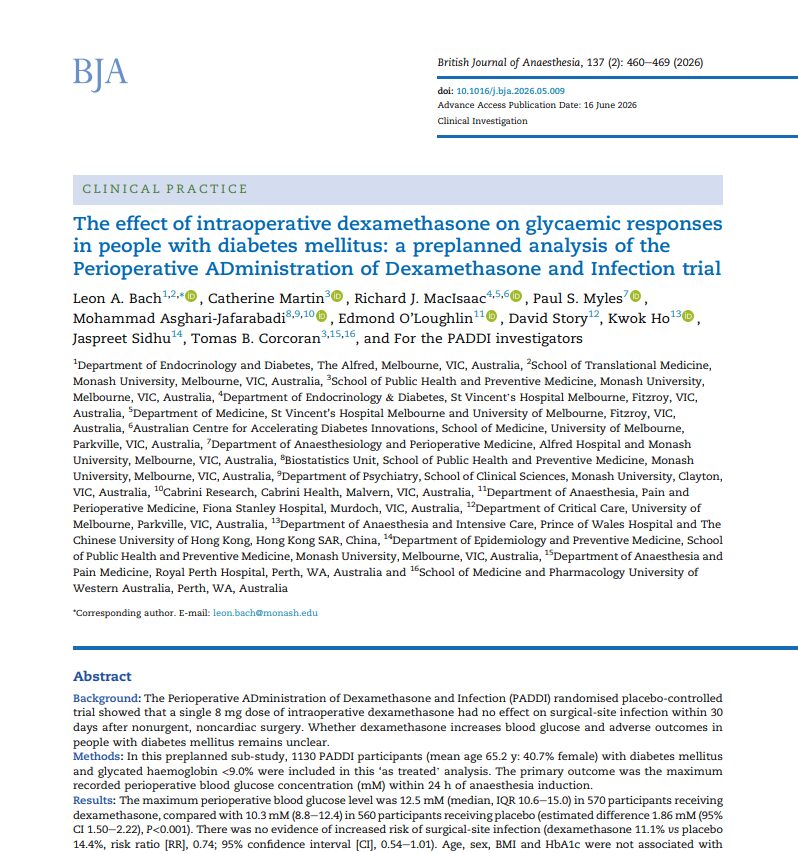
A large preplanned analysis of the PADDI trial provides reassuring evidence for anesthesiologists and surgeons managing patients with diabetes. Although a single 8 mg intraoperative dose of dexamethasone increased perioperative blood glucose levels, the study found no increase in surgical-site infections, additional insulin requirements, hypoglycemia, or hospital length of stay.
Dexamethasone remains a cornerstone of perioperative care
Dexamethasone is widely administered during surgery to prevent postoperative nausea and vomiting (PONV). Its effectiveness as an antiemetic has made it a routine component of anesthetic practice worldwide.
However, because dexamethasone is a glucocorticoid, clinicians have long questioned whether its hyperglycemic effects could increase postoperative complications, particularly among patients with diabetes mellitus.
The newly published preplanned analysis of the international Perioperative Administration of Dexamethasone and Infection (PADDI) trial addresses this important clinical concern using data from more than 1,100 surgical patients with diabetes.
The findings suggest that while dexamethasone causes a measurable but temporary increase in blood glucose concentrations, this does not translate into worse clinical outcomes during the first postoperative month in appropriately selected patients.
Study overview
Researchers performed a preplanned analysis of diabetic participants enrolled in the PADDI randomized controlled trial.
Study characteristics
- 1,130 patients with diabetes mellitus were included.
- Patients underwent elective or expedited non-cardiac, non-obstetric surgery.
- Participants received either:
- A single intravenous 8 mg dose of dexamethasone, or
- Placebo.
- Patients with poorly controlled diabetes (HbA1c > 9%) were excluded.
- Most participants (97%) had type 2 diabetes.
- Mean age was 65 years.
- Median diabetes duration was approximately eight years.
The primary outcome was the maximum blood glucose concentration recorded during the first 24 hours after anesthesia induction.
Researchers also evaluated:
- Surgical-site infections
- Insulin requirements
- Hypoglycemic events
- Hospital length of stay
- Blood glucose trends throughout the perioperative period
Blood glucose increased after dexamethasone
The principal finding confirmed that dexamethasone significantly increased perioperative blood glucose.
Maximum perioperative glucose
Median maximum blood glucose reached:
- 12.5 mmol/L in the dexamethasone group
- 10.3 mmol/L in the placebo group
This represented an adjusted median difference of 1.86 mmol/L, which was statistically significant.
Importantly, sensitivity analyses produced nearly identical results, strengthening confidence in the findings.
Hyperglycemia peaked 8–12 hours after surgery
One of the study’s most clinically useful observations involved the timing of glucose elevation.
Researchers found that glucose concentrations peaked approximately 8–12 hours after surgery, when patients receiving dexamethasone demonstrated the greatest increase compared with placebo.
At this time point:
- Median glucose measured 11.4 mmol/L with dexamethasone.
- Median glucose measured 9.0 mmol/L with placebo.
The difference reached 2.25 mmol/L, representing the largest observed separation between groups.
This finding suggests clinicians should be particularly vigilant during the first postoperative evening following dexamethasone administration.
No increase in surgical-site infections
Although blood glucose increased, one of the most reassuring findings was the absence of an increase in postoperative infections.
Within 30 days after surgery:
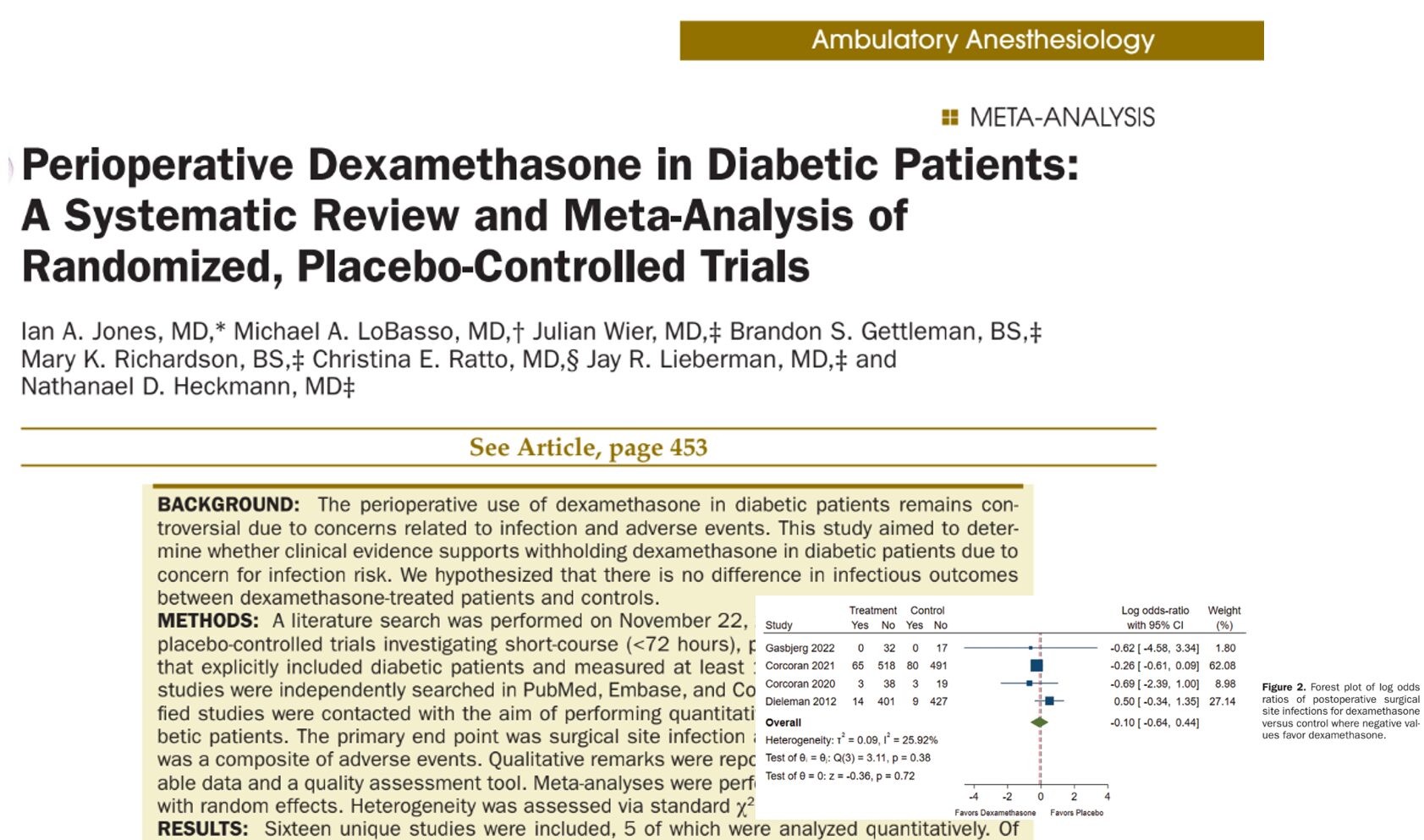
- Surgical-site infection occurred in 11.1% of patients receiving dexamethasone.
- Surgical-site infection occurred in 14.4% of patients receiving placebo.
The difference was not statistically significant.
Researchers also found no relationship between higher maximum perioperative glucose concentrations and the development of surgical-site infections after adjusting for potential confounding factors.
These findings suggest that transient dexamethasone-induced hyperglycemia may not meaningfully impair postoperative wound healing under contemporary perioperative management.
Insulin requirements remained similar
A common concern is that steroid-induced hyperglycemia could necessitate substantially greater insulin therapy.
Interestingly, this was not observed.
The proportion of patients requiring supplemental insulin beyond their usual diabetes treatment was similar between groups:
- 26.6% in the dexamethasone group
- 20.0% in the placebo group
The difference was not statistically significant.
Likewise, the intensity of insulin therapy, including single doses, multiple doses, or insulin infusions, did not differ significantly.
Hypoglycemia was uncommon
Aggressive correction of steroid-associated hyperglycemia can sometimes increase the risk of hypoglycemia.
Fortunately, this analysis found very few hypoglycemic episodes.
Blood glucose below 4 mmol/L occurred in:
- 0.8% of dexamethasone-treated patients
- 0.9% of placebo-treated patients
This indicates that perioperative glucose management remained safe despite transient glucose elevations.
Hospital stay was unaffected
Another reassuring finding involved postoperative recovery.
Researchers observed no significant difference in hospital length of stay between treatment groups.
This suggests that the temporary increase in glucose did not prolong recovery or delay discharge.
Results were consistent across patient groups
The investigators performed subgroup analyses to determine whether certain patients were at greater risk.
They examined differences according to:
- Age
- Sex
- Body mass index
- HbA1c
- Duration of surgery
Most subgroup analyses showed remarkably consistent findings.
The increase in blood glucose following dexamethasone occurred regardless of:
- Patient age
- Sex
- Obesity
- Baseline HbA1c
Only surgical duration demonstrated a modest interaction, with longer procedures showing a smaller difference between dexamethasone and placebo because glucose levels increased more in placebo patients during prolonged operations.
Why do glucocorticoids increase blood glucose?
Dexamethasone belongs to the glucocorticoid class of corticosteroids.
Glucocorticoids increase blood glucose through several physiological mechanisms, including:
- Increased hepatic gluconeogenesis
- Enhanced glycogenolysis
- Reduced peripheral insulin sensitivity
- Altered glucose uptake by skeletal muscle
- Increased insulin resistance during surgical stress
Surgery itself also stimulates stress hormones that promote hyperglycemia.
Consequently, patients receiving dexamethasone experience both the normal surgical stress response and the additional metabolic effects of glucocorticoids.
The PADDI analysis demonstrates that this combined effect is measurable but generally transient.
Why these findings matter
Patients with diabetes frequently undergo surgery.
Because postoperative nausea and vomiting can delay recovery, increase discomfort, prolong hospitalization, and reduce patient satisfaction, effective prophylaxis remains important.
Until now, some clinicians have been reluctant to administer dexamethasone routinely in diabetic patients because of concerns regarding:
- Hyperglycemia
- Infection risk
- Wound healing
- Increased insulin requirements
This study provides robust evidence suggesting these concerns may be less significant than previously feared in patients whose diabetes is reasonably controlled.
Clinical implications
For anesthesiologists, surgeons, endocrinologists, and perioperative physicians, the study provides several practical messages.
Key takeaways
- A single intraoperative 8 mg dose of dexamethasone increases perioperative glucose by approximately 2 mmol/L.
- Blood glucose peaks approximately 8–12 hours after administration.
- Surgical-site infection risk does not increase.
- Additional insulin requirements are not significantly higher.
- Hypoglycemia remains uncommon.
- Hospital length of stay is unchanged.
These findings support continued use of dexamethasone for postoperative nausea and vomiting prophylaxis in patients with diabetes whose glycemic control is not severely impaired.
Bottom line
The latest analysis from the PADDI trial provides important reassurance for perioperative clinicians. While intraoperative dexamethasone predictably causes a modest, temporary rise in blood glucose among patients with diabetes, this increase was not associated with higher rates of surgical-site infection, greater insulin use, more hypoglycemia, or prolonged hospitalization. For patients with reasonably controlled diabetes undergoing non-cardiac surgery, these findings support the continued use of dexamethasone as an effective strategy for preventing postoperative nausea and vomiting while emphasizing the importance of appropriate postoperative glucose monitoring during the first 24 hours after surgery.
Reference: Bach LA et al. The effect of intraoperative dexamethasone on glycaemic responses in people with diabetes mellitus: a preplanned analysis of the Perioperative ADministration of Dexamethasone and Infection trial. Br J Anaesth. 2026;137:460-469.
For more information on diabetes mellitus, check out the Anesthesiology Manual of NYSORA!