 Nerve Blocks App
 Anesthesia Assistant App
 Ultrasound Pain App
 Pain Medicine Assistant App
 POCUS App
 IV Access App
 MSK Knee App
 VetRA App

 Nerve Block Manual 2027
 Nerve Block Manual
 Regional Anesthesia Updates
 Anesthesiology Manual
 Anesthesiology Review
 Anesthesia Updates 2025
 Anesthesia Updates 2026
 Pediatric Anesthesia Updates
 Airway Management Updates
 US Interventional Pain Manual
 Pain Medicine Updates
 Mastering Difficult IV Access
 PACU Nursing Manual
 RA Veterinary Manual
 Books
 About

 Back to News
 9 min read
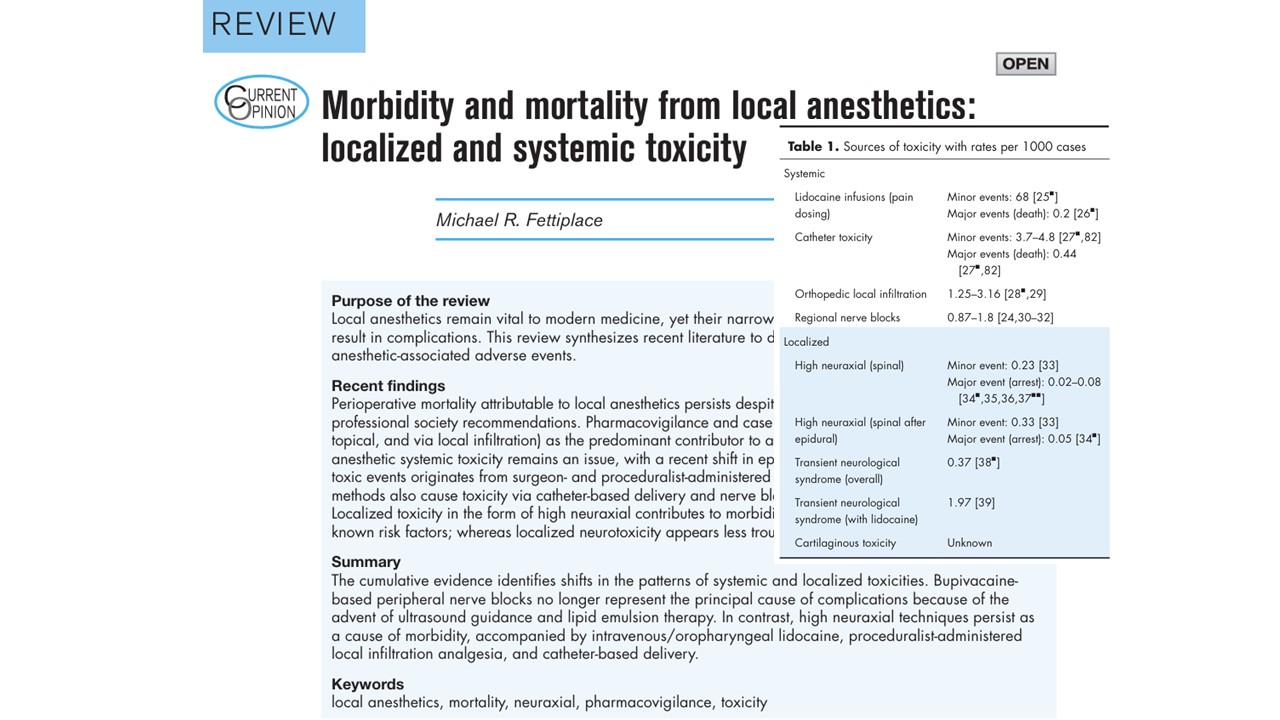

A randomized clinical trial published in Anesthesiology suggests that opioid-free anesthesia (OFA) may reduce postoperative complications in adults undergoing cardiac surgery with cardiopulmonary bypass (CPB).
The OFACAR trial, conducted by Guinot and colleagues at two French university hospitals, included 320 patients randomized to receive either multimodal opioid-free anesthesia or conventional opioid-based anesthesia using sufentanil.
The primary composite endpoint, comprising major cardiovascular, respiratory, neurological, or renal complications or death within 30 days, occurred in 75.4% of patients receiving OFA compared with 84.5% receiving opioid-based anesthesia.
Although the difference reached statistical significance, the primary outcome had a fragility index of only 1, meaning that a change in the outcome classification of a single patient could eliminate statistical significance.
The results therefore provide encouraging, but not definitive, evidence supporting opioid-free techniques in cardiac anesthesia.
Why reconsider opioids in cardiac surgery?
Opioids have been central to cardiac anesthesia for decades because of their potent analgesic effects, attenuation of the surgical stress response, and relative hemodynamic stability.
Sufentanil and fentanyl remain widely used during cardiac procedures, particularly those requiring cardiopulmonary bypass.
However, opioid administration is associated with several clinically important adverse effects:
- Respiratory depression and prolonged sedation
- Postoperative nausea and vomiting
- Reduced gastrointestinal motility and postoperative ileus
- Urinary retention
- Potential immunomodulatory effects
- Risk of persistent postoperative opioid use
These complications may interfere with enhanced recovery pathways and postoperative rehabilitation.
Opioid-free anesthesia replaces intraoperative opioids with combinations of nonopioid agents targeting different mechanisms of nociception, inflammation, and central sensitization.
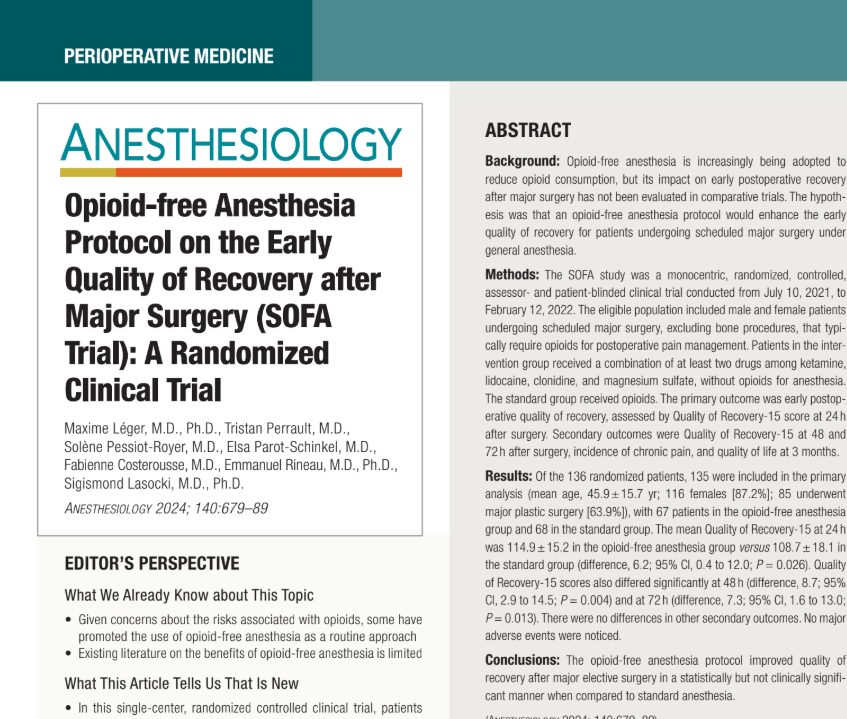
Previous observational studies in cardiac surgery suggested potential benefits, including fewer respiratory complications, reduced delirium, and shorter intensive care unit stays.
Nevertheless, randomized evidence supporting this approach in cardiac surgery has remained limited.
The OFACAR trial was designed to address this evidence gap.
The OFACAR trial: Study design and patient population
The OFACAR study was a randomized, controlled, single-blind, multicenter superiority trial conducted between August 2021 and December 2023 at university hospitals in Dijon and Besançon, France.
- 320 Randomized patients
- 2 French university hospitals
- 30 Days for primary outcome
Eligible participants were adults scheduled for elective cardiac surgery requiring CPB, including coronary artery bypass grafting, valvular procedures, ascending aortic surgery, and combined operations.
The mean age was 66.4 years, approximately 77% were men, and the mean EuroSCORE II was 2.0%.
Patients with chronic opioid use, severe renal or hepatic dysfunction, selected conduction abnormalities, and several other contraindications were excluded.
Randomization was stratified by center and EuroSCORE II. Patients, postoperative clinicians, and outcome assessors were blinded to treatment allocation, although the intraoperative anesthesia team could not be blinded.
What anesthesia protocols were compared?
Opioid-free anesthesia: 159 patients
The OFA protocol combined intravenous medications administered at induction:
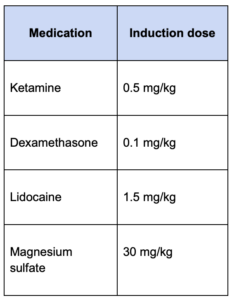
Anesthesia was maintained with propofol and continuous intravenous lidocaine, initially at 1.5 mg/kg/h until sternotomy, followed by 1 mg/kg/h until completion of surgery.
Conventional opioid-based anesthesia: 161 patients
Patients received propofol combined with target-controlled sufentanil infusion, initiated at an effect-site concentration of 0.5 ng/mL. Sufentanil was discontinued at the end of surgery.
Importantly, both groups received standardized postoperative analgesia using paracetamol and morphine, including patient-controlled analgesia.
Consequently, OFA in this study referred to the intraoperative anesthetic technique, not complete avoidance of opioids throughout the perioperative period.
Key clinical findings: Fewer complications with opioid-free anesthesia
The primary outcome was the occurrence of at least one major postoperative complication or death within 30 days.
Primary composite endpoint at 30 days
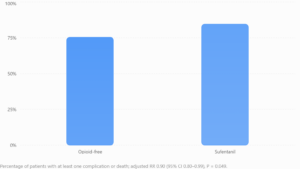
The absolute risk difference was approximately 9 percentage points, corresponding to a relative risk of 0.90 (95% confidence interval [CI], 0.80–0.99; P = 0.049).
This represents an approximately 10% relative reduction in the composite endpoint.
However, the overall event rate was high in both groups, largely because perioperative myocardial injury was included in the composite outcome.
Cardiovascular complications: The principal driver of benefit
Cardiovascular complications occurred in 64.2% of OFA patients compared with 75.2% of controls (adjusted RR 0.86; 95% CI 0.74–0.99; P = 0.031).
The difference was predominantly associated with lower rates of perioperative myocardial injury and/or myocardial infarction.
Selected postoperative outcomes
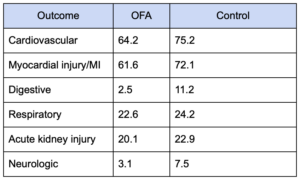
The findings raise the possibility that multimodal nonopioid anesthesia may influence myocardial injury associated with cardiopulmonary bypass.
Nevertheless, the clinical interpretation of postoperative troponin elevation remains challenging.
When myocardial injury was defined using a more stringent troponin threshold exceeding 200 times the upper reference limit, the primary composite endpoint no longer reached statistical significance (adjusted P = 0.074).
This sensitivity analysis underscores the importance of endpoint definitions when interpreting the apparent cardiovascular benefit.
Gastrointestinal complications: A notable reduction
Digestive complications were significantly less frequent in the OFA group:
- OFA: 2.5% (4 patients)
- Sufentanil: 11.2% (18 patients)
- Adjusted relative risk: 0.22 (95% CI 0.08–0.65)
- P value: 0.007
The difference was mainly driven by postoperative ileus, occurring in 1.9% versus 8.1% of patients.
This observation is biologically plausible because opioids inhibit gastrointestinal motility, while intravenous lidocaine may facilitate postoperative recovery of bowel function.
The finding is particularly relevant to enhanced recovery after cardiac surgery, although larger trials are needed to establish its reproducibility.
Mortality: An encouraging but preliminary signal
No deaths occurred in the OFA group during the first 30 postoperative days, compared with six deaths (3.7%) in the sufentanil group.
At 90 days, mortality remained zero in the OFA group, compared with seven deaths (4.3%) in the control group (P = 0.008).
While potentially important, these findings require considerable caution.
The study was not powered specifically to evaluate mortality, and the small number of deaths prevents definitive conclusions about survival benefit.
Respiratory, neurological, and renal outcomes
Despite previous observational findings, OFACAR did not demonstrate statistically significant differences in:
- Respiratory complications: 22.6% versus 24.2%
- Neurological complications: 3.1% versus 7.5%
- Acute kidney injury: 20.1% versus 22.9%
The trial may have been underpowered to detect differences in these individual complications.
Postoperative opioid consumption and recovery
One important observation was that postoperative morphine requirements were similar between groups.
Median postoperative morphine consumption was 17 mg in the OFA group and 20 mg in controls (P = 0.407).
However, total perioperative morphine-equivalent exposure was substantially lower with OFA: 28 mg versus 113 mg (P less than 0.0001).
Postoperative nausea and vomiting occurred in 13.3% versus 29.8% of patients, although the reported P value of 0.027 did not meet the study’s multiplicity-adjusted threshold of 0.01 for secondary outcomes.
No significant differences were observed in ICU length of stay or total hospital stay.
These results suggest that intraoperative opioid avoidance can substantially reduce overall opioid exposure without necessarily reducing postoperative analgesic requirements.
Why might opioid-free anesthesia protect the heart?
The potential benefits of OFA may extend beyond eliminating opioid-related adverse effects.
The four nonopioid medications used in OFACAR have pharmacological properties that could influence myocardial ischemia–reperfusion injury and the inflammatory response associated with CPB.
Lidocaine has antiarrhythmic, anti-inflammatory, and potential myocardial protective properties. It may also improve gastrointestinal motility.
Ketamine provides analgesia through N-methyl-D-aspartate receptor antagonism and has potential anti-inflammatory and ischemic preconditioning effects.
Dexamethasone may attenuate systemic inflammation associated with CPB, although evidence regarding its effect on major clinical outcomes remains inconsistent.
Magnesium sulfate contributes to membrane stabilization, modulates calcium-dependent processes, and may reduce susceptibility to ventricular arrhythmias.
However, because all four medications were administered as a combined protocol, the trial cannot determine which agent, or whether opioid avoidance itself, was responsible for the observed benefits.
Important limitations: Why the results are not definitive
Despite its randomized design, the OFACAR trial has several limitations.
The most important is the fragility index of 1 for the primary endpoint. This indicates that the statistical significance of the principal result is highly sensitive to a small change in event classification.
Additional considerations include:
- The relatively modest sample size of 320 patients
- The high contribution of troponin-defined myocardial injury to the primary composite endpoint
- Loss of statistical significance in the more stringent troponin sensitivity analysis
- Inability to blind intraoperative anesthesiologists
- Exclusion of several higher-risk patient groups
- Comparison with sufentanil rather than shorter-acting opioids such as remifentanil
- Inability to separate the effects of individual nonopioid medications
A post hoc hierarchical win-ratio analysis also favored OFA numerically but did not reach statistical significance (win ratio 1.27; 95% CI 0.95–1.73; P = 0.082).
These limitations reinforce the investigators’ conclusion that the findings should be considered hypothesis-generating.
Implications for cardiac anesthesia practice
The OFACAR trial challenges the assumption that intraoperative opioids are indispensable for cardiac surgery with cardiopulmonary bypass.
Its findings suggest that carefully selected patients may undergo cardiac surgery using a multimodal, opioid-free anesthetic regimen without an apparent increase in major postoperative complications.
For cardiac anesthesiologists, several practical implications emerge.
- Consider multimodal analgesia as an important component of cardiac anesthesia. Combining agents with complementary mechanisms may reduce intraoperative opioid exposure while maintaining adequate anesthesia.
- Prioritize patient selection. The OFACAR population consisted of selected adults undergoing elective surgery. Its results should not automatically be extrapolated to emergency surgery or patients with major contraindications to the study medications.
- Maintain appropriate postoperative analgesia. Intraoperative opioid avoidance does not eliminate the need for effective postoperative pain management, including opioids when clinically indicated.
- Monitor the safety of individual medications. Intravenous lidocaine, ketamine, magnesium, and dexamethasone have distinct pharmacological risks requiring appropriate patient selection, dosing, and monitoring.
- Avoid premature changes to routine practice. Larger multicenter trials are necessary before recommending OFA as a new standard for cardiac surgery.
Future investigations should also compare OFA with opioid-sparing approaches and remifentanil-based anesthesia, ideally using clinically important hierarchical endpoints and standardized definitions of myocardial injury.
Conclusion
The OFACAR randomized clinical trial provides important new evidence that opioid-free anesthesia may improve postoperative outcomes after cardiac surgery with cardiopulmonary bypass.
The observed reductions in cardiovascular and gastrointestinal complications, alongside substantially lower perioperative opioid exposure, are clinically interesting and biologically plausible.
However, the statistical fragility of the primary endpoint, sensitivity to myocardial injury definitions, and limited sample size mean that the findings should be interpreted cautiously.
Opioid-free anesthesia represents a promising strategy in cardiac surgery, but its role as a routine alternative to conventional opioid-based anesthesia remains to be established.
Further adequately powered multicenter randomized trials will be essential to determine whether these encouraging results translate into consistent improvements in major clinical outcomes and survival.
Reference: Guinot PG et al. Opioid-free Anesthesia in Cardiac Surgery: The OFACAR Randomized Clinical Trial. Anesthesiology. 2026;145:557-568.
Take your anesthesia knowledge further with NYSORA’s Anesthesia Assistant
From opioid-free anesthesia to complex cardiac procedures, clinical decision-making requires reliable, evidence-based knowledge.
NYSORA’s Anesthesia Assistant puts practical anesthesia guidance, drug information, and clinical resources at your fingertips, helping you make informed decisions in everyday practice.