- Learn
-
Apps
View all apps
Veterinary
 VetRA App

- Books
- Events
- News
- Partners
- About
- For Clinicians
 VetRA App

Standard Rate

Morning Session
07:30 - 16:00
Morning Session
07:30 - 14:45
Standard Rate
Earlybird discounted rate €2,049.00, the standard rate is within 1 month of course €2,149.00. Registration includes course materials, light breakfast, refreshments & lunch. Please NOTE that accommodation is not included in the registration price.

€2,149
Expertise

Admir Hadzic
MD, PhD.
Director – NYSORA, Anesthesiologist, Professor of Anesthesiology, Department of Anesthesiology, ZOL, Genk, Belgium

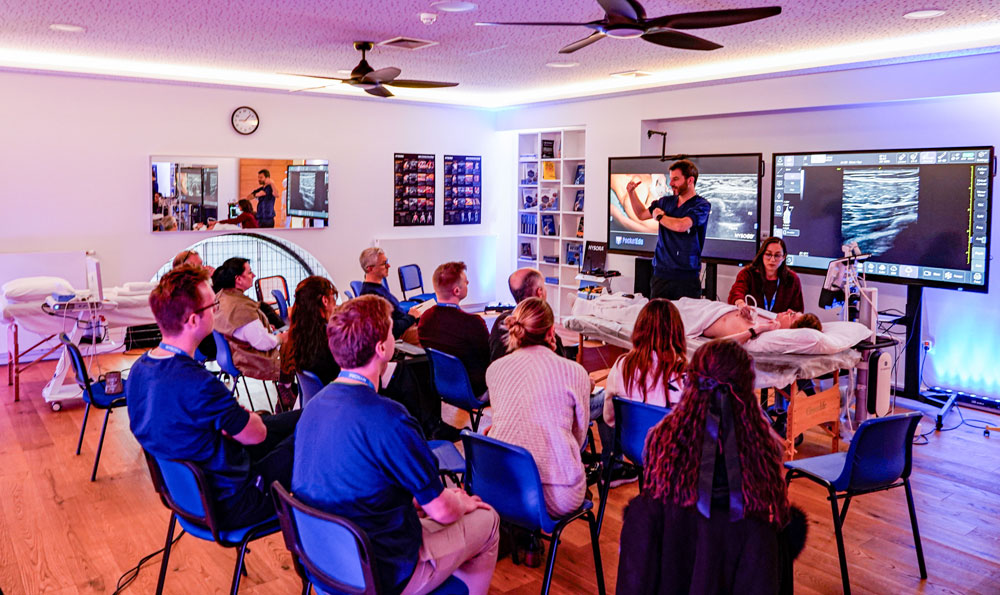
The Ultrasound-Guided Regional Anesthesia Boutique Workshop , Leuven, Belgium 27/06/2026 – 28/06/2026, has been accredited by the European Accreditation Council for Continuing Medical Education (EACCME®) with 10.5 European CME credits (ECMEC®s). Each medical specialist should claim only those hours of credit that he/she actually spent in the educational activity.
Through an agreement between the Union Européenne des Médecins Spécialistes and the American Medical Association, physicians may convert EACCME® credits to an equivalent number of AMA PRA Category 1 CreditsTM. Information on the process to convert EACCME® credit to AMA credit can be found at https://edhub.ama-assn.org/pages/applications.
What is a CME activity? A Continuing Medical Education(CME) activity serves to maintain, develop, or increase the knowledge, skills, and professional performance and relationships that a physician uses to provide services for patients, the public, or the profession.
Why do physicians need continuing medical education (CME) credit? Physicians use CME credit to demonstrate that they have participated in educational activities and obtained CME credit to document meeting the requirements of state medical boards, medical specialty societies, specialty boards, hospital medical staffs, the Joint Commission, insurance groups, and others
Who accredits the Course? Accreditation by the EACCME means that the CME/CPD activity provided is of high scientific value, is free of commercial bias and promotes active adult learning. This is of paramount importance to doctors who need to report to their National Accreditation Authority on their CME/CPD activity over a certain period of time, and this even more now that many national systems are (becoming) mandatory and not voluntary. By attending an EACCME accredited event, they will be able to obtain European CME credits (ECMEC) which are recognised not only in a majority of European countries (with which the EACCME has signed agreements), but also in the USA and Canada. By handing in their EACCME certificate to their National Accreditation Authority, their credits will automatically be recognised and converted into national credits.
What documentation does a physician receive for participating in a certified CME activity provided by an accredited CME provider? A CME certificate will be issued and can be used to prove attendance.
 Nerve Blocks App
 Anesthesia Assistant App
 Ultrasound Pain App
 Pain Medicine Assistant App
 POCUS App
 IV Access App
 MSK Knee App
 Nerve Block Manual
 Regional Anesthesia Updates
 Anesthesiology Manual
 Anesthesiology Review
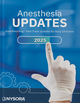 Anesthesia Updates 2025
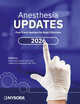 Anesthesia Updates 2026
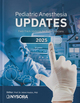 Pediatric Anesthesia Updates
 Airway Management Updates
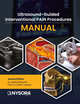 US Interventional Pain Manual
 Pain Medicine Updates
 Mastering Difficult IV Access
 PACU Nursing Manual
 RA Veterinary Manual
 Books
Books About
About

 Download PDF Agenda