 Nerve Blocks App
 Anesthesia Assistant App
 Ultrasound Pain App
 Pain Medicine Assistant App
 POCUS App
 IV Access App
 MSK Knee App
 VetRA App
 Nerve Block Manual
 Regional Anesthesia Updates
 Anesthesiology Manual
 Anesthesiology Review
 Anesthesia Updates 2025
 Anesthesia Updates 2026
 Pediatric Anesthesia Updates
 Airway Management Updates
 US Interventional Pain Manual
 Pain Medicine Updates
 Mastering Difficult IV Access
 PACU Nursing Manual
 RA Veterinary Manual
 Books
Books About
About
 Back to News
 3 min read
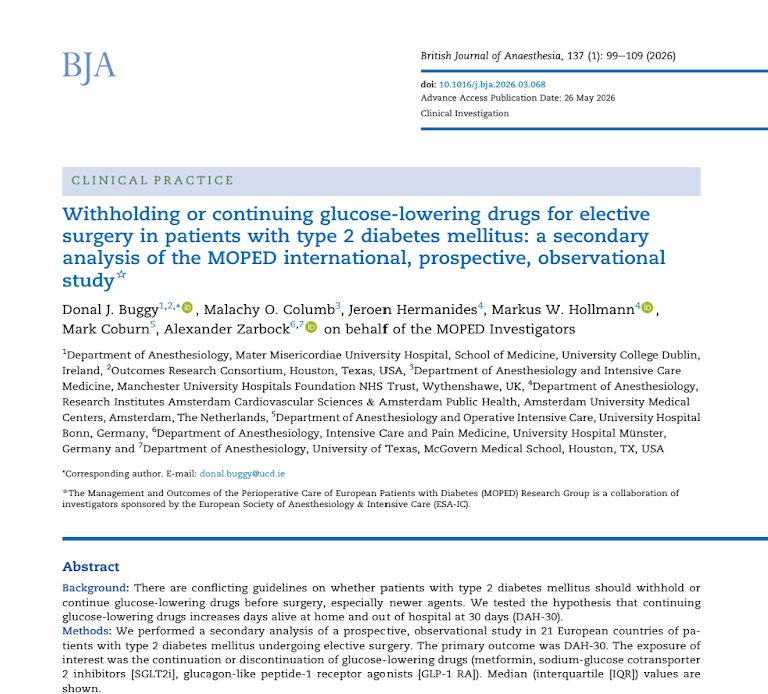
A large 2026 international study suggests that continuing metformin on the day of elective surgery may offer modest benefits for patients with type 2 diabetes mellitus, while no clear advantage or disadvantage was found for continuing or withholding SGLT2 inhibitors or GLP-1 receptor agonists. The findings come from a secondary analysis of the multinational MOPED (Management and Outcomes of Perioperative Care among European Diabetic Patients) study, published in the British Journal of Anaesthesia (Buggy et al.).
Why this study matters
The perioperative management of glucose-lowering medications remains controversial.
Different professional organizations recommend different approaches, particularly for newer medications such as:
- Metformin
- Sodium-glucose cotransporter-2 (SGLT2) inhibitors
- Glucagon-like peptide-1 (GLP-1) receptor agonists
Stopping these medications may worsen glycemic control, while continuing some drugs has raised concerns about complications such as euglycemic diabetic ketoacidosis or delayed gastric emptying.
Study overview
Researchers analyzed data from the prospective MOPED study involving patients with type 2 diabetes undergoing elective surgery.
Study population
- Nearly 5,000 patients undergoing elective surgery
- 89 hospitals
- 21 European countries
- Average age: approximately 64 years
- 57% male
- Median diabetes duration: 9 years
Key findings
Metformin
Patients who continued metformin on the day of surgery experienced:
- Slightly more days alive and at home within 30 days after surgery (DAH-30)
- Lower rates of postoperative ketoacidosis
- Fewer episodes of hypoglycemia
- No reported cases of metformin-associated lactic acidosis
After adjusting for differences in patient characteristics and surgical complexity, the benefit remained statistically significant but modest, approximately 0.5 additional days alive at home.
SGLT2 inhibitors
Researchers found:
- No significant improvement in the primary outcome (DAH-30)
- No increase in diabetic ketoacidosis in this cohort
- Sample size was relatively small, limiting firm conclusions
The authors therefore recommend that current guideline recommendations regarding temporary withholding of SGLT2 inhibitors before surgery should remain unchanged until stronger evidence becomes available.
GLP-1 receptor agonists
For GLP-1 receptor agonists:
- No significant difference in overall postoperative recovery
- Better perioperative glucose control was observed
- No aspiration events were reported
- Too few patients were included to draw definitive conclusions regarding safety or efficacy
Clinical implications
The study highlights an important gap between guidelines and real-world practice.
Although many current recommendations support continuing metformin perioperatively, only a small proportion of patients actually continued taking it on the day of surgery.
The findings suggest that:
- Continuing metformin appears safe for most patients undergoing elective surgery.
- There was no evidence that continuing metformin increased lactic acidosis.
- More randomized clinical trials are needed before changing recommendations for SGLT2 inhibitors or GLP-1 receptor agonists.
Practical takeaways
- Continue following current institutional perioperative diabetes protocols.
- Consider that continuing metformin may be appropriate for many elective surgical patients.
- Individualize decisions based on renal function, surgical risk, and comorbidities.
- Exercise caution with SGLT2 inhibitors and GLP-1 receptor agonists until stronger evidence becomes available.
- Future randomized trials are needed to determine optimal perioperative management of newer glucose-lowering therapies.
Reference: Buggy DJ et al. Withholding or continuing glucose-lowering drugs for elective surgery in patients with type 2 diabetes mellitus: a secondary analysis of the MOPED international, prospective, observational study. Br J Anaesth. 2026;137:99-109.
Read more about diabetes mellitus and perioperative care in our NYSORA Anesthesiology Manual.