 Nerve Blocks App
 Anesthesia Assistant App
 Ultrasound Pain App
 Pain Medicine Assistant App
 POCUS App
 IV Access App
 MSK Knee App
 VetRA App
 Nerve Block Manual
 Regional Anesthesia Updates
 Anesthesiology Manual
 Anesthesiology Review
 Anesthesia Updates 2025
 Anesthesia Updates 2026
 Pediatric Anesthesia Updates
 Airway Management Updates
 US Interventional Pain Manual
 Pain Medicine Updates
 Mastering Difficult IV Access
 PACU Nursing Manual
 RA Veterinary Manual
 Books
Books About
About
 Back to News
 9 min read

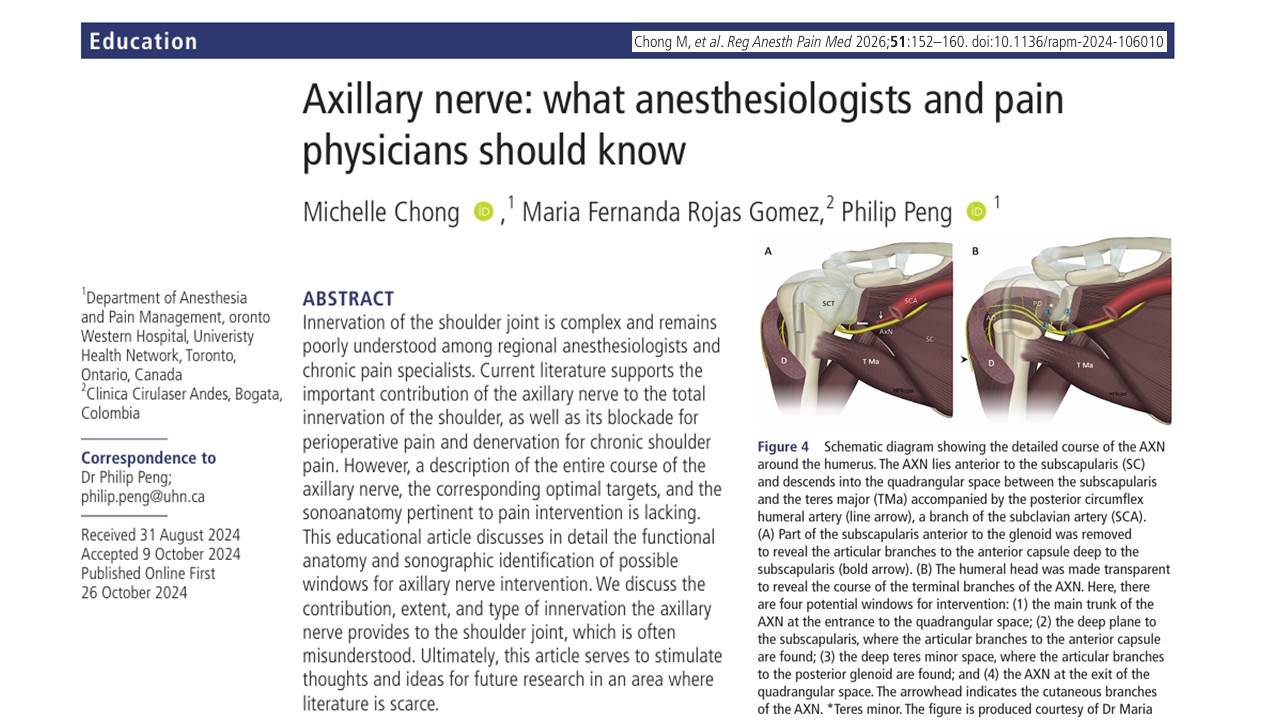
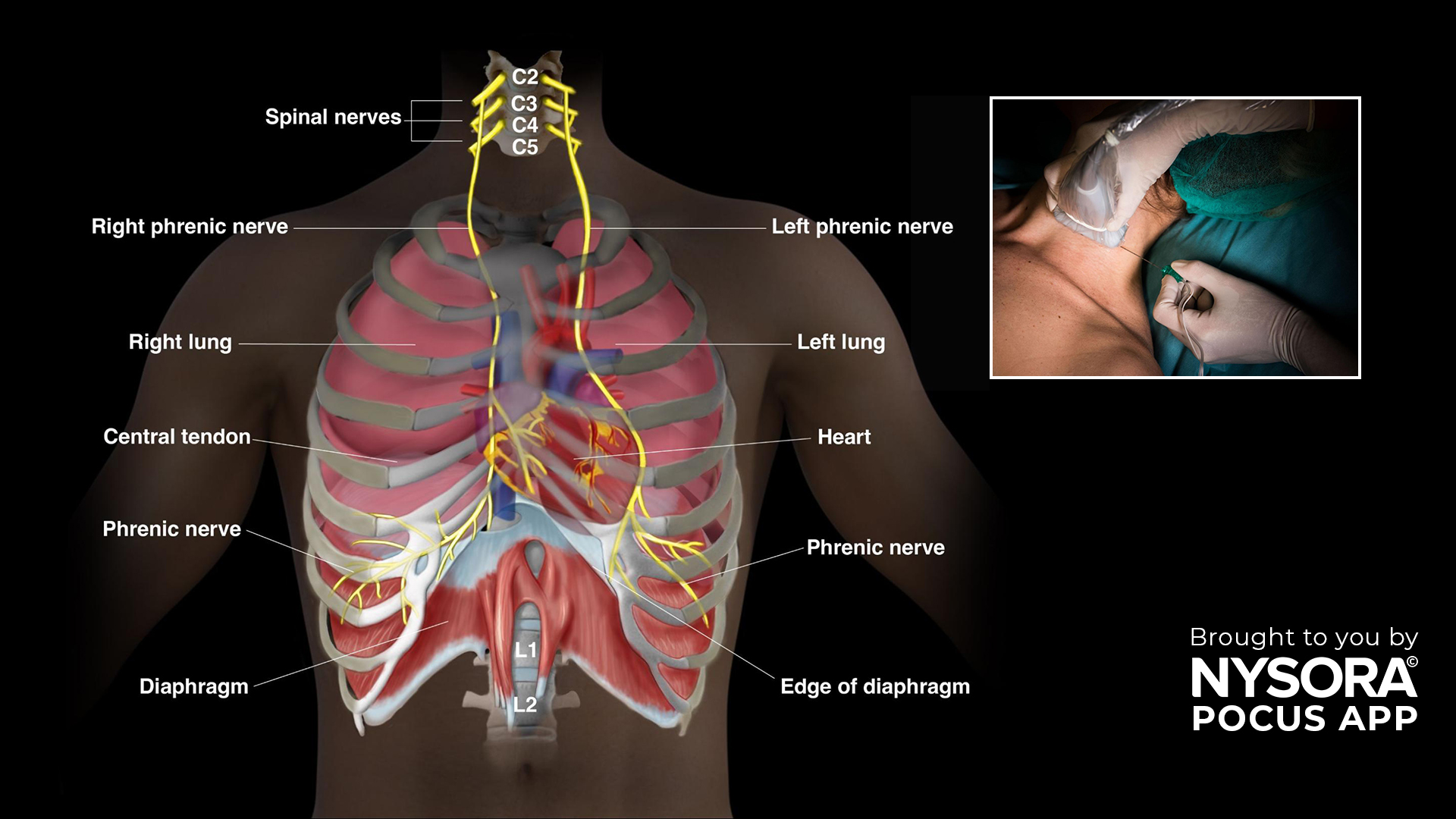
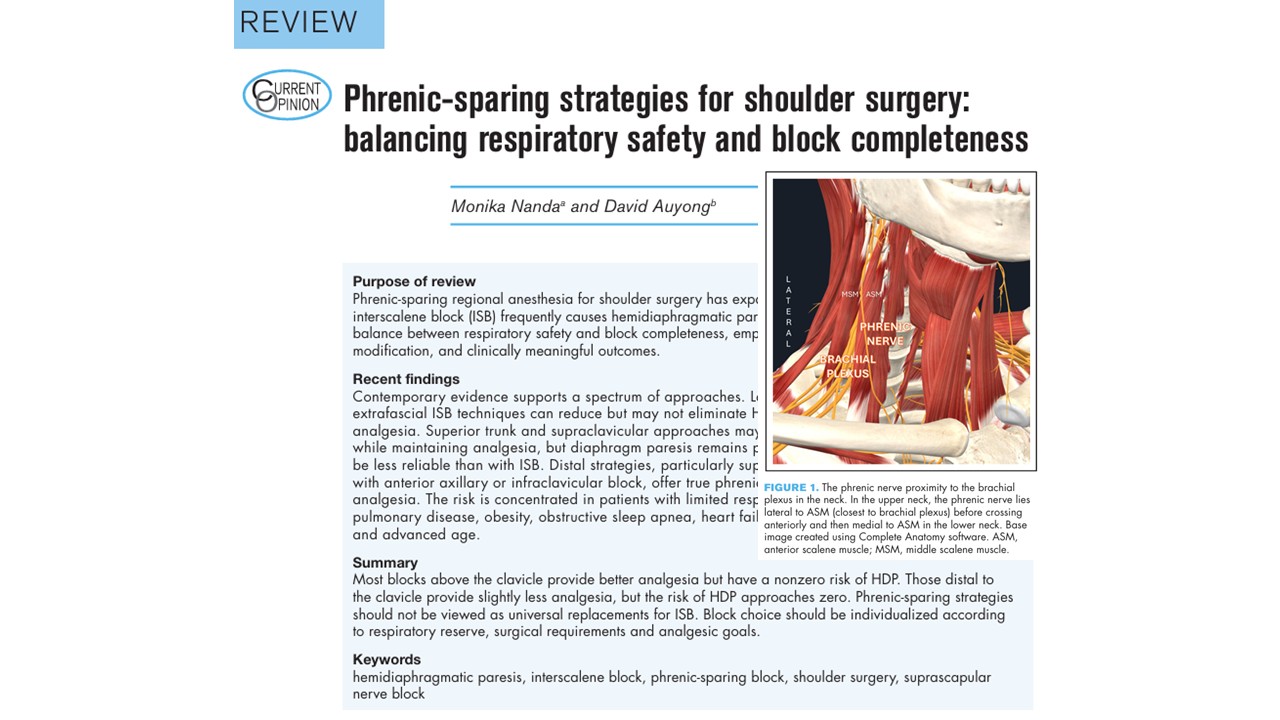
Regional anesthesia plays a central role in pain management for shoulder surgery, and the interscalene block (ISB) remains the reference standard because of its reliable and comprehensive coverage of shoulder innervation. However, this effectiveness comes with an important physiologic consequence: ipsilateral hemidiaphragmatic paresis (HDP) occurs frequently because of the close anatomical relationship between the brachial plexus and phrenic nerve. For most healthy patients, temporary diaphragmatic dysfunction is well tolerated. For patients with limited respiratory reserve, however, even unilateral impairment may contribute to dyspnea, hypoxemia, prolonged postoperative monitoring, or escalation of respiratory support.
These concerns have driven increasing interest in phrenic-sparing regional anesthesia. A 2026 review by Monika Nanda and David Auyong examines the growing range of techniques available for shoulder surgery and emphasizes that phrenic sparing should not be viewed as an all-or-nothing objective. Instead, clinicians must balance preservation of diaphragmatic function against the completeness, reliability, and duration of analgesia or surgical anesthesia.
The review highlights an important clinical principle: moving the block farther from the phrenic nerve generally improves respiratory preservation, but may sacrifice some shoulder coverage. The optimal strategy therefore depends on the patient’s respiratory reserve, surgical requirements, analgesic goals, and whether a single injection or continuous catheter is planned.
Study objective and methods
This article is a clinical review examining current evidence surrounding phrenic-sparing regional anesthesia for shoulder surgery. Rather than asking whether ISB should be universally replaced, the authors focus on how clinicians can balance respiratory safety with reliable shoulder analgesia and anesthesia.
The review evaluates the anatomy and clinical evidence behind a spectrum of regional techniques, including:
- Modified interscalene approaches, such as low-volume, lower-concentration, and extrafascial injection.
- Superior trunk block, designed to retain proximal shoulder coverage while potentially decreasing phrenic involvement.
- Supraclavicular approaches, including targeted injection around superior trunk components.
- An anterior suprascapular nerve block, which moves the injection laterally away from the phrenic nerve.
- Costoclavicular block, targeting the brachial plexus below the clavicle.
- Distal combination techniques, including posterior suprascapular nerve block combined with axillary or infraclavicular blockade.
- Continuous catheter techniques, which may extend analgesia but can also prolong respiratory effects.
Importantly, the authors distinguish ultrasound- or spirometry-defined HDP from clinically meaningful respiratory complications. The authors emphasize patient-centered outcomes—including dyspnea, oxygen requirement, prolonged recovery, discharge readiness, and escalation of care—as more clinically relevant measures of respiratory safety.
Key findings
Hemidiaphragmatic paresis does not always mean respiratory compromise
One of the review’s most important messages is that HDP is a physiologic outcome rather than automatically a clinical complication.
Classic research using large-volume ISB demonstrated HDP in essentially all patients, accompanied by an approximately 27% reduction in forced vital capacity. However, these historical findings largely reflect high-volume techniques that predate contemporary ultrasound-guided regional anesthesia.
Most patients with adequate respiratory reserve tolerate transient unilateral diaphragmatic dysfunction without meaningful symptoms. The consequences become more important when reduced diaphragmatic excursion combines with postoperative pain, supine positioning, opioid administration, atelectasis, or underlying cardiopulmonary disease.
Clinically relevant consequences may include:
- Dyspnea or difficulty taking a deep breath
- Hypoxemia and supplemental oxygen requirements
- Prolonged post-anesthesia care unit monitoring
- Delayed ambulatory discharge
- Unplanned hospital admission
- Need for noninvasive ventilation or higher-acuity monitoring
Therefore, clinicians should ask not simply whether HDP will occur, but whether a particular patient has sufficient respiratory reserve to tolerate it.
Who may benefit most from phrenic-sparing anesthesia?
The review identifies several patient characteristics that may increase vulnerability to respiratory complications.
Patients potentially benefiting most include those with:
- Pre-existing pulmonary disease, including chronic obstructive pulmonary disease, moderate-to-severe asthma, restrictive lung disease, or otherwise limited pulmonary reserve.
- Obesity, which can reduce functional residual capacity and increase the work of breathing.
- Obstructive sleep apnea, particularly when combined with opioid exposure and postoperative hypoventilation.
- Congestive heart failure, which may further limit cardiopulmonary reserve.
- Contralateral phrenic nerve palsy or previous pneumonectomy, where loss of additional diaphragmatic function could be poorly tolerated.
- Low baseline room-air oxygen saturation.
- Advanced age or American Society of Anesthesiology physical status III or higher.
- Planned continuous catheter analgesia, which may prolong phrenic involvement beyond the immediate postoperative period.
A retrospective study discussed in the review found that increasing body mass index, increasing age, asthma, congestive heart failure, lower baseline oxygen saturation, and ASA physical status III or greater were associated with respiratory complications following continuous ISB for shoulder arthroplasty.
Can the interscalene block itself become more phrenic-sparing?
The evidence suggests that modification can substantially reduce—but not eliminate—HDP.
Lower volume
Reducing local anesthetic volume is among the best-established strategies. One study found that decreasing injectate volume from 20 mL to 5 mL reduced HDP from 100% to 45% without compromising analgesia.
Other investigations similarly demonstrated less phrenic nerve spread and respiratory impairment with low-volume ultrasound-guided ISB.
The trade-off is important: reducing the total mass of local anesthetic may shorten block duration.
Lower concentration
Concentration also matters. With a fixed 20-mL volume, reducing bupivacaine from 0.25% to 0.125% decreased HDP from 78% to 21% while maintaining clinically acceptable analgesia in one study.
However, concentration reduction does not guarantee phrenic sparing, particularly when relatively large volumes and anesthetic-range concentrations are used.
Extrafascial injection
Moving local anesthetic outside the conventional interscalene fascial location can reduce HDP. One study reported a reduction from 90% with intrafascial injection to 21% with extrafascial injection.
However, greater distance from the brachial plexus may potentially compromise block density and reliability. The review authors therefore do not favor this technique when dependable block performance is essential.
Moving distally: greater respiratory preservation with potential trade-offs
The review presents regional anesthesia as a continuum between complete shoulder coverage and maximal phrenic sparing.
The conceptual diagram on page 8 illustrates this particularly well: interscalene and superior trunk techniques sit toward the more complete anesthesia end of the spectrum, while posterior suprascapular and distal combination techniques move toward greater phrenic preservation.
Superior trunk block
Superior trunk block can provide postoperative analgesia comparable to ISB while improving respiratory function in some studies.
However, it should not be considered genuinely phrenic-free. One study using 15 mL of 0.5% ropivacaine reported HDP in 76% of superior trunk blocks compared with 98% of ISBs.
Evidence also suggests that superior trunk block may provide noninferior analgesia, but not necessarily equivalent surgical anesthesia.
Supraclavicular and anterior suprascapular approaches
Supraclavicular approaches may preserve pulmonary function better than ISB while providing useful shoulder coverage, particularly when targeting superior trunk structures.
An anterior suprascapular blockade moves the injection farther laterally from the phrenic nerve and can offer significant phrenic sparing. Nevertheless, proximal spread remains possible, so the risk is not zero.
Distal combination blocks
The strongest phrenic-sparing strategies generally involve blocks below or well away from the clavicular region.
The posterior suprascapular nerve block is particularly lung-sparing because it targets the nerve after it has traveled far from the phrenic nerve. However, suprascapular blockade alone predominantly covers the posterior shoulder and may therefore require additional blockade.
Combining suprascapular with axillary or infraclavicular blockade can substantially improve coverage.
In one study of arthroscopic shoulder surgery, combined infraclavicular-anterior suprascapular blockade produced similar 24-hour pain scores, opioid consumption, and patient satisfaction compared with ISB. HDP occurred in 68–88% with ISB versus 0% with the combined approach.
Other research, however, has documented HDP in approximately 10–15% of patients receiving some infraclavicular-suprascapular combinations, reinforcing that even distal strategies may not universally eliminate risk.
Clinical implications
The review challenges the idea that a single “best” block exists for every shoulder procedure.
For a healthy patient with substantial respiratory reserve and a need for highly reliable surgical anesthesia or analgesia, the benefits of ISB may outweigh the physiologic effects of temporary HDP.
For a patient with severely limited pulmonary reserve, the equation changes. A distal combination technique may offer slightly less complete analgesia but provide a clinically important respiratory safety advantage.
A practical approach is therefore:
- Assess baseline respiratory reserve, including pulmonary disease, obesity, obstructive sleep apnea, oxygen saturation, cardiac disease, age, and existing diaphragmatic dysfunction.
- Define the procedural goal—postoperative analgesia and surgical anesthesia are not interchangeable outcomes.
- Choose the appropriate position along the proximal-to-distal spectrum, balancing block completeness against phrenic involvement.
- Modify volume and concentration where appropriate, recognizing that lower doses can also affect block duration and density.
- Consider catheter duration, because continuous infusion may extend both analgesia and phrenic nerve effects.
Future research
Future trials should move beyond ultrasound-detected diaphragm movement as the principal definition of success.
The authors argue that studies should prioritize outcomes patients and clinicians actually experience, including dyspnea, supplemental oxygen requirements, discharge readiness, prolonged monitoring, unplanned admission, and escalation of respiratory care.
Better prospective risk-stratification tools are also needed. Maximal inspiratory pressure (MIP) is discussed as a potentially useful marker of baseline inspiratory strength, but it remains investigational in this setting and requires prospective validation.
Further research should also determine which distal combinations provide the most complete shoulder coverage, establish optimal local anesthetic volumes and concentrations, and clarify the respiratory safety of continuous catheter strategies.
Conclusion
Phrenic-sparing regional anesthesia for shoulder surgery is best understood as a spectrum rather than a universal replacement for interscalene block. ISB remains highly effective because it targets the proximal C5–C6 anatomy before the nerves supplying the shoulder diverge. That same anatomical advantage explains its propensity to involve the nearby phrenic nerve.
Low-volume, lower-concentration, and extrafascial interscalene techniques can reduce HDP but cannot reliably eliminate it. Superior trunk, supraclavicular, and anterior suprascapular approaches offer an intermediate balance, while distal strategies—particularly combinations involving the suprascapular nerve with axillary or infraclavicular blockade—provide the greatest potential for true phrenic sparing.
The central clinical lesson is individualization. The presence of ultrasound-defined HDP alone is less important than whether a patient has sufficient respiratory reserve to tolerate it. Block choice should integrate pulmonary vulnerability, surgical requirements, expected analgesic duration, block reliability, and the planned use of continuous catheters.
Ultimately, the goal is not simply to spare the phrenic nerve. It is to provide the most effective regional anesthesia that the individual patient can safely tolerate.
Read more about phrenic-sparing strategies in our Regional Anesthesiology Module on NYSORA 360 on NYSORA360 – an essential learning resource for residents with practical, up-to-date guidance.