 Nerve Blocks App
 Anesthesia Assistant App
 Ultrasound Pain App
 Pain Medicine Assistant App
 POCUS App
 IV Access App
 MSK Knee App
 VetRA App

 Nerve Block Manual 2027
 Nerve Block Manual
 Regional Anesthesia Updates
 Anesthesiology Manual
 Anesthesiology Review
 Anesthesia Updates 2025
 Anesthesia Updates 2026
 Pediatric Anesthesia Updates
 Airway Management Updates
 US Interventional Pain Manual
 Pain Medicine Updates
 Mastering Difficult IV Access
 PACU Nursing Manual
 RA Veterinary Manual
 Books
 About

 Back to News
 9 min read
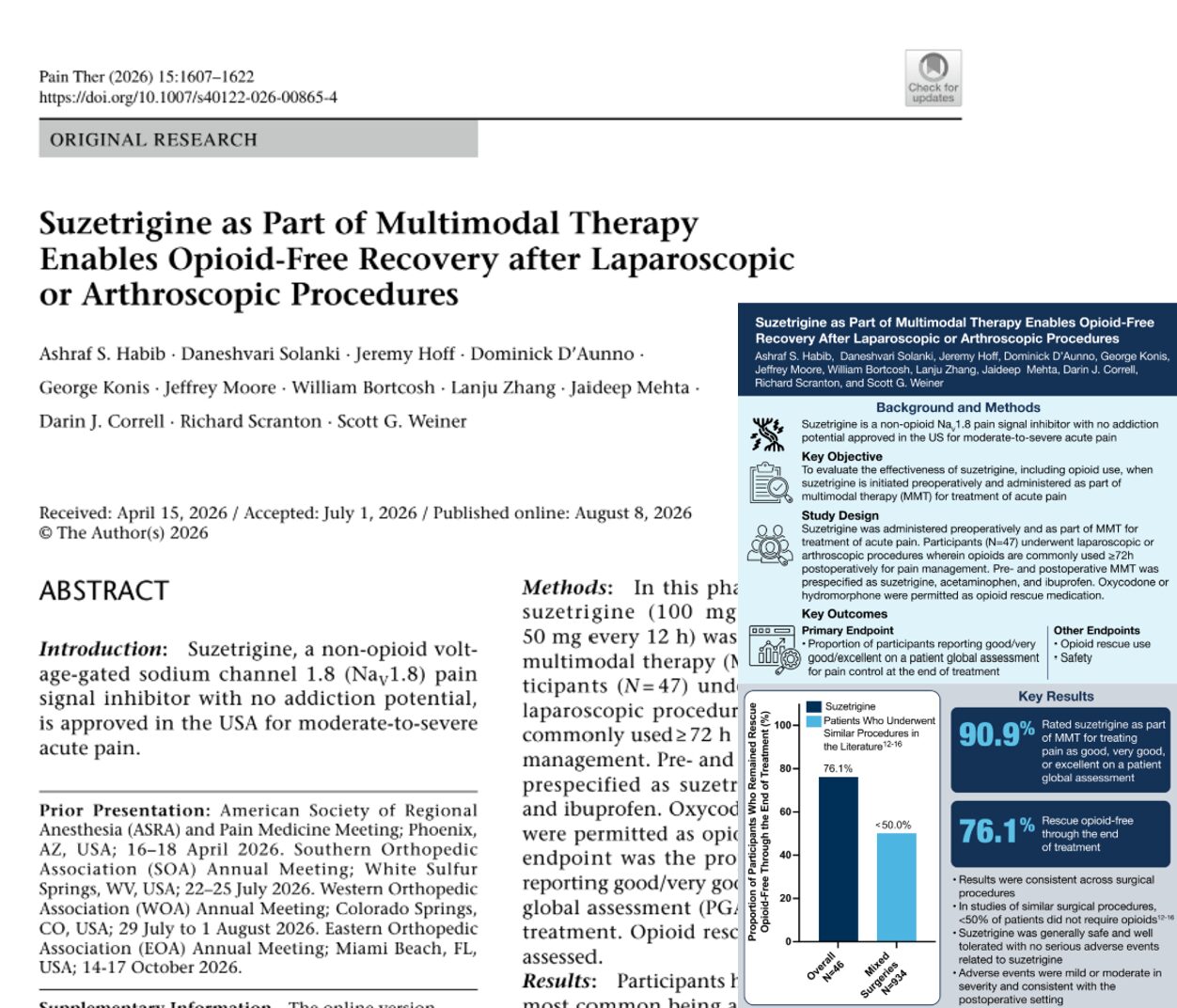
A new phase 4 clinical study published in Pain and Therapy reports promising findings for suzetrigine, a first-in-class, non-opioid analgesic targeting the voltage-gated sodium channel NaV1.8, in patients undergoing laparoscopic or arthroscopic surgical procedures.
The study, led by Ashraf S. Habib and colleagues, found that 76.1% of patients recovered without requiring postoperative oral rescue opioids, while 90.9% reported good, very good, or excellent pain control when suzetrigine was incorporated into a multimodal analgesic regimen.
The study provides preliminary clinical evidence supporting the potential role of suzetrigine in reducing postoperative opioid requirements across several minimally invasive surgical procedures.
However, because the investigation was small, open-label, and lacked a control group, the findings cannot establish that suzetrigine itself caused the observed reduction in opioid use.
Key findings at a glance
- 76.1% required no postoperative oral rescue opioids during treatment
- 90.9% rated pain control good, very good, or excellent
- 2.2 mean rescue opioid tablets among patients who needed them
- 47 patients enrolled across laparoscopic and arthroscopic procedures
The need for effective non-opioid postoperative analgesia
Effective postoperative pain management remains a fundamental component of surgical recovery. Despite advances in regional anesthesia, minimally invasive surgery, and multimodal analgesia, opioids continue to play an important role in managing moderate-to-severe acute postoperative pain.
However, opioid analgesics are associated with several clinically significant adverse effects, including:
- Respiratory depression and excessive sedation.
- Postoperative nausea and vomiting.
- Constipation and gastrointestinal dysfunction.
- Dizziness and impaired mobilization.
- Potential development of opioid dependence or opioid use disorder.
These concerns have increased interest in opioid-sparing and opioid-free postoperative analgesic strategies.
Multimodal analgesia combines medications and techniques acting through different mechanisms to improve pain control while limiting reliance on individual drugs, particularly opioids.
Suzetrigine represents a potentially important addition to this approach because it targets peripheral nociceptive signaling rather than central opioid receptors.
How does suzetrigine work?
Suzetrigine is an orally administered, selective inhibitor of the voltage-gated sodium channel NaV1.8, which plays an important role in the generation and propagation of action potentials in peripheral nociceptive neurons.
NaV1.8 channels are predominantly expressed in peripheral sensory neurons and dorsal root ganglia, where they contribute to transmitting painful stimuli toward the central nervous system.
By selectively inhibiting NaV1.8, suzetrigine reduces peripheral pain signaling without directly activating opioid receptors in the brain.
This mechanism differentiates suzetrigine from conventional opioid analgesics.
Importantly, suzetrigine does not have the established addiction potential associated with centrally acting opioid medications.
The drug has been approved in the United States for the treatment of moderate-to-severe acute pain in adults.
Previous phase 3 randomized clinical trials involving patients undergoing abdominoplasty and bunionectomy demonstrated statistically significant and clinically meaningful analgesic efficacy compared with placebo.
The current phase 4 investigation extends the evaluation of suzetrigine into multimodal postoperative analgesic protocols across additional surgical procedures.
Study design and patient population
The prospective, open-label, single-arm phase 4 study enrolled 47 adults undergoing laparoscopic or arthroscopic procedures for which postoperative opioid treatment would ordinarily be expected for at least 72 hours.
Participants had a mean age of 51.9 years, and 51.1% were female.
The surgical procedures included:
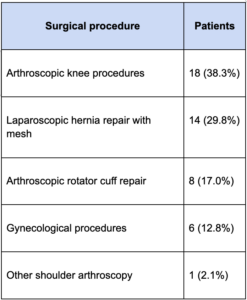
The study was designed to evaluate patient-reported pain control, postoperative opioid rescue requirements, and safety.
Multimodal analgesic protocol
Suzetrigine was initiated approximately one hour before surgery.
The treatment protocol consisted of:
- Preoperative treatment: An initial oral loading dose of suzetrigine 100 mg, combined with acetaminophen and an anti-inflammatory medication according to the surgical protocol.
- Postoperative treatment: Suzetrigine 50 mg every 12 hours, continued for up to 14 days or until pain resolution.
- Initial 72 hours: Scheduled acetaminophen and ibuprofen, with oral opioids permitted as rescue analgesia.
- After 72 hours: Acetaminophen and ibuprofen were used as first-line rescue treatment, with opioids reserved for additional analgesic requirements.
Patients undergoing rotator cuff repair received a modified perioperative regimen that included an interscalene nerve block, celecoxib, and dexamethasone.
The primary endpoint was the proportion of patients rating their pain control as good, very good, or excellent on a five-point patient global assessment (PGA) scale at the end of treatment.
Results: more than three-quarters required no postoperative oral rescue opioids
Patients remaining free of postoperative oral rescue opioids
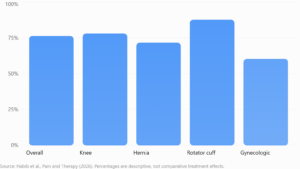
The most notable finding was that 76.1% of participants remained free of oral rescue opioids throughout the postoperative treatment period.
This outcome was consistent at 72 hours and at the end of treatment.
Among the 11 participants who required oral rescue opioids:
- The mean consumption was 2.2 opioid tablets per patient.
- The mean total opioid exposure was 16.7 morphine milligram equivalents (MME).
- The mean duration of rescue opioid use was 1.7 days.
- All patients requiring rescue opioids initiated them within the first 72 postoperative hours.
These findings suggest that the multimodal regimen incorporating suzetrigine was associated with limited postoperative oral opioid requirements.
An important distinction is that opioid-free recovery in this study referred to the absence of postoperative oral rescue opioid use, not complete avoidance of opioids throughout the perioperative period.
In fact, 89.4% of participants received opioids before or during surgery, and 21.3% received intravenous opioids immediately after surgery.
Therefore, the findings should not be interpreted as demonstrating entirely opioid-free anesthesia or surgery.
Patient-reported pain control was consistently favorable
Pain control was evaluated using the PGA scale, which captures patients’ overall impressions of analgesic effectiveness.
At the end of treatment, 90.9% of evaluable participants reported good, very good, or excellent pain control (95% confidence interval: 78.3%–97.5%).
The responses included:
- Excellent pain control: 47.7%.
- Very good pain control: 29.5%.
- Good pain control: 13.6%.
Favorable assessments were also reported by 83.3% of participants on day 3 and 93.2% on day 7.
Across surgical subgroups, favorable pain-control ratings ranged from 84.6% after hernia repair with mesh to 100% after rotator cuff repair and gynecological procedures.
Nevertheless, the study did not evaluate pain intensity using a numerical pain rating scale or visual analogue scale. Consequently, changes in pain intensity and comparative analgesic efficacy cannot be directly quantified from these findings.
Safety and tolerability outcomes
Suzetrigine was generally well tolerated in the study, with adverse events consistent with those commonly encountered during postoperative recovery.
Overall, 19 of 47 participants (40.4%) experienced at least one adverse event.
All reported adverse events were classified as mild or moderate in severity.
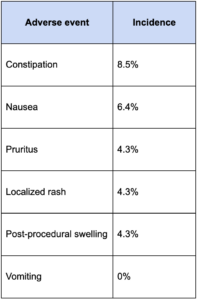
One participant experienced a serious adverse event involving aspiration, which investigators considered unrelated to suzetrigine.
Another participant discontinued treatment following mild lumbar back pain, also considered unrelated to the study medication.
No serious adverse events were attributed to suzetrigine.
Although these findings are reassuring, the limited sample size and short observation period prevent definitive conclusions about uncommon adverse reactions or longer-term safety.
Additionally, the study design does not allow adverse events to be reliably attributed to suzetrigine rather than surgery, anesthesia, or concomitant medications.
How do the findings compare with previous research?
The investigators compared their findings with previously published studies involving similar surgical procedures.
In those reports, the proportion of patients who did not require postoperative opioids ranged from approximately 17.6% to 46%.
By comparison, 76.1% of participants in the current study avoided postoperative oral rescue opioids.
The investigators also reported numerically higher opioid-free recovery rates for knee arthroscopy, hernia repair, and rotator cuff repair than rates described in selected previous publications.
However, these were indirect comparisons across separate studies, rather than randomized comparisons within the same trial.
Differences in surgical techniques, anesthesia protocols, regional nerve blocks, patient characteristics, and rescue medication criteria may influence postoperative opioid requirements.
Consequently, the results are hypothesis-generating and should not be interpreted as proof that suzetrigine is superior to other multimodal analgesic strategies.
Clinical implications for perioperative pain management
The findings have several potential implications for anesthesiologists, surgeons, and acute pain management teams.
Integration into multimodal analgesia
Suzetrigine may offer an additional non-opioid pharmacological option for patients undergoing procedures associated with moderate-to-severe postoperative pain.
Its peripheral mechanism of action could complement acetaminophen, nonsteroidal anti-inflammatory drugs, and regional anesthesia techniques.
Reducing postoperative opioid exposure
The limited requirement for oral rescue opioids observed in this study suggests that suzetrigine-containing regimens may support opioid-sparing recovery pathways.
Reducing opioid exposure could potentially decrease opioid-related adverse effects, although this study was not designed to establish such benefits.
Supporting individualized recovery protocols
The findings may be relevant to enhanced recovery after surgery pathways, particularly when postoperative analgesic strategies aim to balance effective pain relief, early mobilization, and reduced opioid prescribing.
However, treatment decisions should account for procedure-specific pain intensity, comorbidities, contraindications, medication interactions, and local prescribing guidance.
Suzetrigine should not be regarded as a universal replacement for opioids, and adequate rescue analgesia must remain available when clinically indicated.
Important limitations of the study
Several methodological limitations warrant consideration.
First, the study included only 47 patients and lacked a randomized control group. It is therefore impossible to isolate the analgesic contribution of suzetrigine from the effects of acetaminophen, ibuprofen, nerve blocks, and other perioperative interventions.
Second, the open-label design may have influenced patient-reported assessments.
Third, subgroup sample sizes were particularly small, limiting the reliability and generalizability of procedure-specific findings.
Fourth, the study did not collect standardized numerical pain intensity scores, making comparisons with other analgesic trials difficult.
Finally, the study was funded by Vertex Pharmaceuticals, the manufacturer of suzetrigine. Several authors were company employees, and other investigators disclosed relevant financial relationships.
These considerations reinforce the need for larger, independently conducted, randomized controlled trials.
Conclusion
This phase 4 study provides encouraging preliminary evidence that suzetrigine, initiated preoperatively and incorporated into multimodal analgesia, may support effective postoperative pain management while limiting the need for oral rescue opioids.
The finding that 76.1% of participants required no postoperative oral rescue opioids, alongside favorable pain-control assessments in 90.9%, highlights the potential clinical value of selective NaV1.8 inhibition.
Nevertheless, the absence of a control group, small sample size, and concurrent use of other analgesic interventions mean that the contribution of suzetrigine cannot be established independently.
Further high-quality randomized studies will be essential to determine whether suzetrigine can meaningfully improve postoperative outcomes and reduce opioid exposure across routine surgical practice.
Reference: Habib AS et al. Suzetrigine as Part of Multimodal Therapy Enables Opioid-Free Recovery after Laparoscopic or Arthroscopic Procedures. Pain Ther. 2026;15:1607-1622.
For more expert guidance on postoperative pain management, multimodal analgesia, and opioid-sparing strategies, turn to NYSORA’s Anesthesiology Manual for practical, evidence-based insights to optimize pain control and support safer surgical recovery!