 Nerve Blocks App
 Anesthesia Assistant App
 Ultrasound Pain App
 Pain Medicine Assistant App
 POCUS App
 IV Access App
 MSK Knee App
 VetRA App

 Nerve Block Manual
 Regional Anesthesia Updates
 Anesthesiology Manual
 Anesthesiology Review
 Anesthesia Updates 2025
 Anesthesia Updates 2026
 Pediatric Anesthesia Updates
 Airway Management Updates
 US Interventional Pain Manual
 Pain Medicine Updates
 Mastering Difficult IV Access
 PACU Nursing Manual
 RA Veterinary Manual
 Books
 About

 Back to News
 9 min read

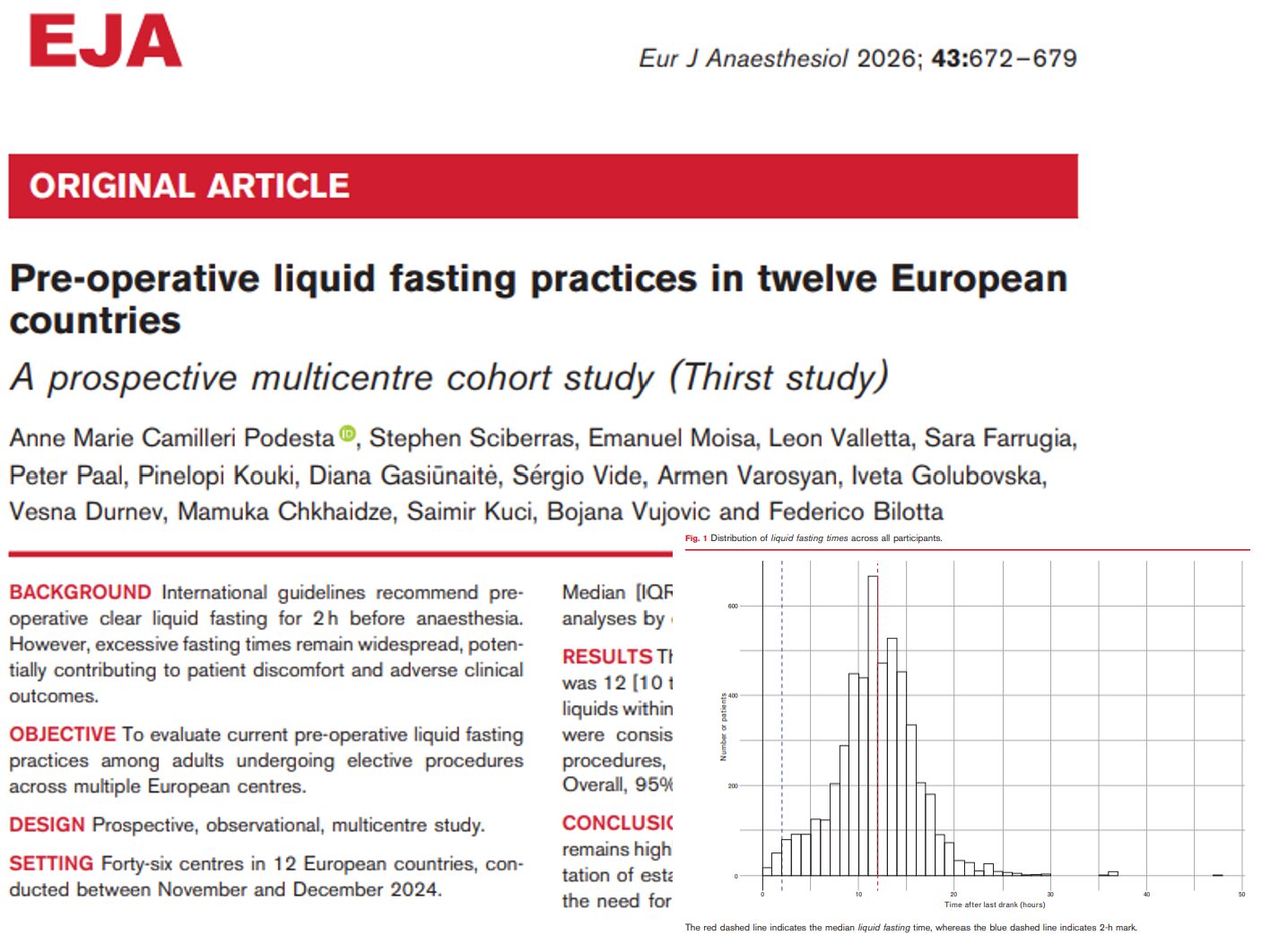
A large European multicentre study has found that 95% of patients undergoing elective procedures fasted from clear liquids for more than four hours before anesthesia, despite international guidelines recommending that healthy adults should be encouraged to drink clear liquids until two hours before their procedure.
Published in the European Journal of Anaesthesiology, the prospective observational Thirst study included 5,100 adult patients from 46 centres across 12 European countries.
The researchers reported a median preoperative liquid fasting duration of 12 hours, six times the recommended two-hour interval.
These findings highlight persistent challenges in implementing evidence-based fasting guidelines and raise concerns about unnecessary patient discomfort, dehydration and perioperative physiological stress.
Key findings at a glance
- Median liquid fasting duration: 12 hours, with an interquartile range of 10 to 14.6 hours.
- Patients fasting for more than four hours: 95.2% (4,862 patients).
- Patients fasting between two and four hours: 3.9% (199 patients).
- Patients drinking within two hours before anesthesia: 0.8% (39 patients).
- Study population: 5,100 adults undergoing elective surgery or interventional procedures.
- Participating centres: 46 hospitals and clinical centres across 12 European countries.
The findings demonstrate that prolonged preoperative liquid fasting remains widespread despite established international recommendations.
Why is preoperative fasting necessary?
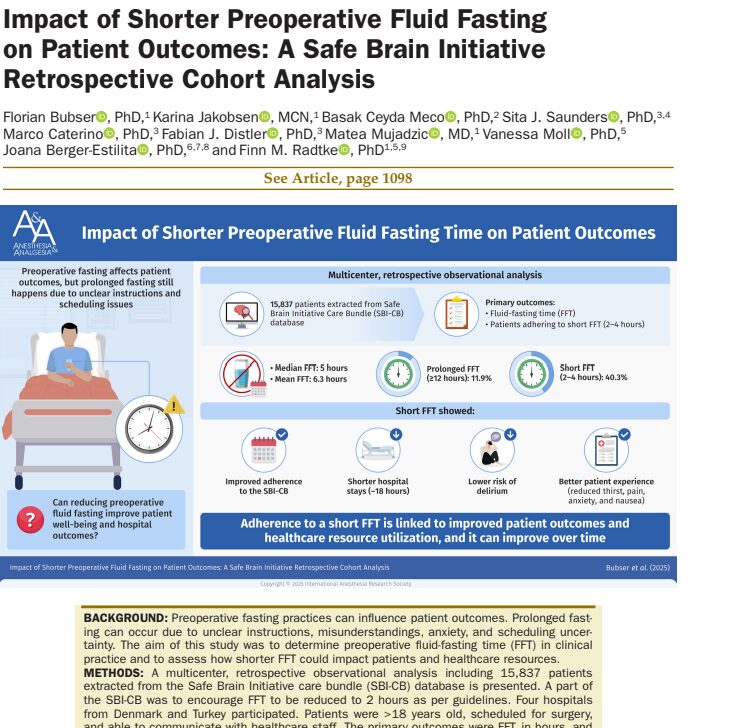
Preoperative fasting is an important safety measure intended to reduce the risk of regurgitation and pulmonary aspiration of gastric contents during anesthesia.
Pulmonary aspiration can cause serious respiratory complications, including aspiration pneumonitis and pneumonia.
However, modern fasting guidelines distinguish between solid food and clear liquids.
For healthy adults undergoing elective procedures, international recommendations generally permit clear liquids until two hours before anesthesia.
Clear liquids empty relatively rapidly from the stomach. Evidence reviewed in the study indicates that consuming clear liquids two hours before anesthesia does not increase aspiration risk compared with longer fasting periods in appropriately selected patients.
Prolonged fluid restriction, therefore, does not necessarily improve anesthetic safety and may negatively affect patient comfort and physiological stability.
Prolonged fasting may contribute to adverse physiological effects
Excessively prolonged fasting can affect patients in several ways.
The authors highlight previous research associating extended preoperative fasting with:
- Dehydration: reduced fluid intake may contribute to intravascular volume depletion.
- Hemodynamic instability: inadequate hydration can increase susceptibility to hypotension during anesthesia.
- Acute kidney injury: dehydration may contribute to renal complications, particularly in vulnerable patients.
- Postoperative delirium: prolonged fluid restriction has been associated with delirium in some patient populations.
- Metabolic stress: fasting can deplete glycogen stores and stimulate gluconeogenesis.
- Insulin resistance: prolonged fasting may contribute to adverse perioperative metabolic responses.
- Patient discomfort: increased thirst, hunger, nausea, pain and anxiety.
Importantly, the Thirst study did not directly measure these clinical complications. Its primary objective was to evaluate actual fasting practices, while the potential consequences of prolonged fasting were discussed using previously published evidence.
Study design: 5,100 patients across 12 countries
The Thirst study was conducted between November and December 2024, with the endorsement of the European Society of Anaesthesiology and Intensive Care (ESAIC).
The investigators collected data from adult patients undergoing elective procedures requiring general anesthesia, regional anesthesia or sedation.
Participating patients completed a questionnaire about their last intake of clear liquids.
The researchers distinguished between meaningful liquid consumption and small sips taken, for example, with preoperative medication.
The study included centres in Albania, Armenia, Austria, Georgia, Greece, Latvia, Lithuania, Malta, Montenegro, North Macedonia, Portugal and Romania.
The primary outcome was the duration of preoperative clear-liquid fasting. Fasting longer than four hours was classified as prolonged.
Major differences in fasting practices between European countries
Although excessive fasting was common throughout the study, important differences were observed between participating countries.
The shortest median fasting duration was recorded in Albania, while Portugal reported the longest.
The median fasting times were:
- Albania: 6 hours 55 minutes.
- Armenia: 12 hours 20 minutes.
- Austria: 12 hours.
- Georgia: 11 hours 40 minutes.
- Greece: 11 hours.
- Latvia: 12 hours 5 minutes.
- Lithuania: 13 hours 5 minutes.
- Malta: 12 hours.
- Montenegro: 13 hours.
- North Macedonia: 13 hours.
- Portugal: 14 hours.
- Romania: 12 hours.
Albania was a notable outlier, with substantially shorter fasting times than most participating countries.
The Albanian centre reported using instructions permitting clear liquids until two hours before anesthesia. Some patients were also managed using a more liberal approach known as sip till send.
This approach allows selected patients to continue consuming small amounts of clear liquid closer to the time of their procedure, according to local protocols.
The researchers suggested that these practices may explain the shorter fasting durations observed in Albania.
However, the country-level findings should be interpreted cautiously because the distribution of participating centres was uneven. Romania contributed 2,185 patients, whereas several countries were represented by only one centre.
Does the type of surgery influence fasting duration?
The study also investigated whether fasting duration differed between surgical specialties and interventional procedures.
Significant variation was observed.
Patients undergoing ophthalmological procedures generally experienced shorter fasting periods, while those undergoing non-operating room anesthesia (NORA) had the longest.
In the adjusted analysis, the estimated fasting durations were:
- Ophthalmological procedures: 9.6 hours.
- Non-operating room anesthesia: 13.4 hours.
The researchers suggested that prolonged fasting in NORA patients might be related to same-day pre-anesthetic assessment and less standardised organisational procedures.
These findings indicate that unnecessary fasting is not restricted to conventional operating theatres but also affects patients undergoing procedures in other clinical environments.
Why are patients still fasting from midnight?
One of the most important findings concerns the persistence of traditional fasting instructions.
Despite international recommendations permitting clear liquids until two hours before anesthesia, many hospitals continue to apply or communicate restrictions beginning at midnight.
Several factors may explain this discrepancy.
Outdated hospital protocols
Traditional nil per os (NPO) instructions remain embedded in clinical workflows.
These instructions may be convenient for hospital scheduling but can result in unnecessarily prolonged fasting, particularly when procedures are performed in the afternoon.
Inconsistent instructions from healthcare professionals
Patients may receive different fasting recommendations from anesthesiologists, surgeons and nursing staff.
When instructions conflict, patients may choose the most restrictive option.
Patient misconceptions
Some patients believe that fasting longer provides greater protection against anesthetic complications.
Consequently, they may voluntarily avoid drinking for many hours, even when shorter fasting periods are permitted.
Organisational barriers
The researchers also identified institutional factors that may prevent guideline implementation.
These include insufficient staff education, outdated standard operating procedures, limited integration of fasting guidance into electronic scheduling systems and inadequate monitoring of actual fasting times.
The authors emphasised that successful implementation requires institutional leadership and coordinated multidisciplinary efforts.
Can shorter fasting improve patient comfort and safety?
Previous research discussed in the article suggests that reducing unnecessary clear-liquid fasting can improve patient comfort without increasing pulmonary aspiration risk in appropriately selected patients.
Studies of more liberal drinking policies have reported reductions in fasting duration and improvements in patient satisfaction.
Shorter fluid restriction may help reduce thirst, dehydration and the physiological stress associated with prolonged fasting.
However, fasting recommendations must be individualised.
Patients with conditions affecting gastric emptying or increasing aspiration risk may require different instructions.
The Thirst study does not establish that unrestricted drinking is appropriate for every patient, nor does it directly demonstrate improved clinical outcomes from shorter fasting.
The authors call for further research into the safety and effectiveness of more liberal fluid policies.
How can hospitals reduce unnecessary preoperative fasting?
The findings support a renewed focus on implementing evidence-based fasting practices.
Several practical measures could help healthcare institutions reduce unnecessary fasting.
- Update institutional fasting protocols. Review existing instructions and ensure they reflect current evidence-based recommendations.
- Improve patient education. Provide clear written and verbal instructions explaining which liquids are permitted and when they should be stopped.
- Standardise multidisciplinary communication. Ensure anesthesiologists, surgeons, nurses and administrative staff provide consistent advice.
- Consider structured clear-liquid policies. Evaluate appropriately selected hydration pathways, including more liberal drinking protocols where supported by local guidance and safety assessment.
- Monitor actual fasting times. Conduct regular clinical audits to identify discrepancies between recommended and observed fasting durations.
- Implement quality improvement programmes. Use structured approaches, such as Plan–Do–Study–Act cycles, to evaluate interventions and sustain improvements.
The authors emphasise that education alone may be insufficient without institutional commitment, protocol integration and continuous monitoring.
Study limitations
Although the Thirst study provides important contemporary evidence, several limitations should be considered.
First, the geographical distribution was uneven, with most participating centres located in Central, Southern and South-Eastern Europe. No centres from Western or Northern Europe were included.
Second, Romania and Austria contributed a substantial proportion of participants, potentially influencing the overall results.
Third, fasting durations were self-reported and may have been affected by recall bias, anxiety or premedication.
Finally, the researchers did not assess intravenous fluid administration on arrival in the operating room or measure postoperative clinical outcomes.
Consequently, the study cannot establish a causal relationship between prolonged fasting and adverse postoperative events.
Nevertheless, its large sample size and multicentre design provide valuable insights into actual preoperative fasting practices.
Conclusion: a clear need to improve preoperative fasting practices
The Thirst study demonstrates that prolonged preoperative liquid fasting remains a widespread problem across the participating European healthcare centres.
Despite established recommendations permitting clear liquids until two hours before anesthesia in healthy adults undergoing elective procedures, the median fasting duration was 12 hours, and more than 95% of patients fasted for longer than four hours.
These findings reveal a substantial gap between scientific evidence and routine clinical practice.
Reducing unnecessary fasting requires consistent patient education, updated institutional protocols, multidisciplinary collaboration and systematic quality improvement.
Improving adherence to evidence-based fasting recommendations offers an important opportunity to enhance patient comfort and promote more patient-centred perioperative care without compromising appropriate anesthetic safety standards.
Reference: Camilleri Podesta AM et al. Pre-operative liquid fasting practices in twelve European countries: A prospective multicentre cohort study (Thirst study). Eur J Anaesthesiol. 2026;43:672-679.
Want to read more about preoperative fasting? Deepen your knowledge with the NYSORA Anesthesiology Manual. Designed as a practical, quick-reference resource, it puts essential clinical information at your fingertips whenever you need it.