 Nerve Blocks App
 Anesthesia Assistant App
 Ultrasound Pain App
 Pain Medicine Assistant App
 POCUS App
 IV Access App
 MSK Knee App
 VetRA App
 Nerve Block Manual
 Regional Anesthesia Updates
 Anesthesiology Manual
 Anesthesiology Review
 Anesthesia Updates 2025
 Anesthesia Updates 2026
 Pediatric Anesthesia Updates
 Airway Management Updates
 US Interventional Pain Manual
 Pain Medicine Updates
 Mastering Difficult IV Access
 PACU Nursing Manual
 RA Veterinary Manual
 Books
Books About
About
 Back to News
 10 min read
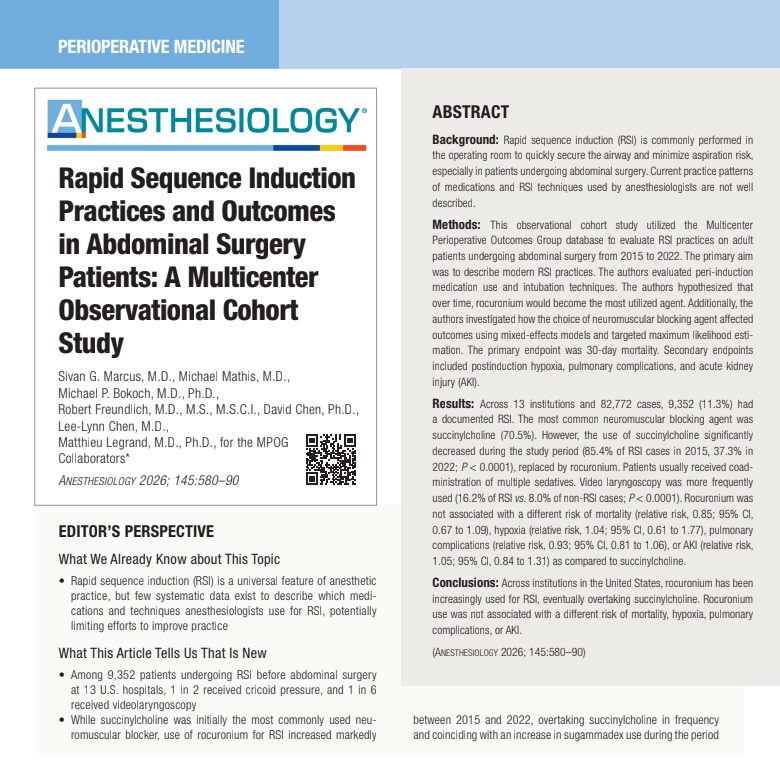
A large multicenter observational study published in the September 2026 issue of Anesthesiology provides important insights into contemporary rapid sequence induction (RSI) practices in patients undergoing abdominal surgery.
The study, conducted by Marcus and colleagues using the Multicenter Perioperative Outcomes Group (MPOG) database, analyzed 82,772 surgical cases across 13 US hospitals between 2015 and 2022, identifying 9,352 patients who underwent documented RSI.
The findings demonstrate a substantial shift in neuromuscular blocking agent selection, with rocuronium progressively replacing succinylcholine. Importantly, after adjustment for potential confounding factors, neither agent was associated with significantly different rates of mortality, hypoxemia, postoperative pulmonary complications, or acute kidney injury.
The research also highlights considerable variability in airway management techniques, including cricoid pressure, mask ventilation, and videolaryngoscopy.
Key findings at a glance
- 9,352 patients underwent documented RSI, representing 11.3% of the 82,772 abdominal surgery cases analyzed.
- Succinylcholine use decreased from 85.4% of RSI cases in 2015 to 37.3% in 2022.
- Rocuronium became the most frequently used neuromuscular blocking agent by 2022.
- Sugammadex use increased from 0% to 83.9% during the study period.
- Propofol was administered in 94.8% of RSI cases, making it the predominant induction agent.
- Cricoid pressure was documented in 51.5% of RSI procedures.
- Videolaryngoscopy was used in approximately 16% of RSI cases.
- No statistically significant differences in major clinical outcomes were identified between succinylcholine and rocuronium after confounder adjustment.
Why rapid sequence induction remains important in abdominal surgery
Rapid sequence induction is an airway management technique designed to minimize the interval between loss of protective airway reflexes and successful placement of a cuffed endotracheal tube.
Its principal objective is to reduce the risk of pulmonary aspiration of gastric contents during anesthetic induction.
Patients undergoing abdominal surgery may be particularly vulnerable because of conditions associated with increased gastric volume, impaired gastric emptying, or elevated intra-abdominal pressure.
Examples include bowel obstruction, acute abdominal pathology, and other gastrointestinal disorders.
Traditional RSI typically involves:
- Preoxygenation to increase oxygen reserves before apnea.
- Administration of an intravenous hypnotic agent.
- Rapid administration of a neuromuscular blocking agent.
- Application of cricoid pressure in traditional protocols.
- Avoidance of positive-pressure mask ventilation before intubation.
- Rapid tracheal intubation followed by cuff inflation.
However, contemporary RSI has evolved considerably, and several components of the traditional approach remain controversial.
The availability of alternative neuromuscular blocking agents, improved airway visualization technologies, and selective reversal agents has contributed to increasingly individualized techniques.
Study design and methodology
Marcus and colleagues conducted a retrospective observational cohort study using electronic health records collected through the MPOG consortium.
Although the initial database included 54 institutions, only 13 hospitals provided sufficiently complete data for inclusion in the final analysis.
The investigators examined adult patients undergoing intra-abdominal surgery under general anesthesia between January 2015 and December 2022.
The primary objective was to characterize RSI practices, including medication selection, drug dosing, and airway management techniques.
A secondary objective was to evaluate associations between the choice of neuromuscular blocking agent and postoperative outcomes.
Clinical outcomes evaluated
The primary endpoint was in-hospital mortality within 30 days.
Secondary endpoints included:
- Postinduction hypoxemia: Oxygen saturation below 90% lasting at least five minutes.
- Postoperative pulmonary complications: A composite of respiratory complications documented within 90 days, including pneumonia, respiratory failure, and acute respiratory distress syndrome.
- Acute kidney injury: A serum creatinine increase of at least 0.3 mg/dL within 48 hours or at least 1.5 times baseline within seven days.
To account for differences in patient characteristics, the researchers used mixed-effects regression models and targeted maximum likelihood estimation (TMLE).
The latter incorporated propensity score estimation and flexible machine-learning methods to adjust for measured confounding variables.
Rocuronium replaces succinylcholine as the leading RSI agent
One of the most striking findings was the progressive replacement of succinylcholine by rocuronium.
Across the entire study period, succinylcholine remained the most frequently administered primary neuromuscular blocking agent, accounting for 70.5% of RSI cases.
Rocuronium was used as the primary agent in the remaining 29.5%.
However, these overall percentages conceal a major temporal shift.
In 2015, succinylcholine was used in 85.4% of RSI cases. By 2022, its use had fallen to 37.3%, with rocuronium becoming the dominant agent.
The trend was statistically significant (P < 0.0001).
The potential role of sugammadex
The introduction and increasing availability of sugammadex may have contributed to this transition.
Sugammadex selectively reverses neuromuscular blockade produced by aminosteroid agents, particularly rocuronium.
Historically, succinylcholine offered two important advantages for RSI: rapid onset and relatively short duration of action.
High-dose rocuronium can provide rapid neuromuscular blockade, while sugammadex offers the possibility of rapid pharmacological reversal.
In the study, sugammadex use increased from 0% in 2015 to 83.9% in 2022.
The parallel increase in rocuronium and sugammadex use suggests an association between reversal-agent availability and changing clinical preferences.
However, the observational design cannot establish that sugammadex availability directly caused the transition.
Furthermore, rapid reversal of neuromuscular blockade does not necessarily guarantee restoration of airway patency, spontaneous ventilation, or protection against aspiration.
Propofol dominates induction medication selection
The study also challenges the perception that etomidate and ketamine are the predominant hypnotic agents used during RSI.
Although these drugs are frequently discussed in emergency department and intensive care settings, propofol overwhelmingly dominated induction practices in the operating room.
Medication use during RSI
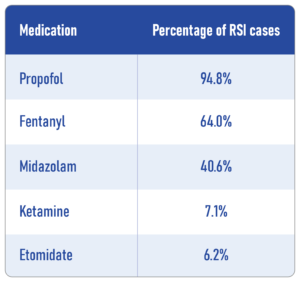
Many patients received combinations of sedatives and analgesics rather than a single induction agent.
Notably, approximately 65% of patients receiving ketamine or etomidate also received propofol.
The median administered doses included 150 mg of propofol, 100 micrograms of fentanyl, and 2 mg of midazolam.
These findings suggest that RSI in the operating room frequently resembles a balanced anesthetic induction using multiple medications.
The investigators proposed that differences between operating room and emergency RSI practices may partly reflect patient characteristics and hemodynamic stability.
Patients undergoing planned surgical procedures may tolerate propofol more readily than critically ill patients experiencing shock or severe cardiovascular instability.
Nevertheless, the study was descriptive and did not establish the comparative safety of different hypnotic induction regimens.
Cricoid pressure remains controversial
Another important observation concerns the inconsistent use of cricoid pressure.
Traditionally considered a central component of RSI, cricoid pressure aims to reduce regurgitation by applying external pressure over the cricoid cartilage.
However, its effectiveness in preventing pulmonary aspiration remains uncertain.
In the present study, cricoid pressure was documented in only 51.5% of RSI cases.
This suggests that approximately half of documented RSI procedures were performed without recorded cricoid pressure.
The investigators noted that previous randomized studies have questioned the maneuver’s protective effects and raised concerns that it may interfere with laryngoscopic visualization.
Importantly, the absence of documentation does not necessarily prove that cricoid pressure was not applied.
Nevertheless, the findings highlight substantial variation in what anesthesiologists consider an appropriate RSI technique.
Mask ventilation and videolaryngoscopy
Mask ventilation was documented in 5.4% of RSI cases.
Avoidance of positive-pressure ventilation is a traditional RSI principle intended to minimize gastric insufflation, although modified RSI techniques may incorporate gentle ventilation when clinically appropriate.
Videolaryngoscopy was used in approximately 16.2% of RSI cases, compared with 8.0% of non-RSI procedures.
This difference was statistically significant (P < 0.0001).
The higher use of videolaryngoscopy during RSI may reflect clinicians’ efforts to optimize glottic visualization and facilitate successful tracheal intubation.
However, the study did not establish that videolaryngoscopy improved patient outcomes in this cohort.
Rocuronium versus succinylcholine: What happened to patient outcomes?
The central clinical question was whether the choice of neuromuscular blocking agent influenced postoperative complications or mortality.
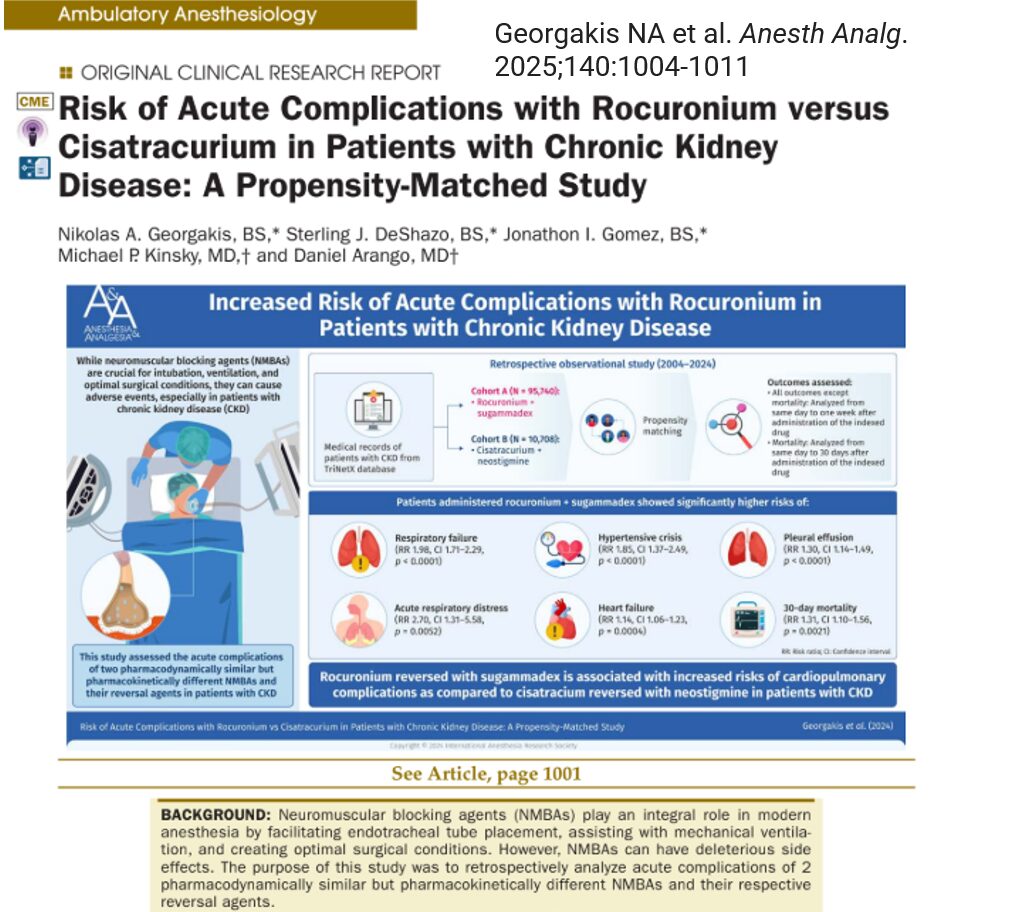
Initially, unadjusted analyses suggested that patients receiving succinylcholine experienced lower mortality and fewer pulmonary complications than those receiving rocuronium.
The observed mortality rates were 2.28% with succinylcholine and 4.13% with rocuronium among patients with available outcome data.
However, patients receiving different agents were not necessarily comparable in their baseline characteristics and clinical risks.
After adjustment for measured confounders, the apparent differences were no longer statistically significant.
Adjusted clinical outcomes
The following relative risks were reported using TMLE, comparing succinylcholine with rocuronium.
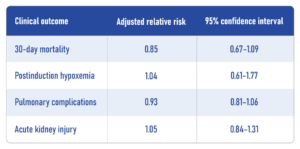
All confidence intervals crossed 1.0, indicating that none of the adjusted comparisons reached statistical significance.
These findings suggest that either neuromuscular blocking agent may be a reasonable option for RSI in abdominal surgery patients.
However, the results should not be interpreted as proof of therapeutic equivalence, because clinically relevant differences cannot be definitively excluded by an observational study.
Does rocuronium dose affect clinical outcomes?
The researchers also investigated variation in rocuronium dosing.
Although weight-based dosing is commonly recommended, clinicians frequently administered fixed doses of either 50 mg or 100 mg.
The investigators compared these approaches with dosing based on ideal body weight.
After adjustment for measured confounders, no statistically significant differences were identified in mortality, hypoxemia, pulmonary complications, or acute kidney injury.
These findings suggest that the dosing variations observed in clinical practice were not associated with detectable differences in the selected outcomes.
However, the analysis did not directly establish equivalent intubating conditions, onset times, or duration of neuromuscular blockade.
Consequently, the results should not be interpreted as support for indiscriminate fixed-dose administration.
Important limitations of the study
Several limitations warrant consideration before applying these findings to clinical practice.
- Observational design: Residual and unmeasured confounding may have influenced the reported associations.
- Incomplete institutional data: Only 13 of the 54 participating institutions contributed eligible cases.
- Documentation variability: RSI identification depended on electronic airway records, potentially leading to misclassification.
- Missing procedural details: Preoxygenation methods, patient positioning, and gastric decompression techniques could not be comprehensively evaluated.
- Unmeasured adverse events: The study did not assess important drug-specific complications such as intraoperative anaphylaxis.
- Limited generalizability: Findings from US abdominal surgery patients may not directly apply to emergency department, intensive care, obstetric, or pediatric populations.
The study also did not directly compare the effectiveness of RSI against non-RSI techniques for preventing aspiration.
Therefore, it cannot determine whether RSI itself reduces aspiration-related complications.
Clinical implications for anesthesiologists
The findings provide a valuable overview of evolving airway management practices and offer several considerations for perioperative care.
First, rocuronium has become increasingly prominent in RSI, potentially reflecting the influence of sugammadex availability.
Second, the absence of significant adjusted outcome differences supports individualized neuromuscular blocking agent selection rather than a universal preference based solely on postoperative mortality or pulmonary complications.
Third, the considerable variability in cricoid pressure and airway equipment use demonstrates that contemporary RSI is not a single standardized procedure.
Finally, medication selection should continue to account for patient physiology, contraindications, airway difficulty, aspiration risk, and available reversal strategies.
Neither rocuronium nor succinylcholine eliminates the need for appropriate preoxygenation, careful airway planning, and preparedness for failed intubation.
Conclusion
This large multicenter study provides compelling evidence that rapid sequence induction practices have changed substantially over the past decade.
Rocuronium has overtaken succinylcholine as the most commonly used neuromuscular blocking agent for RSI in the participating US hospitals, alongside a marked increase in sugammadex use.
Despite this transition, adjusted analyses found no statistically significant differences between the two agents in mortality, postinduction hypoxemia, postoperative pulmonary complications, or acute kidney injury.
The findings reinforce the importance of individualized airway management and highlight the need for further prospective research to determine which RSI techniques provide the greatest benefit for patients at risk of pulmonary aspiration.
Marcus SG et al. Rapid Sequence Induction Practices and Outcomes in Abdominal Surgery Patients: A Multicenter Observational Cohort Study. Anesthesiology. 2026;145:580-590.
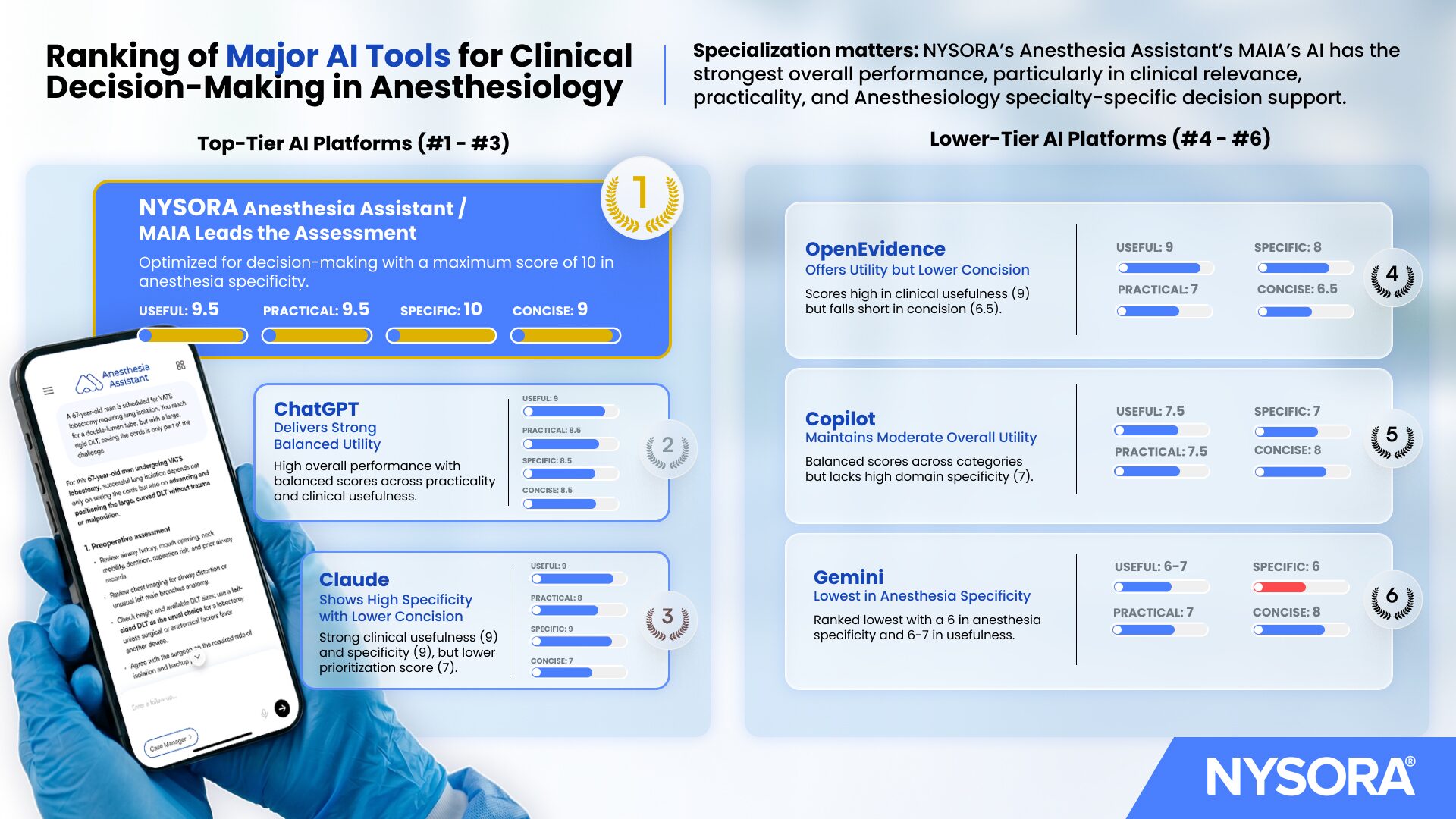
Read more about recent evidence like this in NYSORA’s Anesthesia Assistant app. Simulate case, check dosages and search through NYSORA knowledge database!